
Career profile

Agricultural Engineer

Agricultural engineers design the equipment and systems used to grow, move, and process farm products.

Engineering math meets biology here: the machines have to cope with living things, and every design has to fit what plants, livestock, and soil require.
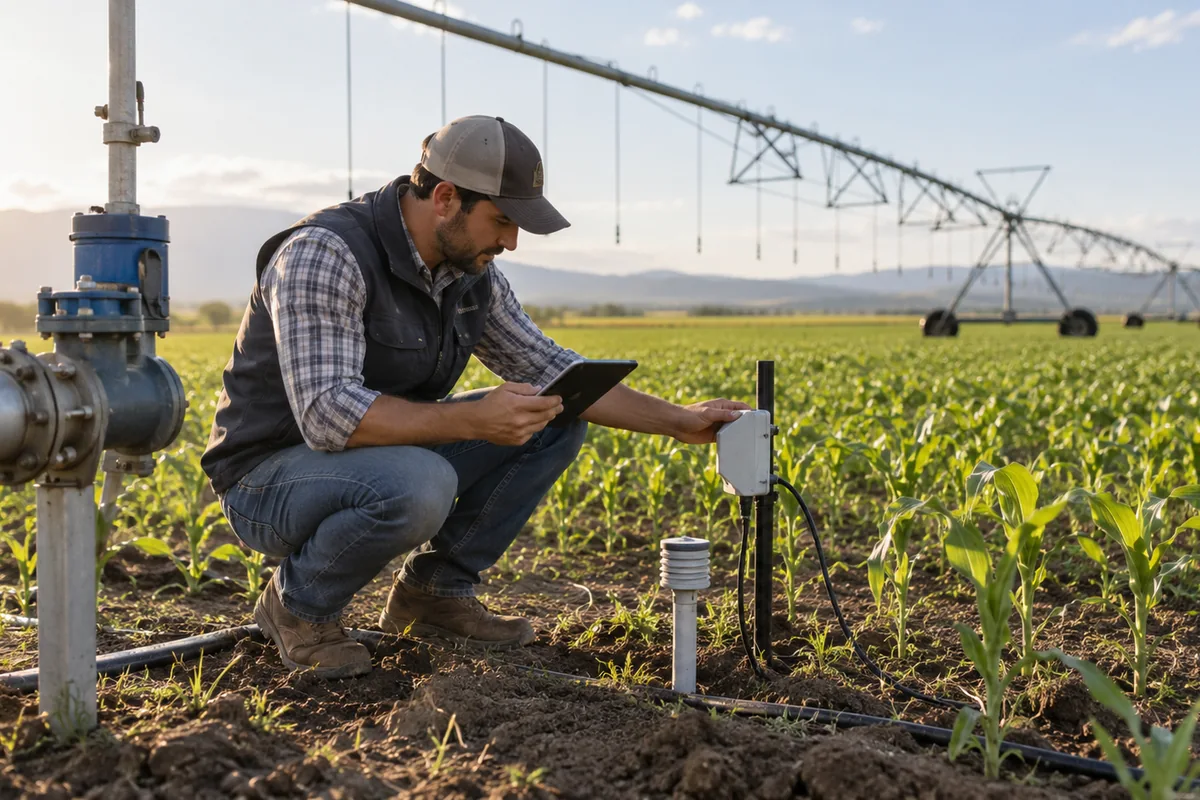
An agricultural engineer inspecting irrigation equipment and soil sensors in a working crop field.

A day in the life

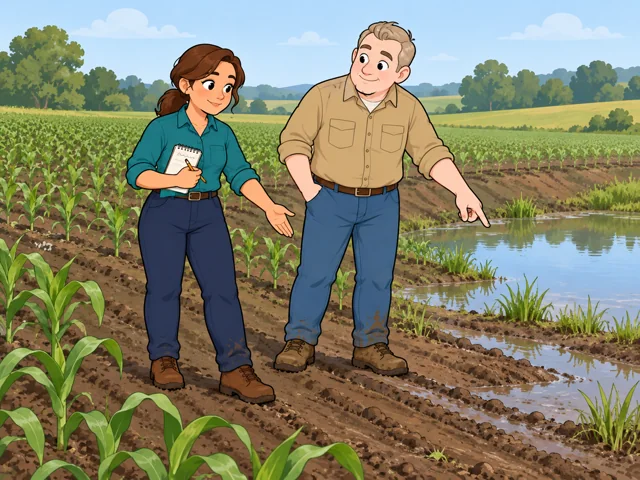
1An agricultural engineer walks a field with a farmer, inspecting pooled water and discussing the surrounding slope before planning drainage.

Scout wet ground with a grower

Tour the land with the grower, talk through wet spots, and inspect the ground before drawing the drainage.
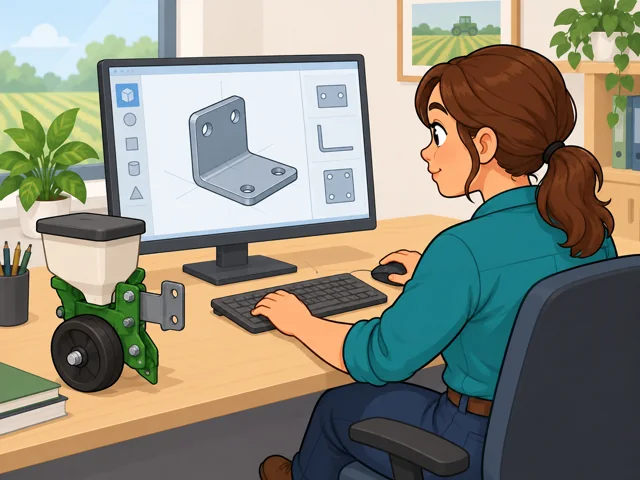
2The engineer uses computer-aided design software to shape a planter component, with a physical assembly sample beside her screen.

Shape an equipment part on screen

On machinery projects, you shape a part for equipment like a planter in a computer-aided design program.
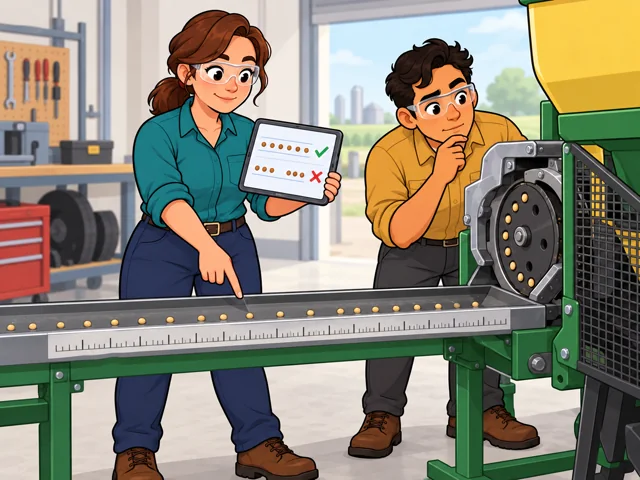
3The engineer compares seed-spacing test measurements with a target pattern while a coworker investigates the stopped planter mechanism.

Check test results against targets

Put the trial numbers beside the design targets, and if the equipment falls short, work out the fixes.
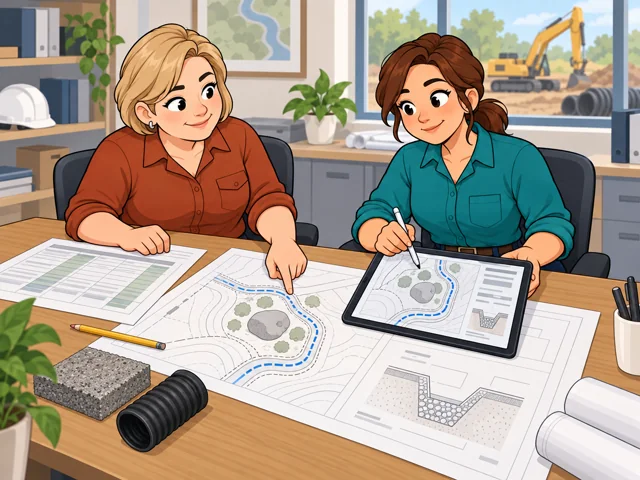
4The engineer and a contractor review drainage drawings and costs while updating the route and specifications to address a construction obstruction.

Rework specs with the builder

Go over drawings and costs together with the builder, then revise specs to fix the construction problem.

Quick facts

Preparation

Bachelor's degree

United States

Pay

$98,590/year

United States · May 2025

Outlook

6.9% projected growth

United States · 2025–2035

Quick orientation

Preparation, pay & outlook

Preparation

Bachelor's degree

An engineering degree is the usual starting point.

Geography
United States
Period
Not applicable

Pay

$98,590/year

National median for agricultural engineers; equivalent to $47.40/hour.

Geography
United States
Period
May 2025

Outlook

6.9% projected growth

About 100 openings per year nationwide, averaged over the projection period.

Geography
United States
Period
2025–2035

Fit, tradeoffs & changing tools

Things to weigh

  • Outdoor projects follow the weather; manufacturing problems can need attention outside normal hours.
  • Expect substantial office time, even when your designs end up in fields or barns.

Where AI may help

In fruit-harvesting research, cameras and artificial intelligence help robots locate apples and assess ripeness.

What people still lead

Engineers choose sensors, build picking mechanisms, and test how the parts work together in an orchard.

What we can’t predict yet

How reliably robots can find and pick fruit behind leaves or in difficult lighting remains a development challenge. That affects how much harvesting they can take over.

Pay in context

Earnings

Use the national figures as a comparison point when reading offers, rather than as a starting salary.

The midpoint

Agricultural engineers earned a median $98,590 a year, equivalent to $47.40 an hour. Half earned more and half earned less.

Geography
United States
Period
May 2025
Pay basis
National employee wages; annual median and hourly equivalent.

The national spread

The 10th-percentile wage was $68,060 and the 90th-percentile wage was $166,460 a year. These describe the wage distribution, not beginner and senior pay rates.

Geography
United States
Period
May 2025
Pay basis
National annual employee wage percentiles.

Openings include replacement

Employment is projected to grow 6.9%. About 100 annual openings include jobs created by growth and openings when workers leave the occupation.

Geography
United States
Period
2025–2035
Pay basis
Employment projection and annual average openings, not compensation.

Getting started

Study agricultural engineering

What the route involves
Combine calculus and physics with design projects involving machinery, agricultural buildings, or soil and water. Look for laboratory work and internships.
What it can lead to
This supplies the usual degree preparation for entry-level agricultural engineering jobs.

Bring a related engineering degree

What the route involves
Study a related engineering field, such as biological engineering, and build agricultural experience through projects or internships.
What it can lead to
You can pursue agricultural engineering roles that match your preparation, including conservation work involving water and erosion.
What to check
Federal conservation engineering jobs have specific degree and coursework criteria; check the vacancy against your transcript.

Build toward an engineering bachelor's degree. New engineers usually begin with experienced engineers supervising their work.

After entry

Career paths

This starts where the entry routes leave off: early work, growing capability, and advancement or specialization. This path also has a credential or licensing boundary; see the requirements and limits.

  1. Get established

    Learn how your employer checks drawings and test results. Use review comments to improve your next design.

  2. Handle harder projects

    Take on more difficult designs and make more of the decisions about how to solve performance problems.

  3. Specialize or lead

    Develop deeper expertise in machinery, animal facilities, or water systems, or advance to leading engineers and technicians.

Where you can work

Conservation offices and farms

Work with landowners on irrigation, livestock water, or erosion problems. Office design work connects directly to conditions on the land.

  • Office
  • Field work
  • Outdoors

Agricultural research teams

Work with researchers to build and test new equipment. In harvesting robotics, orchard trials expose problems that a controlled setup may miss.

  • Indoors
  • Field work
  • Outdoors

Try it

See whether the job clicks before you commit to the path.

Sketch a small vegetable plot with a water source and a path for equipment. Draw two possible irrigation layouts, compare pipe length and access, then list the measurements you would need before choosing. Notice whether you enjoy connecting plant needs with a buildable design.

Stay safe: Keep this a paper exercise; it is not an installation plan.

Explore more careers

Sources

  1. O*NET OnLine. Agricultural Engineers — 17-2021.00. Accessed 2026-10-10.
  2. U.S. Bureau of Labor Statistics. Occupational Employment and Wage Statistics — May 2025 national estimates, SOC 17-2021. Accessed 2026-09-29.
  3. U.S. Bureau of Labor Statistics. Employment Projections, Table 1.2 — 2025–2035, SOC 17-2021. Accessed 2026-09-29.
  4. U.S. Bureau of Labor Statistics. Occupational Outlook Handbook — Agricultural Engineers. Accessed 2026-10-10.
  5. Iowa State University. Agricultural Engineering — 2026–2027 Catalog. Accessed 2026-10-10.
  6. U.S. Department of Agriculture, Natural Resources Conservation Service. Careers — Engineer. Accessed 2026-10-10.
  7. U.S. Department of Agriculture, Agricultural Research Service. Development of Innovative Technologies for Pre-harvest Precision Quality/Maturity Assessment and Robotic Harvesting of Fruits. Accessed 2026-10-10.
  8. National Council of Examiners for Engineering and Surveying. Licensure. Accessed 2026-10-10.

Your message goes to the Great Jobs team. How we use your information