
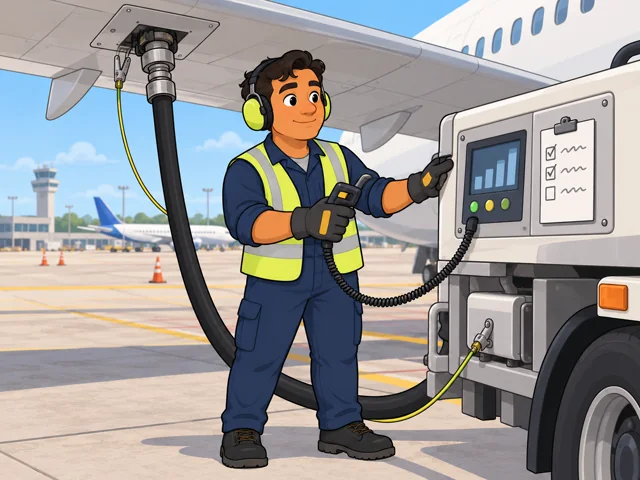
Run the fuel truck and hose
Operate the fueling truck and hose, and compare the amount loaded with the written fueling order.
Career profile
Aircraft service attendants fuel planes and handle other ground tasks between flights.
This is work done right beside the plane: moving hoses and confirming details while other crews get it ready to leave.
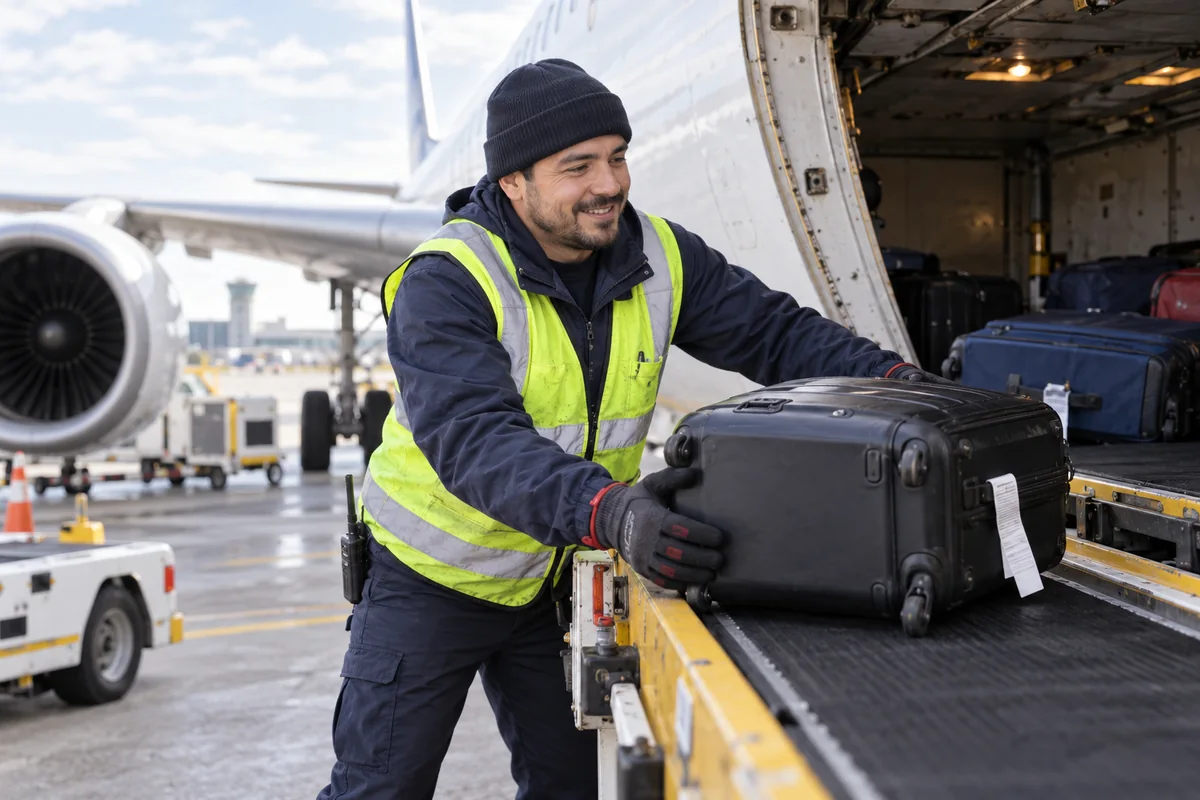
Operate the fueling truck and hose, and compare the amount loaded with the written fueling order.
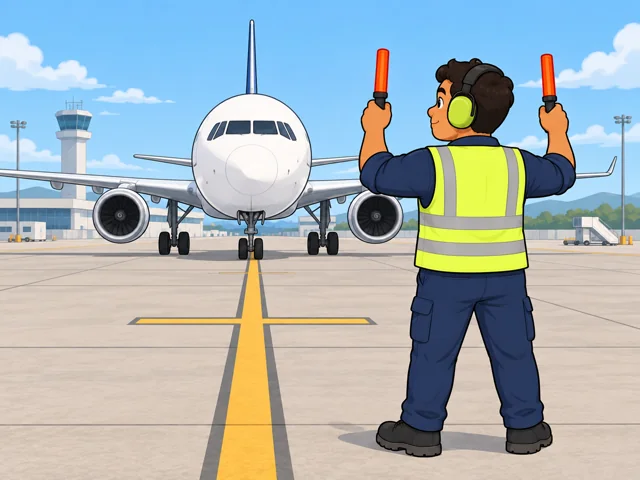
Guide the pilot with standard hand signals as the plane rolls into its parking spot.
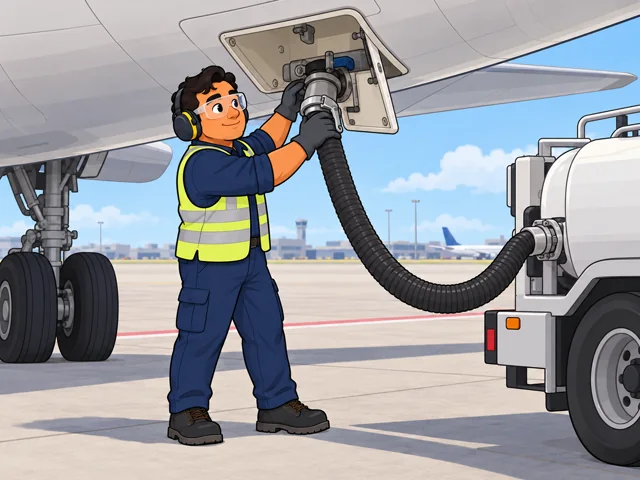
In certain positions, you fill the plane's drinking water tanks and drain its toilet systems.
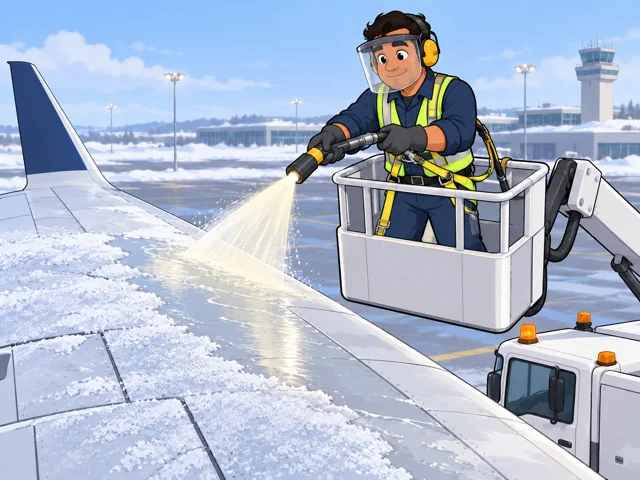
On a de-icing team, you spray the plane's outer surfaces from a raised truck basket.
United States · 2025
United States · May 2025
United States · 2025–2035
Quick orientation
Typical entry preparation is a high school diploma or equivalent, followed by short-term on-the-job training.
National median pay, equivalent to $19.45 an hour.
About 4,000 openings a year are projected nationally, including replacement needs.
Fueling software can send orders to crews, track vehicles, and record deliveries, reducing paperwork.
You still operate the equipment and perform fuel-quality checks.
How much scheduling and recordkeeping becomes automatic—and how often crews must resolve exceptions—will depend on the systems each airport adopts.
Pay in context
The national midpoint is about $19.45 an hour. Treat it as a comparison point when reading offers.
In May 2025, median pay was $40,450 annually. The lowest-paid 10% earned $33,830 or less; the highest-paid 10% earned $57,610 or more. These are wage percentiles, not starting and experienced pay levels.
For historical context, May 2023 average annual pay was $41,090 in air transportation support services and $42,270 in scheduled air transportation. These are industry averages for this occupation, not current offers.
Employment is projected to grow 5.6% from 2025 to 2035, with about 4,000 openings annually from growth and replacement needs. That does not guarantee openings near you.
A high school diploma or equivalent is the usual starting point. Look for jobs that teach aircraft servicing at work.
After entry
This starts where the entry routes leave off: early work, growing capability, and advancement or specialization.
Build reliable habits during training: check equipment and complete service records accurately.
Become more confident with fuel-quality checks and the procedures different airlines require.
A lead fueler coordinates coworkers and trains newcomers while continuing hands-on fueling work.
Your work centers on fuel vehicles, quality checks, and airline-specific procedures, alongside other crews preparing departures.
You combine parking and fueling with direct contact with pilots and arriving customers. Hangar upkeep can also be part of the shift.
Try it
Make two fictional fuel tickets with an aircraft identifier, requested quantity, and delivered quantity. Put a mismatch on one. Compare them and write a clear message explaining what needs checking. Notice whether careful checking holds your attention.
Stay safe: Keep this a paper exercise; it is not aircraft-fueling training.