
Take fees and explain rules
Collect entry fees, check tickets, show people the way, and explain the rules and how to join in.
Career profile
Amusement and recreation attendants take fees and get visitors ready at rides, games and facilities.
Checking that a rider's harness is fastened and handing out bowling shoes serve one goal: people have fun while everything stays orderly.
Collect entry fees, check tickets, show people the way, and explain the rules and how to join in.
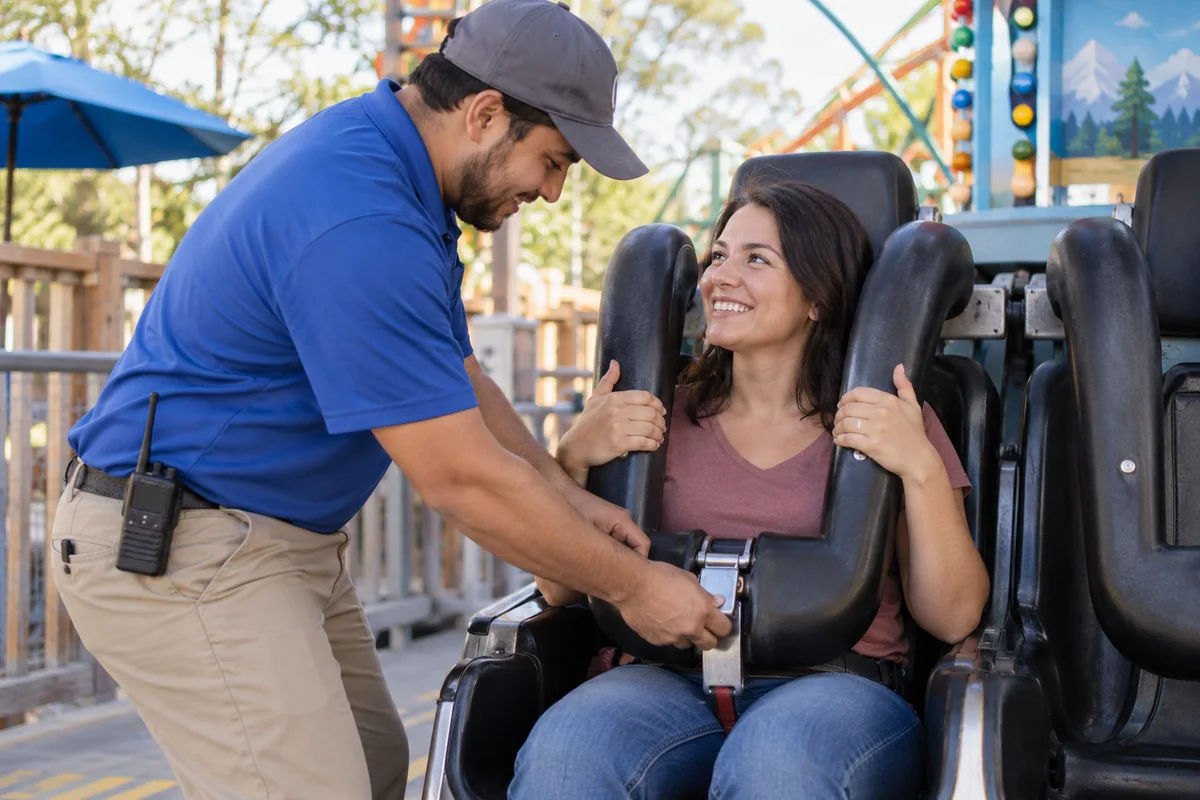
Compare each rider's height with the ride's requirement, help them into seats, and confirm every harness is fastened.
At a bowling center, hand out shoes, help each group choose a ball, and get their lane ready.
Watch riders through every run, report risky behavior to your supervisor, and sweep debris from around the ride.
United States · 2025
United States · May 2025
United States · 2025–2035
Quick orientation
Typically no formal educational credential or related experience; employers provide short-term training.
National median; $32,150 on an annualized basis.
About 100,400 openings a year are projected across the occupation.
Online lane reservations let bowling guests book ahead and can shorten check-in.
You still help people use the facility. On rides, attendants physically check restraints and help guests board.
How much check-in moves to self-service will vary by facility; it could change the balance between counter transactions and hands-on guest help.
Pay in context
The national median is $15.46 an hour, or $32,150 annualized. The hours you actually work matter when estimating your income.
The lowest-paid 10% earned $10.75 an hour or less; the highest-paid 10% earned $20.43 or more. These are wage percentiles, not starting and experienced pay rates.
Seasonal ride jobs may cover only part of the year. Compare the hourly rate, expected weekly hours and season length before treating an annualized wage as your budget.
Employment is projected to grow 3.7% from 2025 to 2035, with about 100,400 openings annually. Openings include replacing workers who leave, not just newly created jobs.
You can usually enter through employment and learn at the facility. A college program is not the typical entry requirement.
After entry
This starts where the entry routes leave off: early work, growing capability, and advancement or specialization.
Learn the opening routine and emergency procedures until you can explain what happens next without guessing.
Build confidence giving clear directions and helping nervous guests while keeping every restraint and eligibility check consistent.
With experience, look toward lead or supervisor roles. Moving into park services is another possible route to leadership; advancement may involve changing departments.
You work around moving equipment and waiting guests, using control panels and hand signals. Weather exposure and repeated loading cycles shape the shift.
Indoor shifts mix counter service with shoe issue, lane setup and cleaning. Evening and weekend groups bring interruptions, and reservations help organize lane use.
Try it
Choose a posted bowling-center or amusement-ride rule online. Explain it aloud to a friend, then answer a pretend guest who asks for an exception. Notice whether you can stay clear, patient and firm.
Stay safe: Keep this a conversation exercise; do not operate equipment or test safety restraints.