

Review allergies and past illnesses
Ask about allergies and past or current illnesses that could change the anesthesia, and explain what comes next.
Career profile
Anesthesiologist assistants give anesthetic drugs and watch how patients respond throughout an operation or procedure.
Curious about lungs, blood flow and how drugs act in the body? This job puts that curiosity beside surgery, from health history to waking up.

Ask about allergies and past or current illnesses that could change the anesthesia, and explain what comes next.
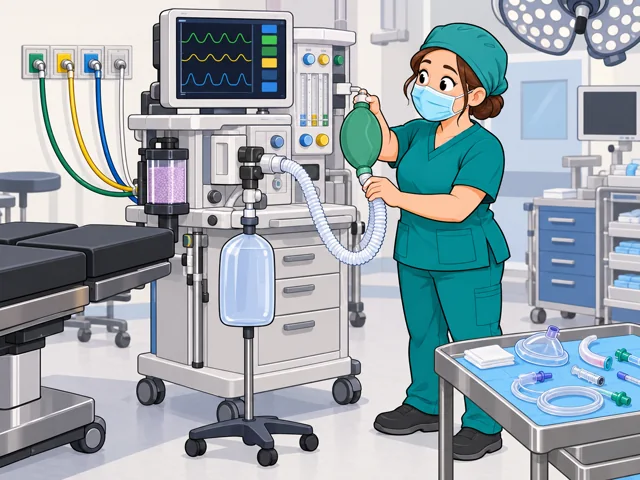
Make sure supplies are stocked and medical gas is on hand before the procedure starts.
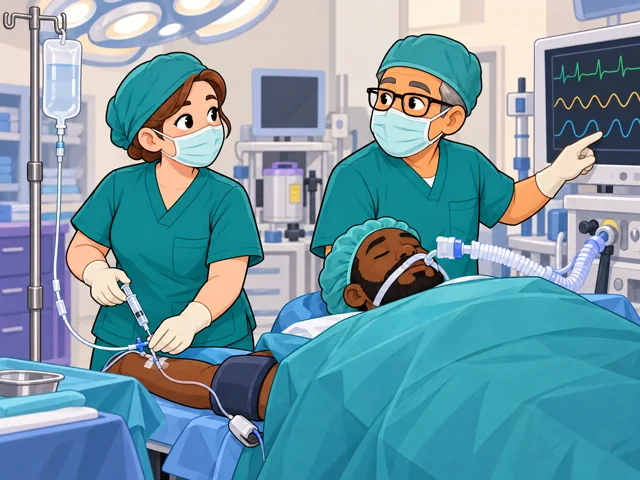
Give anesthetic drugs, and if readings shift, assess the patient and plan the next move with the anesthesiologist.

Watch and record how the patient wakes, pain control included, and keep the recovery team informed.
United States
Compare location-specific salary ranges and the hours they cover.
Look for openings in places where you can obtain practice authorization.
Quick orientation
Complete premedical prerequisites, then graduate anesthesia education with clinical training.
Compare location-specific salary ranges and the hours they cover.
Look for openings in places where you can obtain practice authorization.
Electronic records organize patient information, while monitors track changes in the body throughout anesthesia.
You still examine the patient, recognize misleading readings, and communicate what needs attention.
Researchers are testing ways to adjust anesthesia automatically using brain signals. How broadly those systems can handle different patients and procedures remains uncertain.
Pay in context
Compare salary with the schedule, extra-shift pay, and benefits attached to it.
UCHealth advertises $232,960–$305,427 a year for full-time work in Colorado Springs, depending on relevant experience. That is roughly $112–$147 an hour when divided by 2,080 hours—not an advertised hourly rate. Evening and weekend stipends are separate. This is a local salary range, not a national median.
Current recruitment includes a Colorado hospital-system role accepting newly qualified applicants and a North Carolina surgery-center role requiring five years of experience. Check whether an opening fits your stage of practice.
Both starting points lead to the same graduate anesthesia training and certification process.
After entry
This starts where the entry routes leave off: early work, growing capability, and advancement or specialization. This path also has a credential or licensing boundary; see the requirements and limits.
Learn your workplace's anesthesia machines, patient records, and emergency routines so you can use your training reliably in that setting.
Build confidence with different operations and patient needs as your role allows. Keep up with continuing education and certification assessments.
Develop expertise in areas such as cardiac anesthesia, teach students in clinical placements, or pursue a chief anesthetist role.
Your cases may range from spine and vascular surgery to obstetrics. Some teams cover trauma facilities and use long shifts with evening or weekend coverage.
A center may focus mainly on orthopedic procedures or offer several surgical specialties. Some anesthesia practices move you among multiple centers, so ask which locations you would cover.
Try it
Make a paper checklist for an imaginary patient's anesthesia visit: questions about health history on one side, body functions to watch during a procedure on the other. Notice whether connecting the patient's story with breathing and circulation makes you curious to learn more.
Stay safe: Keep this a paper exercise; do not practice medication delivery or airway procedures.