
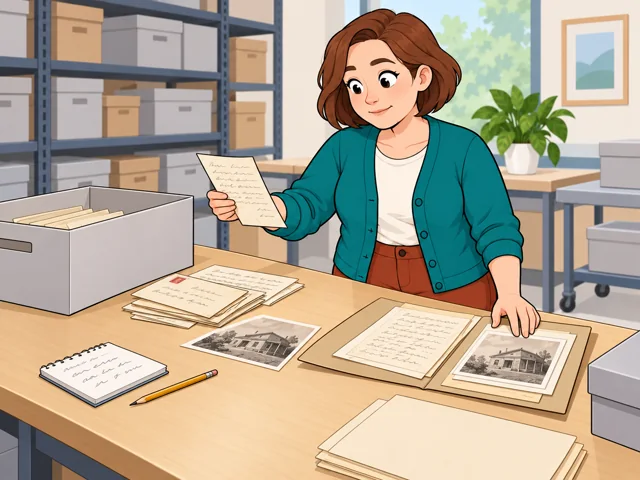
Judge a collection's lasting worth
Look at who created the records, what activities or events they cover, and whether the proof survives elsewhere.
Career profile
Archivists keep old records usable, from handwritten letters to computer files.
A shelved box of documents isn't finished. Archivists identify its maker, pick what to keep long term, and plan how later readers find its facts.
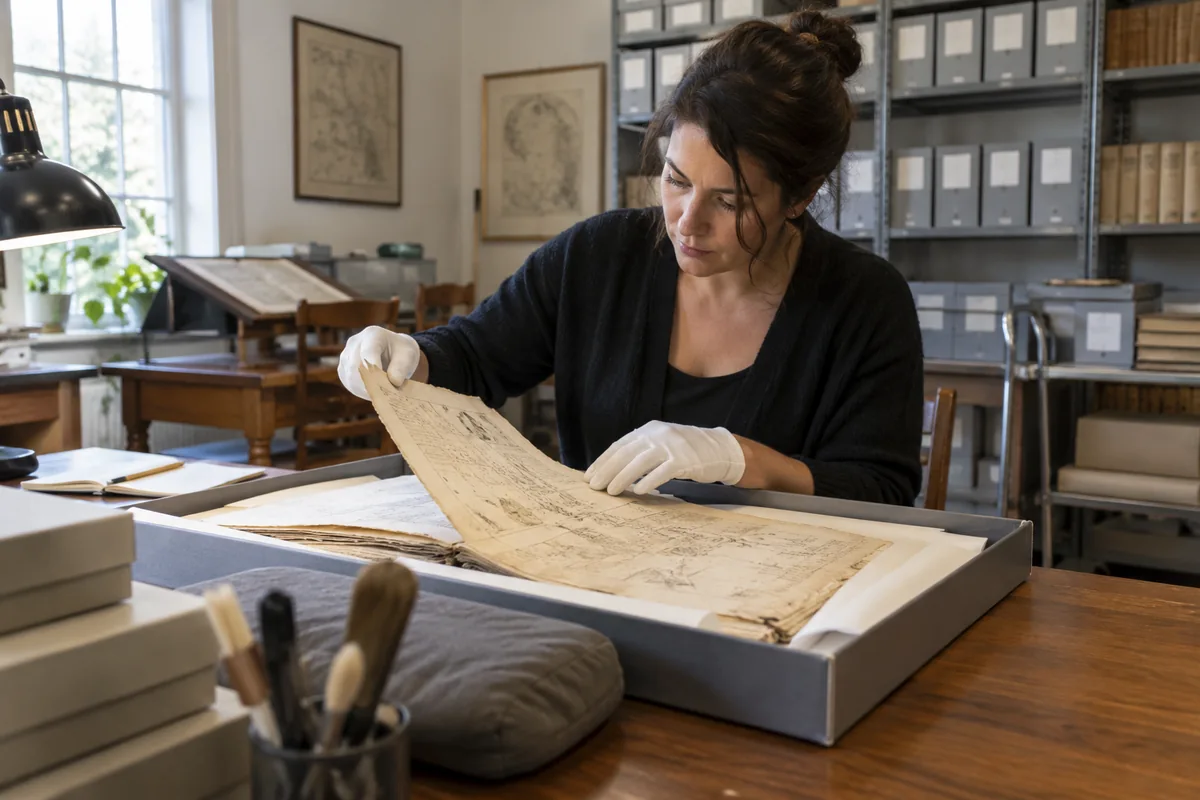
Look at who created the records, what activities or events they cover, and whether the proof survives elsewhere.
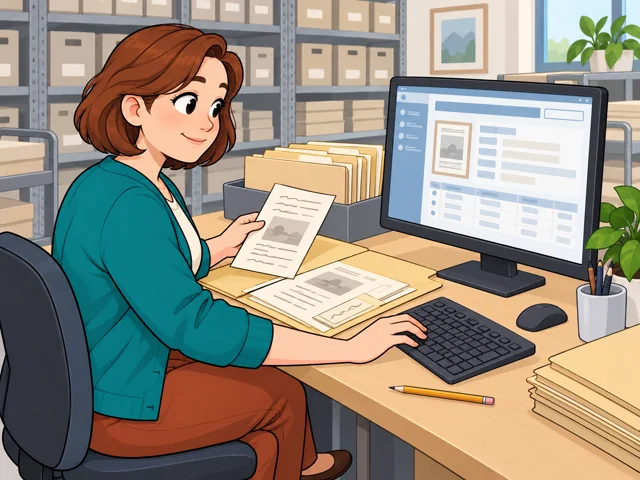
Put the records in order and enter folder dates, topics, and summaries in a database researchers search.

Ask what they want to prove or confirm, suggest fitting records, and switch collections if the first fails.
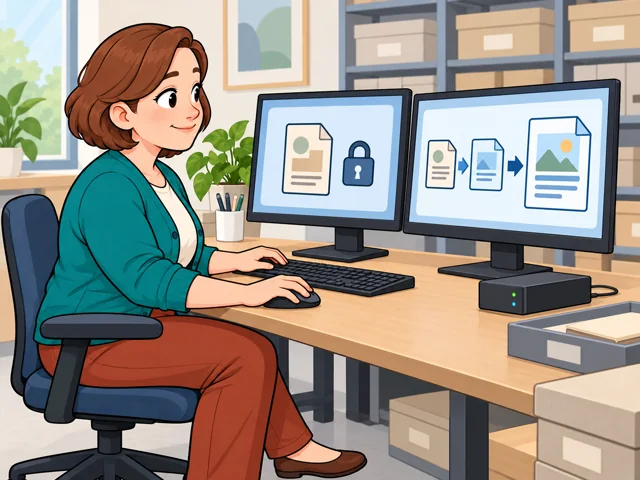
Leave digital files in their original format and make separate access copies if researchers need another way in.
United States
United States · May 2025
United States · 2025–2035
Quick orientation
Relevant graduate study and hands-on archival experience are common preparation.
National median for archivists, equivalent to $31.03 an hour.
About 1,100 openings a year nationally, including openings to replace workers who leave.
Software can turn scanned handwriting or typing into searchable text. This is optical character recognition, or OCR; the National Archives uses it in its catalog.
You still weigh a record’s origins, uniqueness, and likely research value when assessing what belongs in an archive.
How much transcription checking software can remove remains uncertain: machine text can contain errors, so faster searching does not automatically mean less review.
Pay in context
Use the national figures as a comparison point when reading job offers, not as a starting-salary promise.
Archivists had a median annual wage of $64,550, with an hourly equivalent of $31.03.
The 10th-percentile wage was $39,970 and the 90th-percentile wage was $110,550 a year. These mark the lower and upper ends of the middle 80% of wages, not beginner and senior salaries.
Employment is projected to grow 3.4%, with about 1,100 openings per year on average. That includes replacing people who change occupations or leave the workforce, not just newly created jobs.
Graduate study is the usual route, but federal archivist jobs also have a defined undergraduate qualification route.
After entry
This starts where the entry routes leave off: early work, growing capability, and advancement or specialization.
Learn your archive’s collections and description practices while organizing records and answering routine requests.
Learn to preserve files in their original formats and choose access copies that work for researchers and the archive’s resources.
Lead collection work and staff, or specialize in a historical subject or archival technology.
In appraisal roles, you work with agency staff on which government records merit permanent preservation. Recommendations move through formal decisions. Government archivists generally work regular business hours.
You connect campus offices that create records with students, faculty, and staff who need them later. The collection can mix paper records with files transferred from university departments.
Try it
Choose ten copies of your own school or club records. Write what the collection documents, which items you would preserve and why, and a short guide someone else could use to find them. Notice whether deciding what matters and explaining the context interests you.
Stay safe: Use copies, keep private information out, and do not discard originals.