
Career profile

Barber

Barbers cut hair, trim and shape beards, and give shaves.

A customer says what they want, and your job is to turn that into a haircut they can check in the mirror.
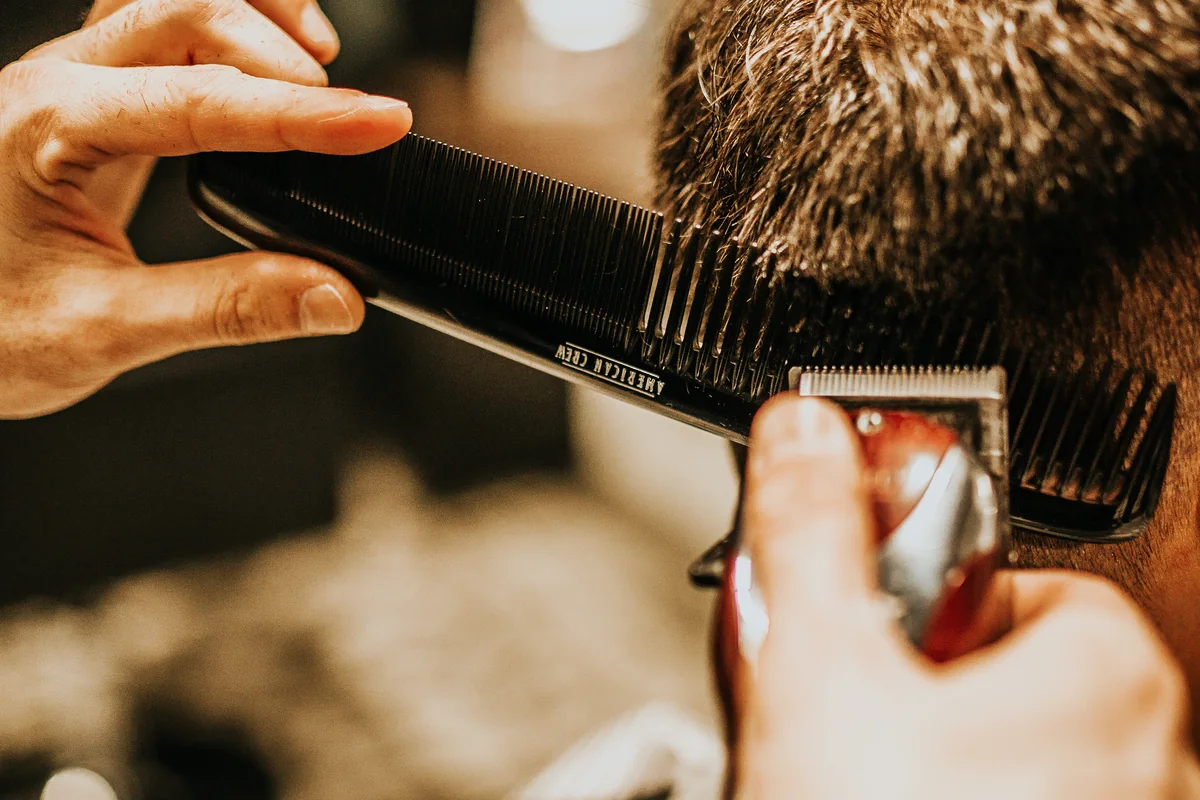
A barber trims a client’s hair with a comb and clippers.
Nenad Stojkovic / Wikimedia Commons. CC BY 2.0

A day in the life

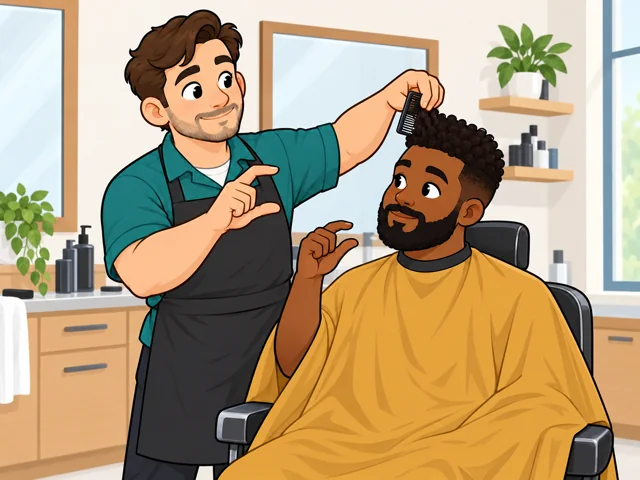
1A barber holds up a section of a seated client's hair while they use finger gestures to agree on how much to cut.

Ask what "shorter" means

Pin down the haircut by asking what "shorter" means before deciding how much to take off.
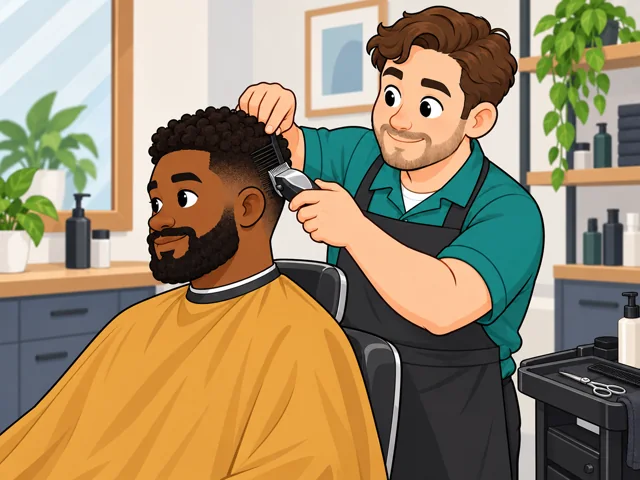
2A barber uses clippers over a comb to blend the side of a client's haircut into the longer hair above.

Blend the sides into length

Work the sides with clippers, scissors and a comb until close-cut areas flow smoothly into longer hair.
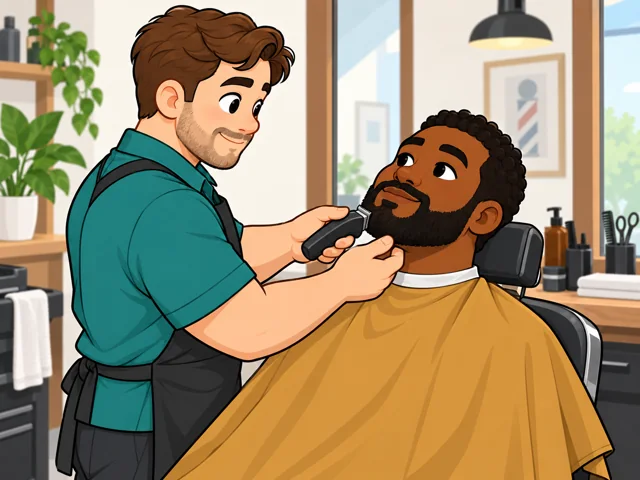
3A barber steadies a relaxed client's chin and trims the beard edge along the jaw.

Shape the beard they asked for

Trim beards and other facial hair to the requested style, using a razor when someone wants a shave.
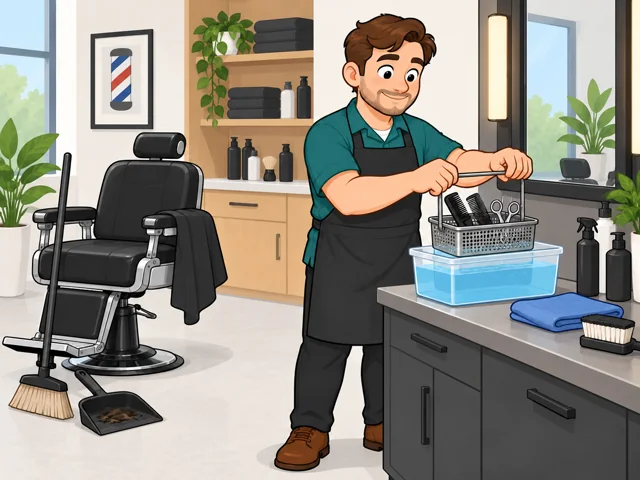
4A barber lowers cleaned tools into disinfectant beside an empty chair, with swept hair collected in a nearby dustpan.

Sweep up and disinfect tools

Sweep cut hair off the floor and wash and disinfect your tools before the next customer sits down.

Quick facts

Preparation

Barber training + state license

United States · 2025

Pay

$38,210/year

United States · May 2025

Outlook

3.3% projected growth

United States · 2025–2035

Quick orientation

Preparation, pay & outlook

Preparation

Barber training + state license

A certificate or other nondegree program is typical; approved routes depend on your state.

Geography
United States
Period
2025

Pay

$38,210/year

National employee median: $18.37/hour. Self-employed earnings are excluded.

Geography
United States
Period
May 2025

Outlook

3.3% projected growth

About 6,900 barber openings a year are projected nationwide, including replacement openings.

Geography
United States
Period
2025–2035

Fit, tradeoffs & changing tools

Things to weigh

  • Expect long stretches standing and schedules that may include evenings and weekends.
  • A dissatisfied client can make an appointment tense; you still need to listen and respond calmly.

Where AI may help

Booking software can accept appointments online and send automatic text or email reminders.

What people still lead

You still handle the consultation, cutting, and shaving.

What we can’t predict yet

How much client communication will become automated remains uncertain, especially when requests need back-and-forth clarification.

Pay in context

Earnings

Use employee wages as a starting point. They do not measure the income of a barber running a business.

The middle and the spread

The median was $38,210 a year, or $18.37 an hour. The 10th–90th percentile range was $28,600–$76,460 annually, or $13.75–$36.76 hourly. These are wage percentiles, not beginner and expert rates. Annual figures assume 2,080 paid hours.

Geography
United States
Period
May 2025
Pay basis
Employee gross wages; includes tips and commissions; excludes self-employment

Pay in personal care businesses

Barbers employed in personal care services, including barbershops, had a median wage of $18.26 an hour.

Geography
United States
Period
May 2025
Pay basis
Industry median hourly employee wage

What reaches your pocket

Tips and commissions are already included in employee wage figures. If you rent a chair, customer payments must also cover business expenses such as rent and products. Compare the pay arrangement, hours, and expenses before judging an offer.

Geography
United States
Period
Not stated
Pay basis
Employee wages versus independent business receipts before expenses

Openings include replacements

Employment is projected to grow 3.3% from 2025 to 2035. The roughly 6,900 annual openings include replacing people who leave the occupation, so they are not all newly created jobs.

Geography
United States
Period
2025–2035
Pay basis
Employment projection, including self-employed barbers

Getting started

Complete an approved barber program

What the route involves
Combine classroom learning with hands-on practice. California, for example, requires 1,000 hours of approved school training.
What it can lead to
Completing approved training lets you pursue the licensing exam. In California, you must pass the written exam and receive the license before charging for services.
What to check
Training hours and admission requirements vary by state; verify that the program qualifies you for the barber license you want.

Enter an approved paid apprenticeship

California's program normally spans two years, with at least 3,200 work hours plus classes.Paid
What the route involves
Where offered, learn in a shop while taking classes. California apprentices work with a licensed trainer through an approved sponsor.
What it can lead to
Complete the required work and classes, then apply for the licensing exam. Passing California's written exam leads to a professional license.
What to check
California requires age 16 or older, 10th-grade education or equivalent, and an apprentice license before work begins. You may need to find your own trainer and shop; sponsor and equipment fees can apply.

States license barbers. Check your state's age, education, training, and exam rules before enrolling.

After entry

Career paths

This starts where the entry routes leave off: early work, growing capability, and advancement or specialization.

  1. Get established

    Build consistent cuts and record client preferences for return visits.

  2. Expand your techniques

    Use advanced classes to learn styles and techniques beyond your initial training.

  3. Manage or open a shop

    With experience, you could add staffing, supplies, and advertising to your responsibilities.

Where you can work

A shop where you're an employee

The owner may set your shifts and service prices. Ask how appointments, supplies, and pay are handled before accepting a job.

  • Indoors
  • Physical demands

A rented chair inside a shop

You share the setting but operate your own business. You typically choose prices and hours, buy products, and keep your own income and expense records.

  • Indoors
  • Physical demands

Try it

See whether the job clicks before you commit to the path.

Choose a haircut photo and ask a friend to describe what they like about it. Sketch the desired length on the top, sides, and neckline, then check whether your sketch matches their request. Notice whether you enjoy turning vague preferences into precise choices.

Stay safe: Keep this to conversation and drawing; no cutting or shaving is needed.

Explore more careers

Sources

  1. O*NET OnLine. Barbers — 39-5011.00. Accessed 2026-10-03.
  2. U.S. Bureau of Labor Statistics. Occupational projections and worker characteristics, 2025–35. Accessed 2026-10-03.
  3. O*NET OnLine / U.S. Bureau of Labor Statistics. National Wages: Barbers — 39-5011.00. Accessed 2026-10-03.
  4. U.S. Bureau of Labor Statistics. Occupational Employment and Wage Statistics: Concepts. Accessed 2026-10-03.
  5. U.S. Bureau of Labor Statistics. Barbers, Hairstylists, and Cosmetologists. Accessed 2026-10-03.
  6. California Board of Barbering and Cosmetology. Frequently Asked Questions. Accessed 2026-10-03.
  7. California Board of Barbering and Cosmetology. Apprenticeship. Accessed 2026-10-03.
  8. Square. Appointment Reminder Software. Accessed 2026-10-03.
  9. Internal Revenue Service. Publication 4902: Tax Tips for the Cosmetology & Barber Industry. Accessed 2026-10-03.

Your message goes to the Great Jobs team. How we use your information