
Career profile

Boilermaker

Boilermakers build and fix boilers, storage tanks and other containers for pressurized liquid or gas.

If you like turning a plan on paper into parts that fit together, this job does it with huge industrial equipment.
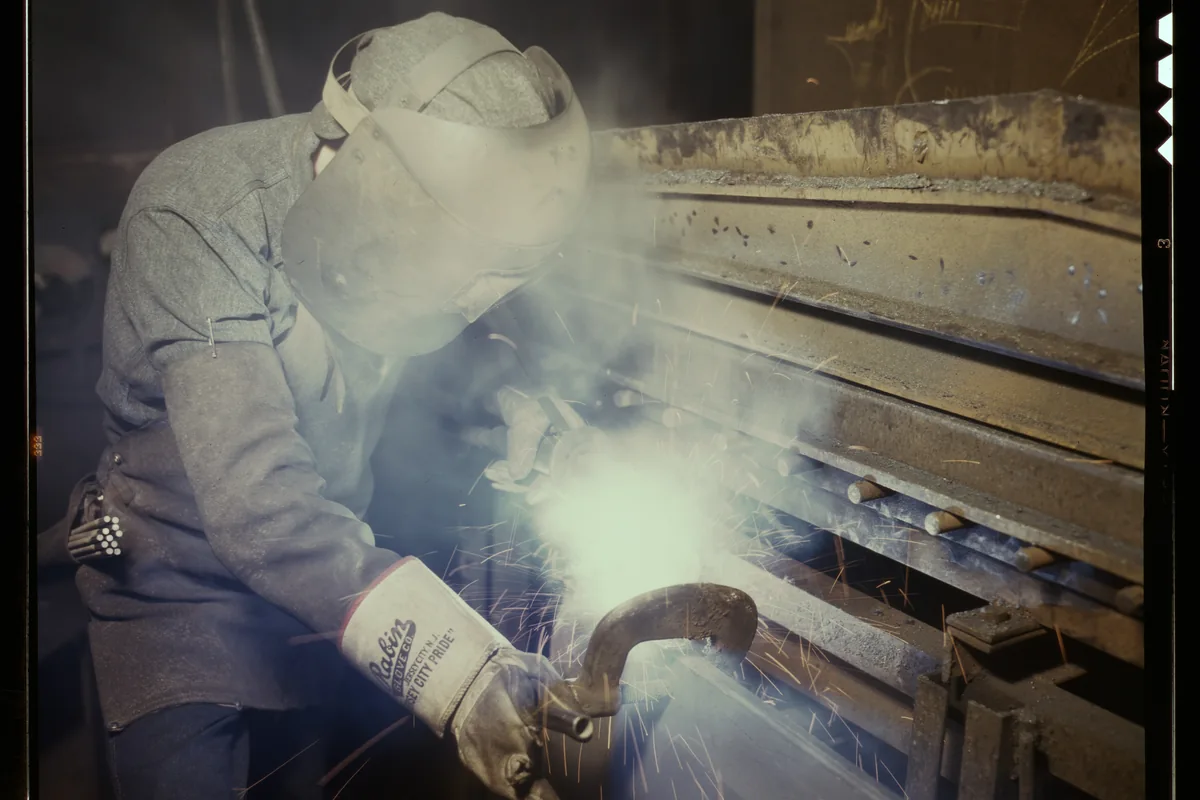
Boilermaker welding a steel boiler section.
Palmer, Alfred T., photographer / Wikimedia Commons, Public domain

A day in the life

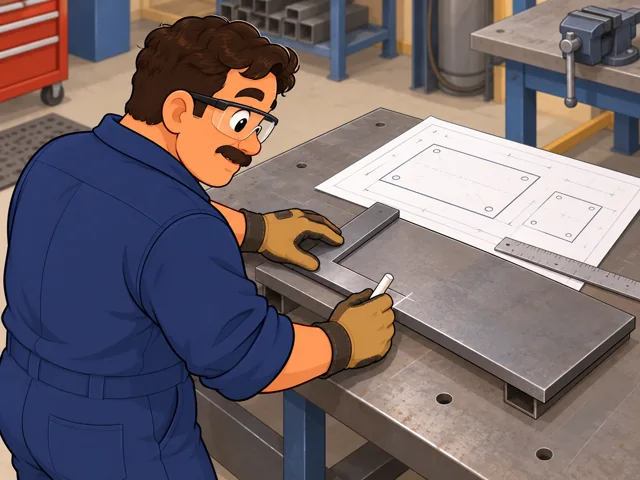
1A boilermaker checks a technical drawing while using a square and soapstone to mark a reference point on a steel plate.

Mark out the steel

Reading the blueprint, you use an L-shaped square to mark the steel where each plate should sit.
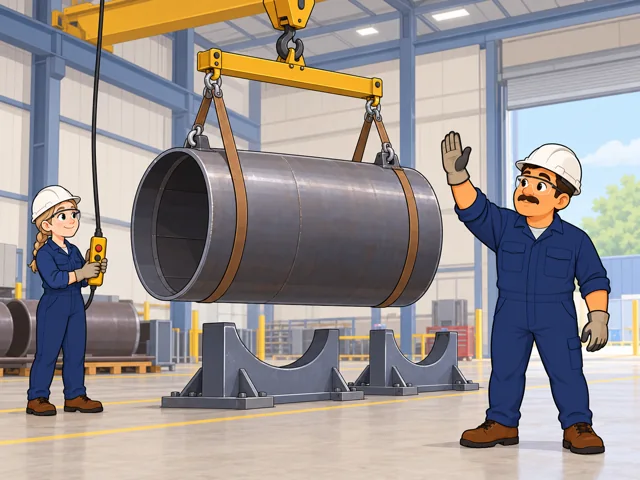
2A boilermaker signals a woman operating an overhead crane as a rigged boiler section moves toward its supports, with both workers clear of the suspended load.

Move a heavy section

You hook a boiler section to the crane, then signal the operator as it moves into place.
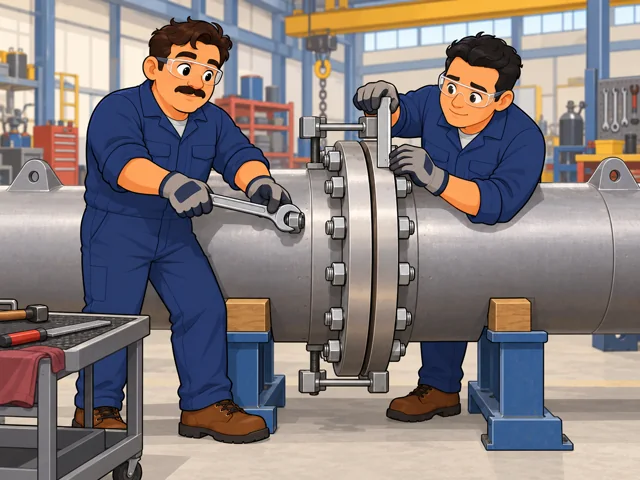
3A boilermaker tightens a flange bolt while a male coworker checks the alignment of two supported vessel sections.

Fit and join the pieces

You trim rough edges so pieces meet properly, line them up, then bolt or weld them together.
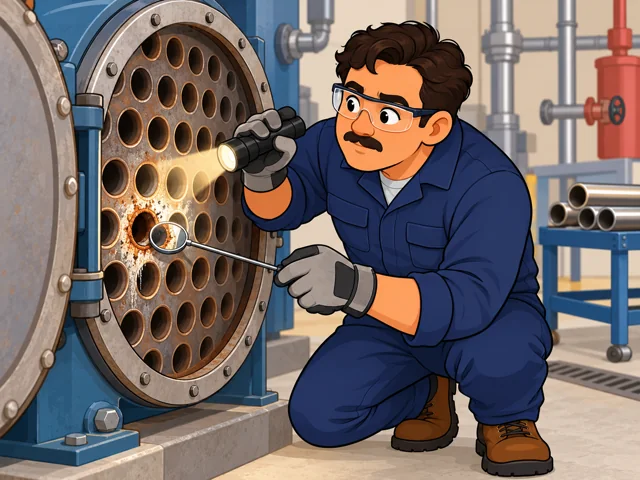
4A boilermaker uses a flashlight and inspection mirror to examine a corroded tube end inside an opened boiler.

Track down failing parts

You check valves, tubes and walls for leaks or damage, then fix or replace the bad parts.

Quick facts

Preparation

High school + apprenticeship

United States

Pay

$76,410/year

United States · May 2025

Outlook

1.8% decline

United States · 2025–2035

Quick orientation

Preparation, pay & outlook

Preparation

High school + apprenticeship

A diploma or equivalent is the usual starting point; you learn the trade through work and classes.

Geography
United States
Period
Not applicable

Pay

$76,410/year

National median employee wage, equivalent to $36.74 an hour.

Geography
United States
Period
May 2025

Outlook

1.8% decline

About 700 openings a year are projected nationally despite declining employment.

Geography
United States
Period
2025–2035

Fit, tradeoffs & changing tools

Things to weigh

  • The work can put you in cramped, noisy spaces or outdoors at height. Protective equipment is part of the day.
  • Field contracts can mean extended time away from home and gaps between jobs.

Where AI may help

Automatic welding equipment can join boiler sections; some assembly already uses it.

What people still lead

People still fit parts and repair existing equipment by hand.

What we can’t predict yet

How much welding equipment can take over will depend partly on whether it can reach and handle the particular joint.

Pay in context

Earnings

Use the national median as a comparison point, not an apprentice pay offer.

The national range

The median was $76,410 a year, or $36.74 an hour. The 10th-to-90th-percentile spread was $50,490–$110,370 annually, or $24.28–$53.06 hourly. These describe the wage distribution, not starting and senior rates.

Geography
United States
Period
May 2025
Pay basis
BLS employee wage estimates for Boilermakers, SOC 47-2011; annual and hourly figures

Hours matter

Shutdown work can bring overtime, while a finished contract can leave a gap in employment. Both affect what you earn over a year.

Geography
United States
Period
Not stated
Pay basis
Qualitative annual-earnings context for field construction and repair

Openings despite a decline

Employment is projected to fall 1.8% from 2025 to 2035, with about 700 openings annually as workers leave the occupation or workforce.

Geography
United States
Period
2025–2035
Pay basis
Employment projection and average annual openings, not compensation

Getting started

Learn through a paid apprenticeship

The national union program spans four years.Paid
What the route involves
Combine supervised field work with classes in welding, drawings, and lifting equipment. The Boilermakers National Apprenticeship Program requires at least 6,000 field construction hours and 576 classroom hours.
What it can lead to
Completing the program leads to journey-level work as a field-construction boilermaker.
What to check
For this program, you must be at least 18 and have a high school diploma or equivalent. Selection prioritizes welding qualifications; meeting the minimums does not guarantee a place.

Bring experience from another trade

What the route involves
Build relevant experience in welding, machining, or rigging, then ask a Boilermakers union local to assess your skills for field-construction work.
What it can lead to
Experienced construction workers may qualify for jobs where union boilermakers work. Acceptance depends on your skills; related experience alone is not a job offer.

Apprenticeship is the usual route. Existing construction-trade skills can also support entry.

After entry

Career paths

This starts where the entry routes leave off: early work, growing capability, and advancement or specialization.

  1. Get established

    Build reliable habits in reading drawings, laying out parts, and using the crew’s lifting signals.

  2. Handle more complex lifts

    Deepen your rigging skills: recognize worn lifting gear, read capacity charts, and understand how a load’s weight is distributed.

  3. Move toward crew leadership

    Field-leadership training can support a move into supervising work. With substantial supervisory experience, project-management training offers a further direction.

Where you can work

Large-vessel installation sites

You work around cranes and staged steel sections as a vessel takes shape. Outdoor conditions and work at height can shape the day.

  • Field work
  • Outdoors
  • Physical demands
  • Safety-sensitive

Industrial shutdown projects

At refineries and other process plants, you join several trades repairing existing equipment. Access constraints and the planned restart make coordination especially important.

  • Field work
  • Physical demands
  • Safety-sensitive

Try it

See whether the job clicks before you commit to the path.

Sketch a paper cylinder with two end caps and a marked access opening. Give it dimensions, then use paper, a ruler, and tape to build it. Notice whether you enjoy working out where the seams and parts must meet.

Stay safe: Keep this a paper model; do not heat or pressurize it.

Explore more careers

Sources

  1. O*NET OnLine. 47-2011.00 — Boilermakers. Accessed 2026-10-09.
  2. U.S. Bureau of Labor Statistics. Occupational Outlook Handbook — Boilermakers. Accessed 2026-10-09.
  3. U.S. Bureau of Labor Statistics. May 2025 Occupational Employment and Wage Statistics — national estimates; pinned SOC 47-2011 binding. Accessed 2026-09-29.
  4. U.S. Bureau of Labor Statistics. Employment Projections Table 1.2, 2025–2035; pinned SOC 47-2011 binding. Accessed 2026-09-29.
  5. Boilermakers National Apprenticeship Program. How to Apply. Accessed 2026-10-09.
  6. Boilermakers National Apprenticeship Program. What We Do. Accessed 2026-10-09.
  7. International Brotherhood of Boilermakers. Apprenticeship Program. Accessed 2026-10-09.
  8. International Brotherhood of Boilermakers. How to Become a Boilermaker. Accessed 2026-10-09.
  9. MOST Trust. Training Programs. Accessed 2026-10-09.
  10. Babcock & Wilcox. Turnaround Services. Accessed 2026-10-09.

Your message goes to the Great Jobs team. How we use your information