
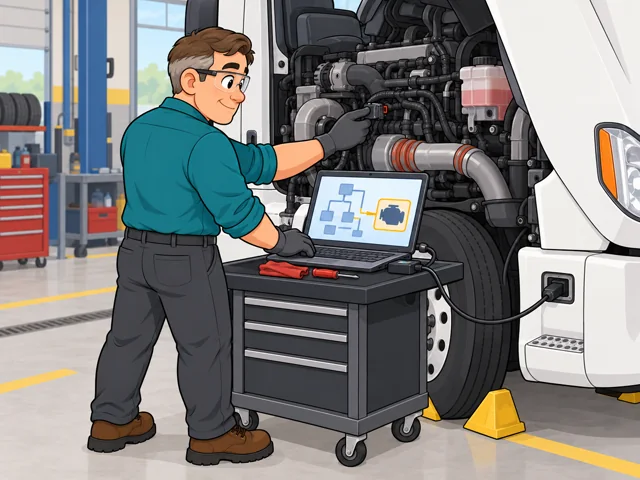
Run engine diagnostics on a laptop
Plug in a diagnostic computer, read stored fault codes, then follow that engine's troubleshooting steps to the cause.
Career profile
Bus and truck mechanics diagnose and repair engine, brake and electrical problems on heavy vehicles.
Curious why machines stop working right? Take a truck that has lost power: you hook up test gear, find the cause and repair what failed.
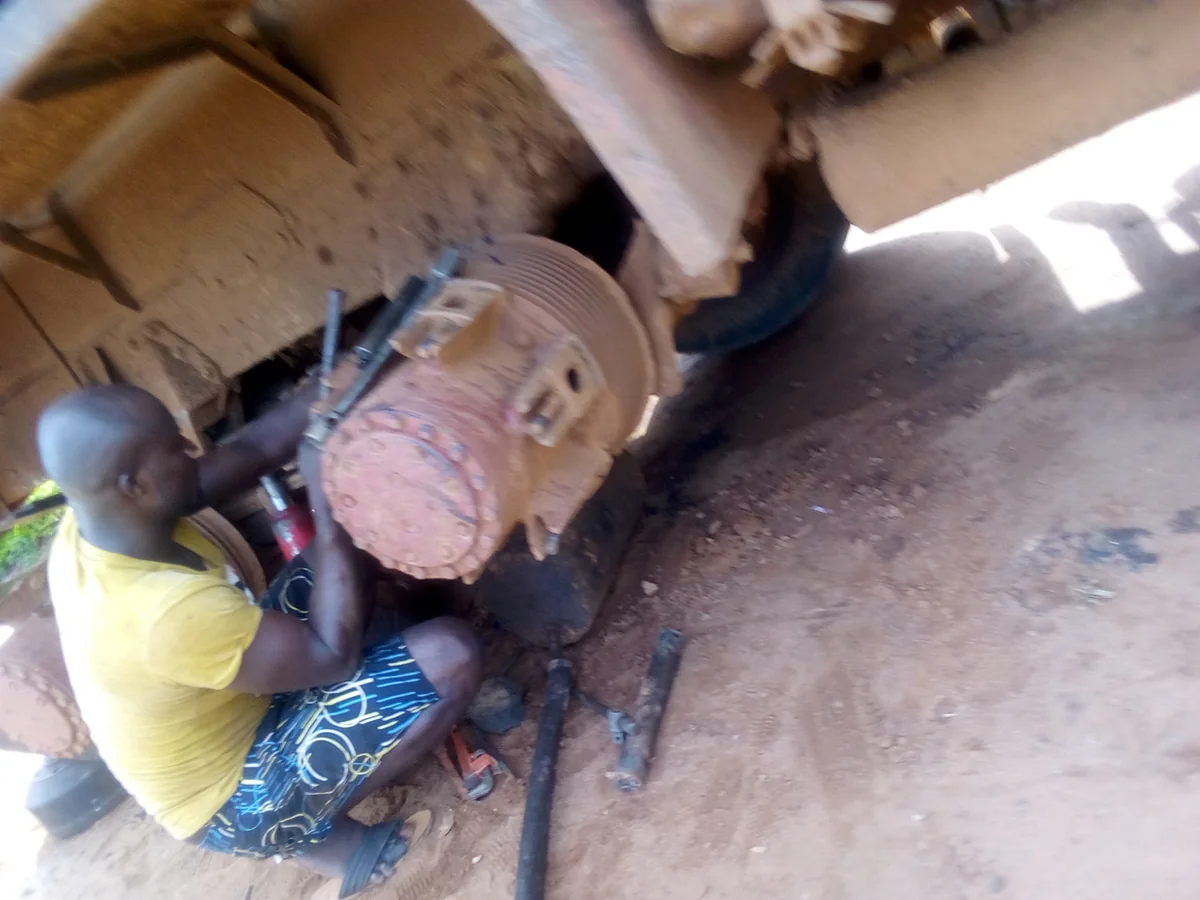
Plug in a diagnostic computer, read stored fault codes, then follow that engine's troubleshooting steps to the cause.
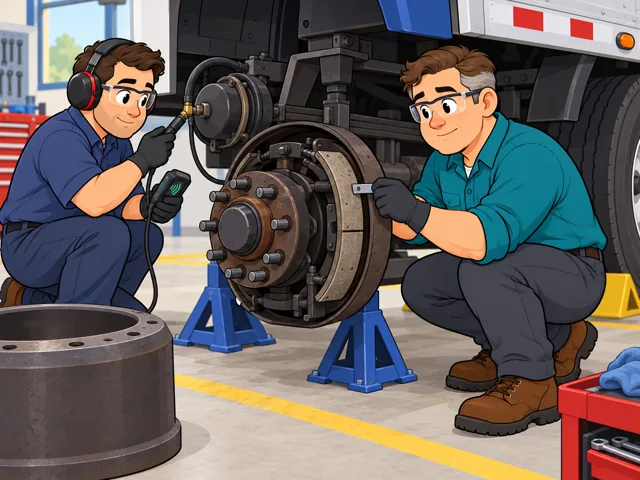
Listen for leaking air and measure lining thickness to see which brake parts need repair or replacement.
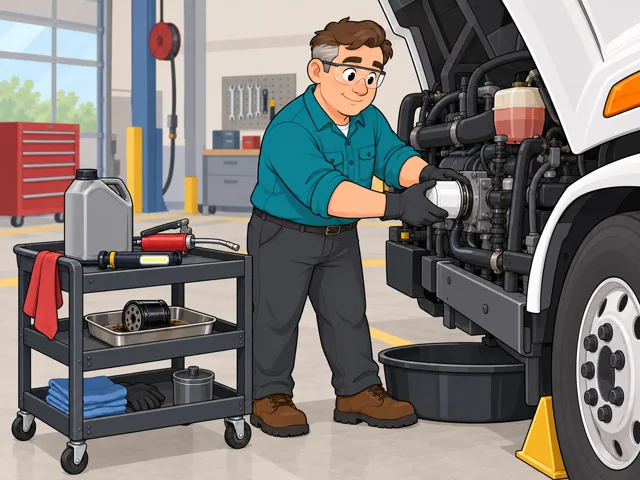
At a planned service, change oil and filters, grease the fittings and look for worn or loose parts.
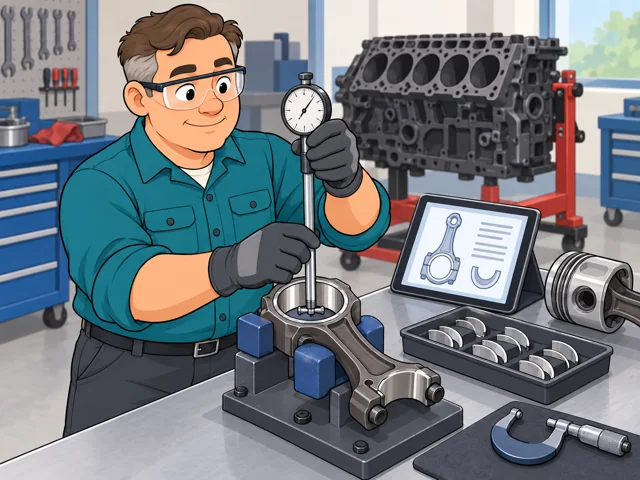
Some jobs include teardowns, where you swap worn bearings or pistons and measure clearances against factory specs.
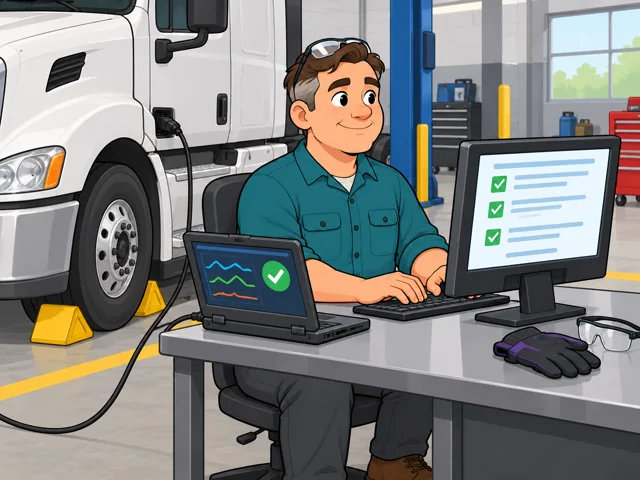
First confirm the original complaint is gone, then record the repair in the shop's electronic work-order system.
United States · 2025
United States · May 2025
United States · 2025–2035
Quick orientation
Expect substantial learning on the job.
National median, equivalent to $29.70/hour.
About 24,400 openings annually, including replacement needs.
Engine software can display fault information and guide troubleshooting. On Cummins engines, it can also bring up wiring and sensor-location diagrams.
You inspect the actual parts, interpret measurements, and carry out the repair.
As fleets add electric vehicles, the amount of diesel-engine work may shrink. How quickly your shop's vehicle mix changes remains uncertain.
Pay in context
The national median is $61,770 a year, or $29.70 an hour. Half earn more and half earn less.
The lowest-paid 10% earned below $44,530; the highest-paid 10% earned above $88,740. These are wage percentiles, not starting and senior salaries.
Annual medians were $71,460 in local government, excluding education and hospitals; $60,330 in automotive repair and maintenance; and $59,820 in truck transportation.
Employment is projected to grow 3.6%. The estimated 24,400 annual openings also include people changing occupations or leaving the workforce.
Most employers require high school completion. Some also require industry certification; test-driving large vehicles may require a commercial driver's license.
After entry
This starts where the entry routes leave off: early work, growing capability, and advancement or specialization.
Build accuracy in inspections, lubrication, brake work, and tire repairs.
Develop electrical troubleshooting skills and tackle steering, suspension, and driveline repairs with greater independence.
Build toward major engine and transmission rebuilds. Experienced mechanics may also mentor newer technicians.
Work in a fixed shop with jacks, hoists, and repair bays. Some shops operate around the clock, so your shift may extend beyond daytime hours.
Travel in a service vehicle to work on customers' trucks. Some roles combine repairs with arranging visits and discussing estimates directly with the customer.
Try it
Find a manufacturer's truck-engine troubleshooting diagram. Pick one symptom and sketch how different test results would change your next check. Notice whether tracing the cause makes you want to keep going.
Stay safe: Keep this a paper exercise; do not run tests on a vehicle.