
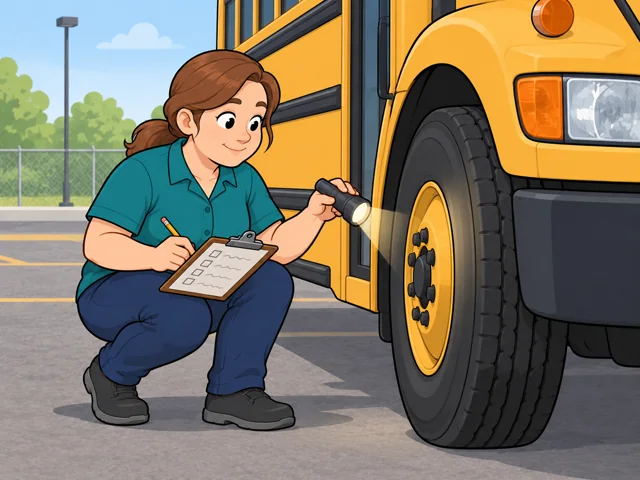
Inspect the bus before leaving
Look over brakes, lights, tires and other safety gear, and write down problems for the maintenance crew.
Career profile
School bus drivers carry kids between home and school, watching traffic and children at stops.
A love of driving and real patience with children suit this job, and every pickup takes your full attention.
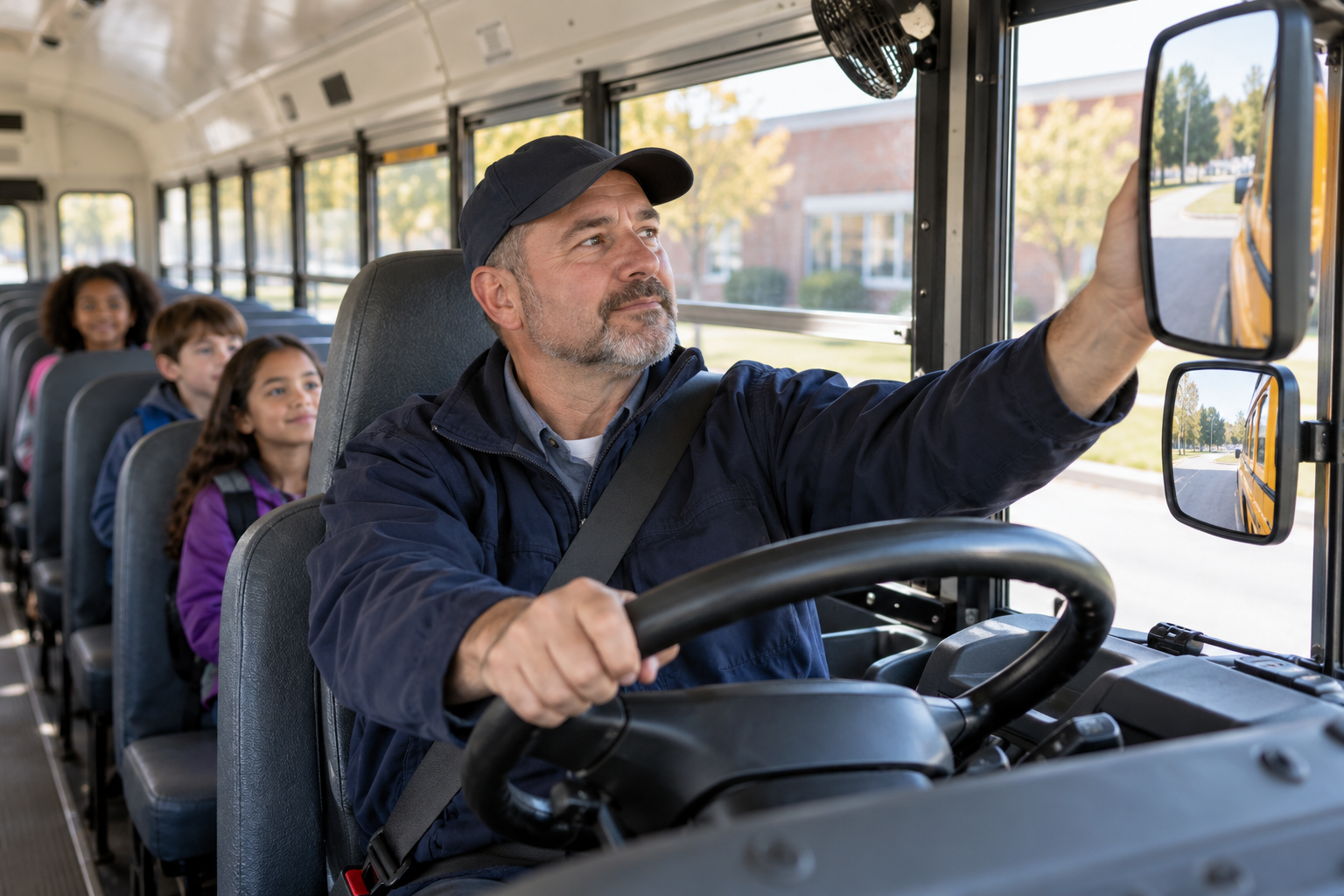
Look over brakes, lights, tires and other safety gear, and write down problems for the maintenance crew.
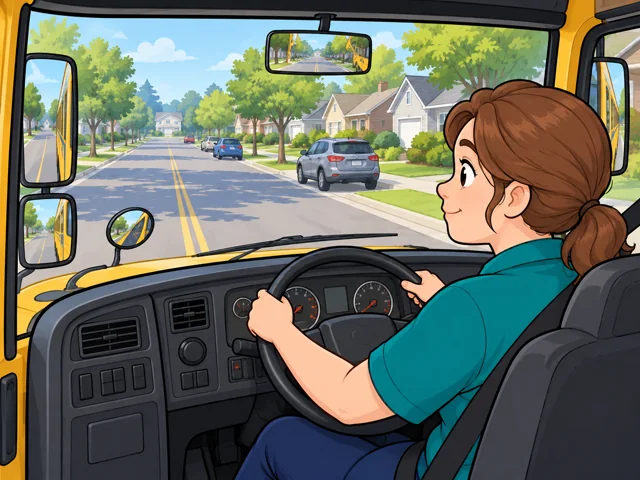
Steer a big bus along your set route through neighborhood streets, collecting students right on time.
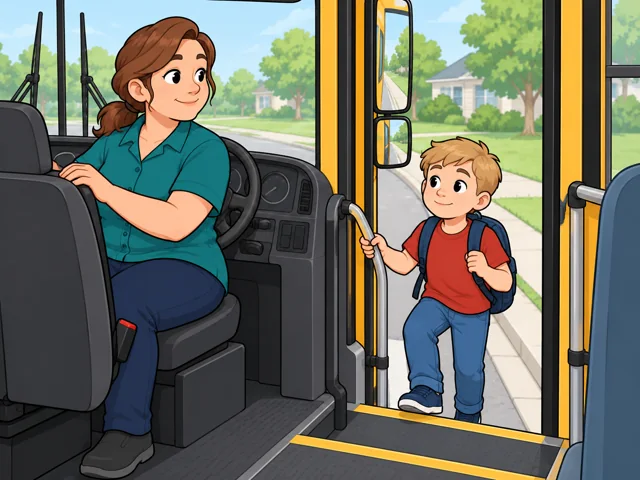
Use your mirrors to track students as they board, step off and cross the street near the bus.
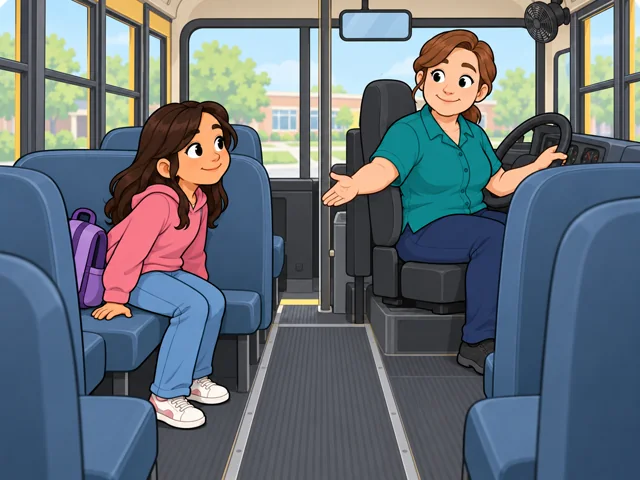
When a student stands in the aisle, plainly tell them to sit, and report misbehavior to school staff.
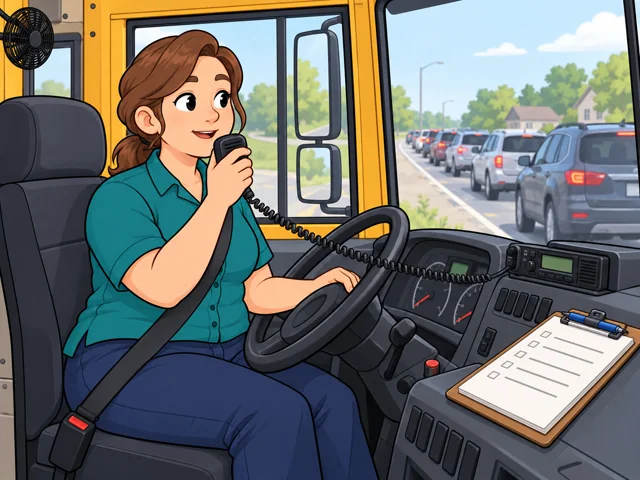
If traffic holds you up, call in on the two-way radio, and log every trip's hours and miles.
United States · 2025 entry classification; current licensing requirements
United States · May 2025
United States · 2025–2035
Quick orientation
A high school diploma or equivalent is typical. You also need a commercial driver's license (CDL) appropriate to the bus and its required endorsements.
Equivalent to the $47,920 annualized median. A school-year or part-time schedule can mean lower yearly earnings.
School bus driver employment is projected to change little, with about 56,500 openings annually.
Some fleets use tablets for inspection records and navigation, plus cameras that sound alerts about possible hazards.
You still judge what is happening around the bus and respond to children who need help.
How much future systems can take over hazard detection and driving—and how much checking they will require from you—remains uncertain.
Pay in context
Compare the hourly rate and paid calendar together.
The median was $47,920 annually, about $23.04 an hour. The lowest tenth earned below $29,240 and the highest tenth above $65,730 on an annualized basis. These are wage percentiles, not starting and senior pay.
Annualized medians were $50,040 in school and employee bus transportation and $45,830 in local public elementary and secondary schools.
Annual estimates assume 2,080 hours. School routes often provide fewer. Ask about guaranteed hours, paid breaks, summer work, and benefits before comparing offers.
Employment is projected to grow 0.7% during 2025–35, with 56,500 openings per year on average. Openings include replacing departing workers, not just adding jobs.
Choose employer training or a qualifying training provider. Both lead toward the license and endorsements needed for the bus.
After entry
This starts where the entry routes leave off: early work, growing capability, and advancement or specialization. This path also has a credential or licensing boundary; see the requirements and limits.
Learn your stops and timing, and build reliable inspection and reporting habits.
Develop skills for students who need boarding assistance, wheelchair securement, or individual evacuation plans.
Some districts offer floater roles covering different buses and routes, then opportunities to become a bus driver supervisor.
Your day follows school bell times, often with separate morning and afternoon shifts. Activity trips can add work beyond the regular route.
You work for a transportation company serving schools. In some fleets, tablets connect your route and inspection records with dispatch, and camera recordings support driver coaching.
You may work with a bus attendant, helping secure wheelchairs and other equipment. Student-specific information guides boarding assistance and emergency planning.
Try it
Sketch a school-bus arrival scene with a waiting child, a crossing student, and passing traffic. Mark what the driver would need to notice before moving. Does keeping track of people and vehicle movement interest you?
Stay safe: Keep this on paper; it is an observation exercise, not driving practice.