
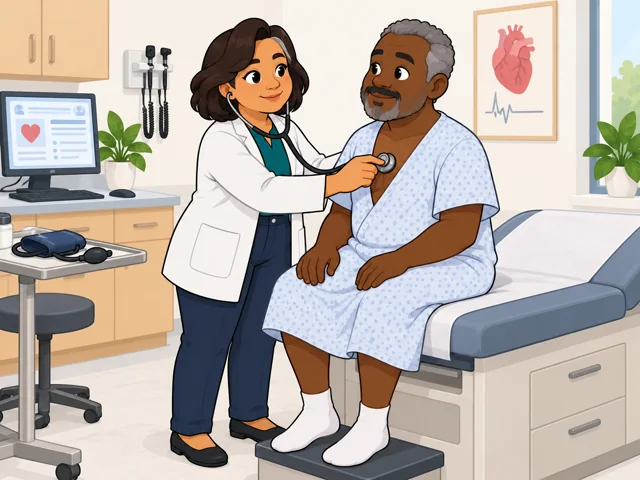
Ask when the breathlessness started
Ask when the breathlessness began, review past health records and examine the patient before choosing a heart test.
Career profile
Cardiologists are medical doctors who diagnose and treat illnesses of the heart and blood vessels.
Heart scan images hold clues. A cardiologist combines them with what the patient describes, decides the next step and explains the reasoning.
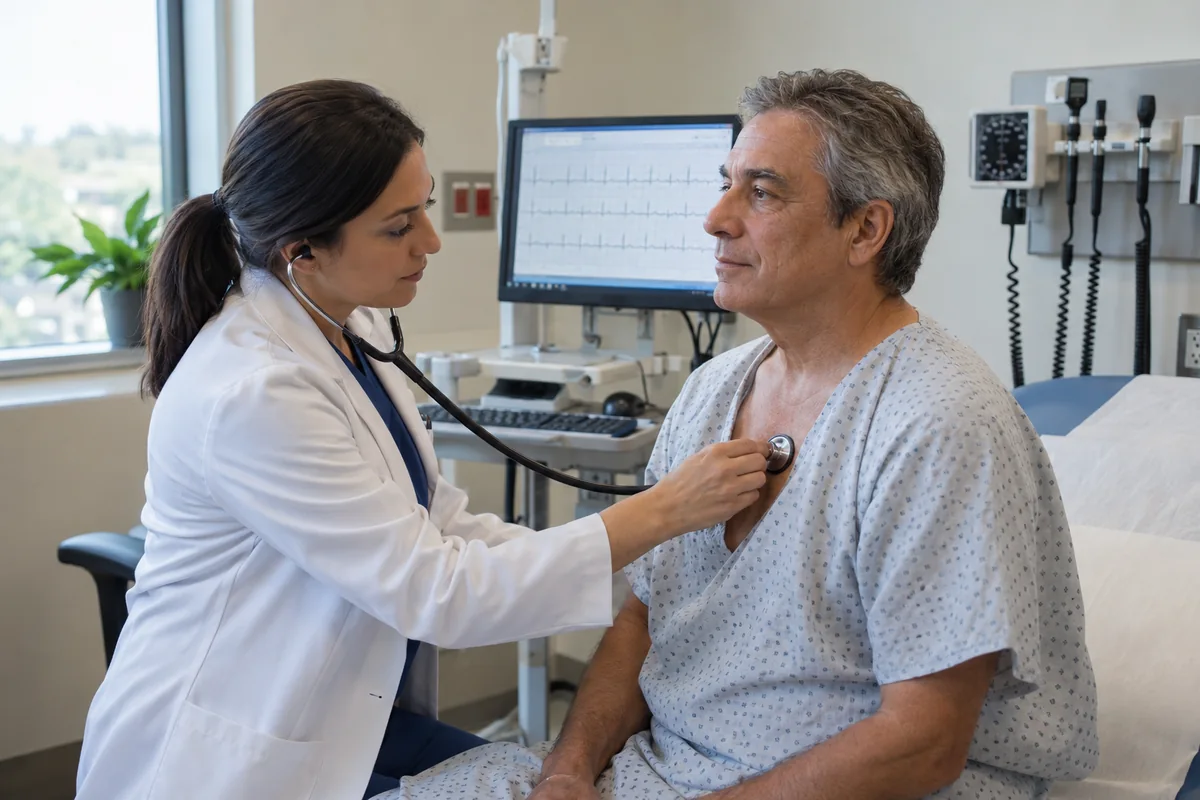
Ask when the breathlessness began, review past health records and examine the patient before choosing a heart test.
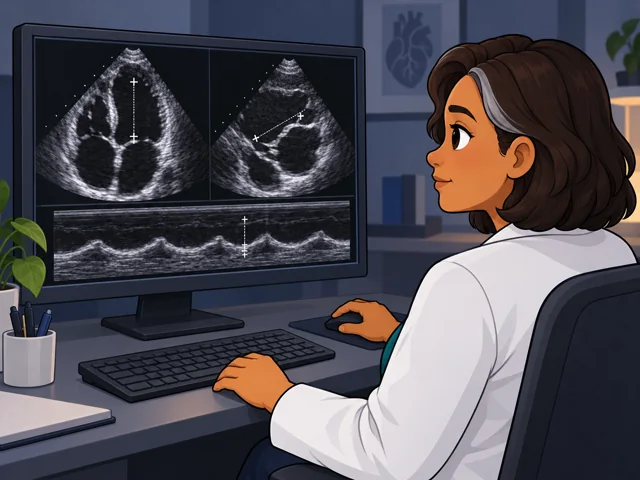
Play the echocardiogram, an ultrasound video of the heart, and compare chamber and valve measurements to spot problems.
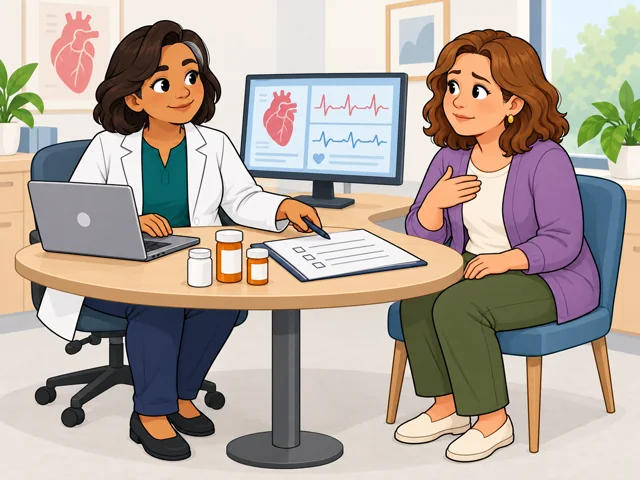
If symptoms persist, look back at medication responses and test results, then change the treatment plan.
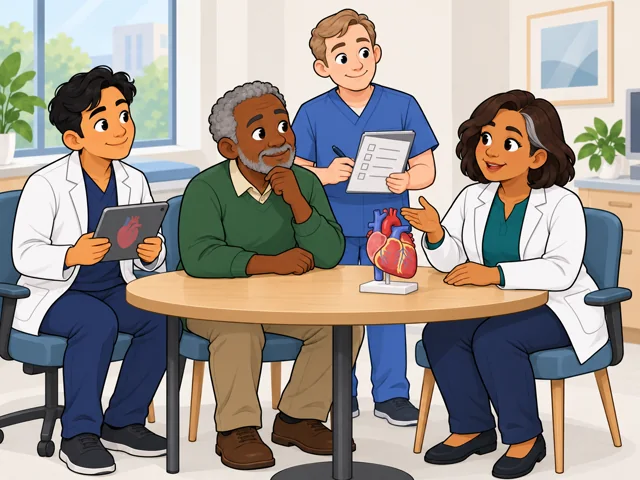
Weigh a procedure with fellow physicians, coordinate the doctors and nurses, and explain the options to the patient.
United States · 2026
United States · May 2025
United States · 2025–2035
Quick orientation
A doctoral or professional degree starts the preparation; residency and cardiology fellowship follow.
Equivalent to $238.47 an hour in national cardiologist employee wage estimates.
About 500 openings a year, including growth and replacement.
Research tools can analyze heart ultrasound videos and draft reports about heart structure and function. This is one developing use of artificial intelligence (AI).
You connect the report with symptoms and other findings, choose treatment, and discuss the decision with the patient.
How much report writing these tools will take over—and how much checking their drafts will require in everyday care—remains unsettled.
Pay in context
National pay is high, but the median is not an offer you can expect when you finish training.
The median was $496,010 a year, with an hourly equivalent of $238.47. These are cardiologist employee wages; they do not describe self-employed practice income.
Annual wages at the 10th and 90th percentiles were $107,190 and $712,130. Those mark positions in the national wage distribution, not starting and senior salaries.
Employment is projected to grow 4.8%, with about 500 openings annually from growth and replacement. That national projection does not tell you which communities will be hiring.
For adult cardiology, the usual route has successive stages. Either physician degree can lead into the specialist training.
After entry
This starts where the entry routes leave off: early work, growing capability, and advancement or specialization. This path also has a credential or licensing boundary; see the requirements and limits.
Build a practice of following patients, reviewing their results and checking whether treatment is helping.
Develop stronger heart-imaging skills and discuss difficult cases with colleagues as your experience broadens.
Interventional cardiology focuses on catheter-based treatments. Its standard ABIM training pathway adds a 12-month fellowship, procedure requirements and a further certification exam after cardiovascular disease certification.
Return visits let you follow patients over time. Some clinics have heart-ultrasound, rhythm-monitoring and exercise-testing services on site, connecting appointments with diagnostic work.
You see hospitalized patients, consult on other services and work alongside residents and fellows. Intensive cardiac care and specialist units bring more acute illness; some roles include overnight call.
Try it
Compare patient-education explanations of an electrocardiogram (ECG), which records heart electrical activity, and an echocardiogram. Write what each helps a cardiologist learn, then explain the difference aloud without jargon. Notice whether you enjoy both the science and the explanation.
Stay safe: Use educational examples, not your own or someone else’s test results to attempt a diagnosis.