
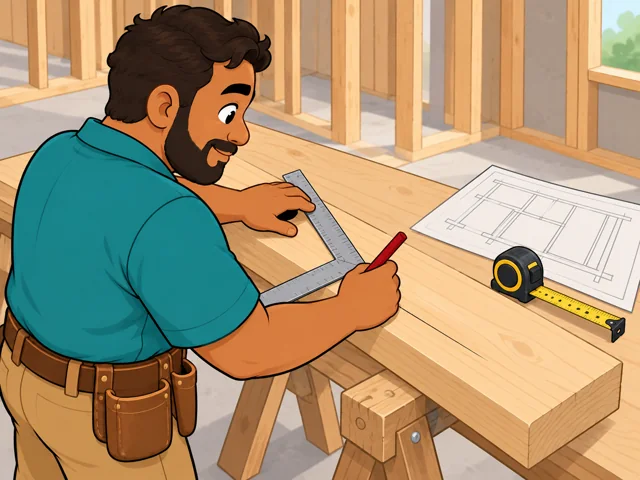
Measure and mark cut lines
Read the drawings, measure the area, then mark cut lines in chalk or pencil so parts land correctly.
Career profile
Carpenters build and repair the wooden framing, door units and trim that shape buildings.
The work turns a paper plan into parts that fit: first a pencil line, then a sawn piece, then an opening someone can walk through.
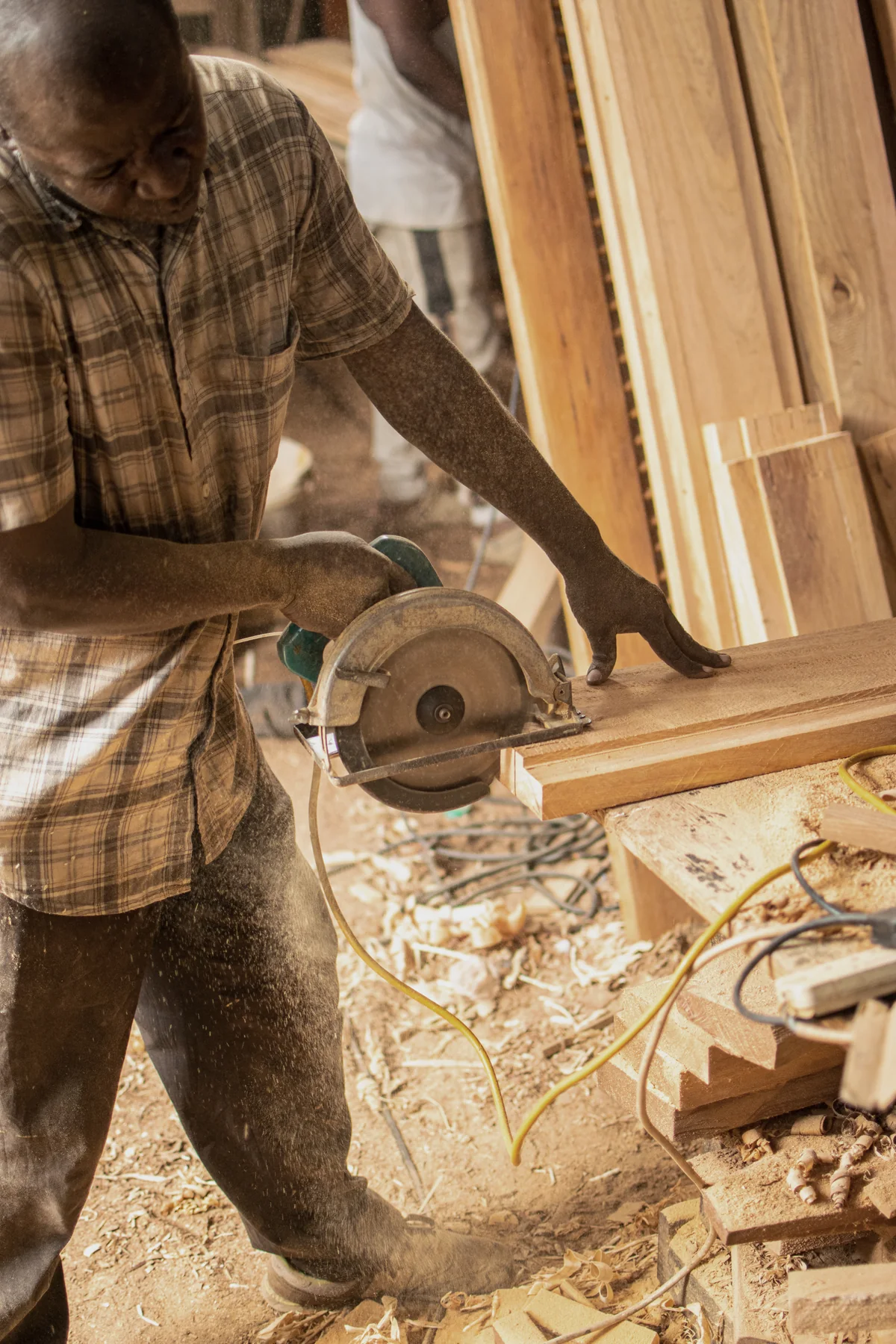
Read the drawings, measure the area, then mark cut lines in chalk or pencil so parts land correctly.
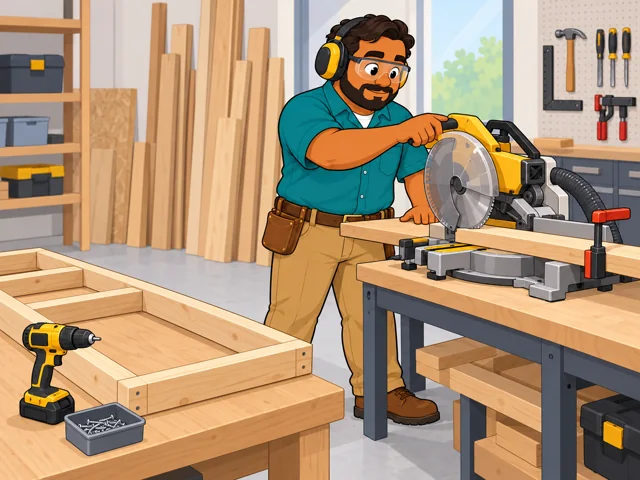
Cut the boards to length with a power saw, then nail or screw them into a frame.
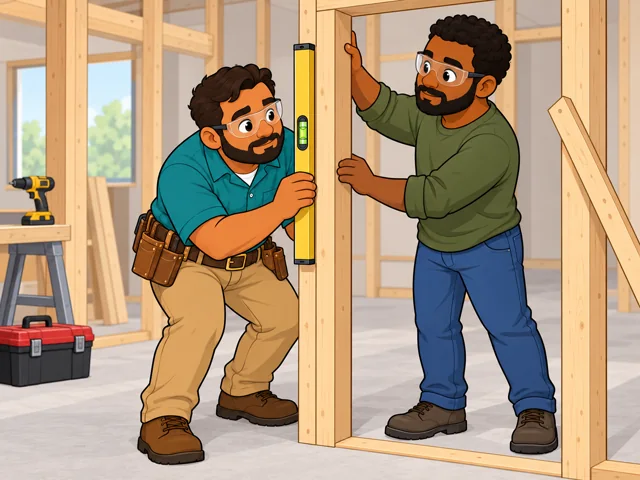
Set a level against the frame, and if it tilts, shift it and test it once more.
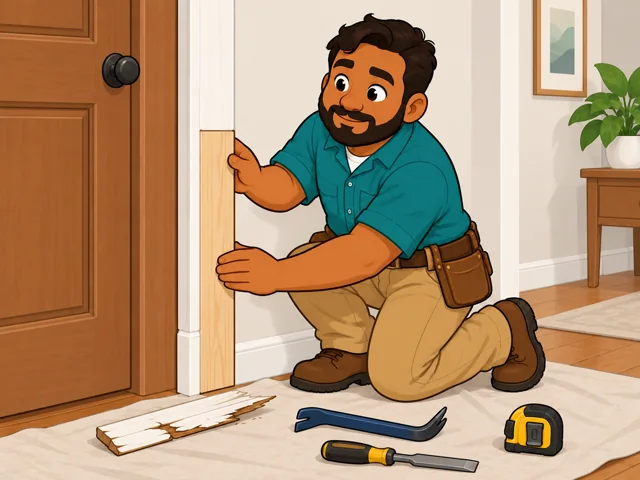
Inspect a fixture or worn doorframe, remove the damaged part, and fit a new piece in its place.
United States
United States · May 2025
United States · 2025–2035
Quick orientation
A high school diploma or equivalent is typical, followed by employer training or apprenticeship.
National median employee wage; equivalent to $29.12 an hour.
About 62,800 openings a year are projected nationally, including replacement openings.
Drawing and estimating software can help you plan dimensions and material costs.
You still fit pieces to the actual building and check their alignment.
Factory-made building sections can reduce onsite construction. How much your work shifts toward assembling them depends on the projects you take.
Pay in context
Read these as employee wages before taxes; benefits, overtime premiums, and self-employed earnings are excluded.
The median was $60,580 a year, or $29.12 an hour. The lowest tenth earned under $40,410; the highest tenth earned over $99,910. These are wage bands, not career stages.
Annual medians were $63,780 in nonresidential building construction, $60,880 with building finishing contractors, and $60,600 in residential building construction.
Apprentices start below fully trained carpenters and receive pay increases as they gain experience.
Employment is projected to grow 3.9% during 2025–35, with 62,800 openings annually on average. Openings include replacing workers, so they exceed the number of newly added jobs.
A high school diploma or equivalent is typical. Both routes involve learning from experienced workers.
After entry
This starts where the entry routes leave off: early work, growing capability, and advancement or specialization.
Make accurate marks and cuts, then check the finished pieces against their intended dimensions.
Connect the plan to the layout, assembly, and final alignment checks.
Work toward lead carpenter or supervisor responsibilities.
Cabinets and trim put you close to the finished surfaces. Work can involve kneeling and fitting pieces into cramped spaces.
Concrete forms and scaffolding bring larger assemblies and work at height. Some installations involve cranes and rigging equipment.
Try it
Measure an accessible doorway and sketch its trim with dimensions. Remeasure without looking at your first numbers, then compare. Notice whether checking fit and resolving small differences holds your attention.
Stay safe: Work from floor level; leave the trim in place.