
Career profile

Choreographer

Choreographers create dances and help performers bring them to life on stage.

A sequence may look different than you pictured once the group dances it together. Watch, change one move, and see if your intent reads clearer.
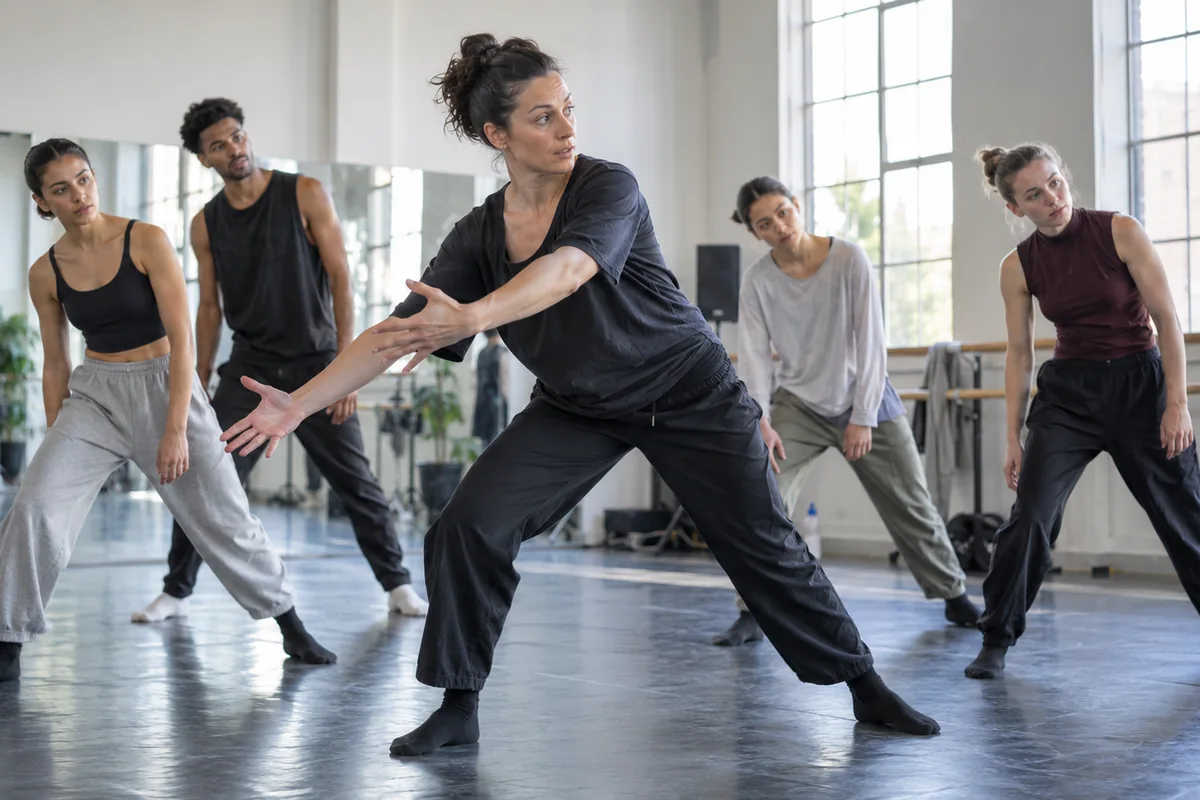
A choreographer demonstrating a movement to dancers in a rehearsal studio.

A day in the life

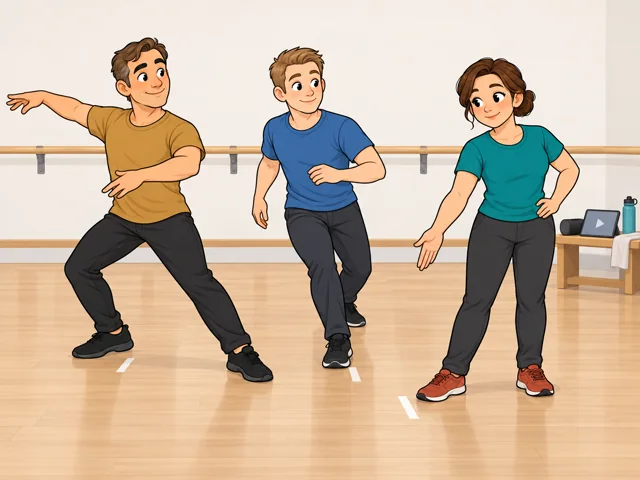
1A choreographer redirects one dancer's position while another holds a dance shape beside floor marks in a rehearsal studio.

Test a new sequence

Choose a piece of music, try steps with the dancers, and after watching, shift where they stand.
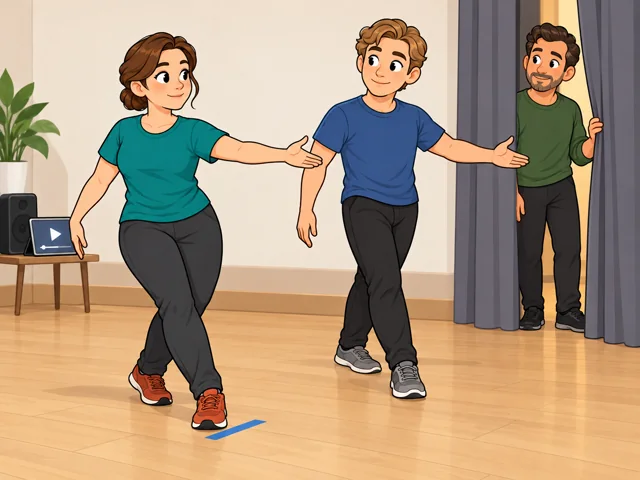
2A choreographer demonstrates the first movement of an entrance while one dancer copies her and another waits beside a curtain.

Break down a tough entrance

Teach the combination, and if dancers miss the entrance, rerun it in smaller chunks with the music cue.
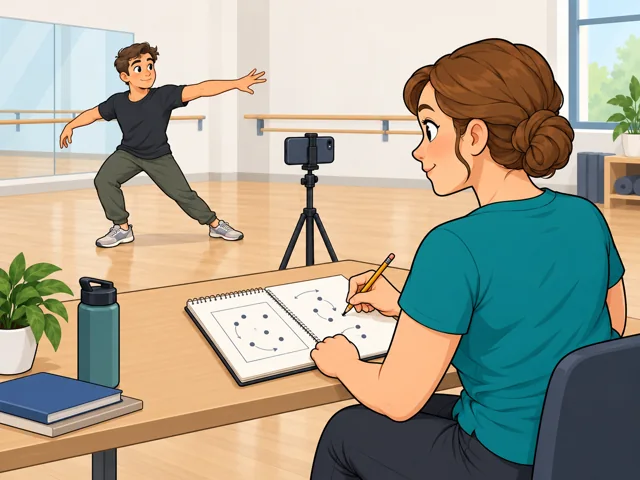
3A seated choreographer sketches a dance formation while a phone records a dancer repeating the sequence.

Write down steps and formations

Note each step and sketch the formations so you can return to this sequence at another rehearsal.
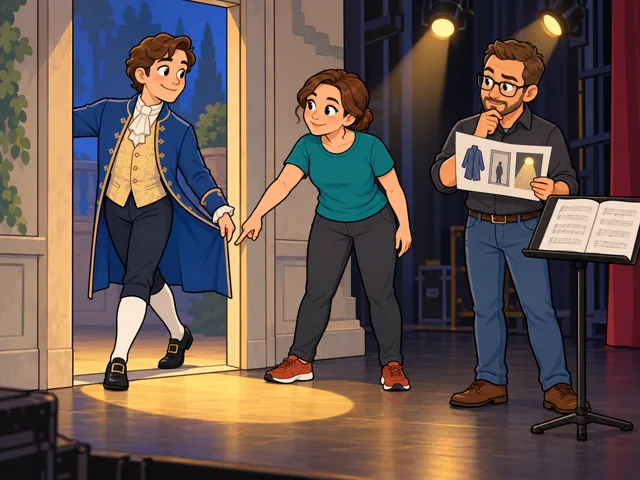
4On a theatre stage, a choreographer checks a dancer's coat clearance through a lit scenic doorway with a colleague consulting design sketches beside a music stand.

Fit the dance to the show

In musical theatre, you check movement against costumes, sets and lights with the designers and music director.

Quick facts

Preparation

High school + dance experience

United States

Pay

$26.59/hour

United States · May 2025

Outlook

3.1% growth

United States · 2025–2035

Quick orientation

Preparation, pay & outlook

Preparation

High school + dance experience

A high school diploma or equivalent is typical; substantial dance experience matters. Some employers prefer a bachelor's degree.

Geography
United States
Period
Not applicable

Pay

$26.59/hour

National median for choreographers; the annual equivalent is $55,310.

Geography
United States
Period
May 2025

Outlook

3.1% growth

About 600 openings per year are projected for choreographers, including replacement openings.

Geography
United States
Period
2025–2035

Fit, tradeoffs & changing tools

Things to weigh

  • Rehearsals and performances can put work into evenings and weekends.
  • Demonstrating movement means spending time on your feet and repeating physical actions.

Where AI may help

Experimental artificial intelligence tools can suggest movement. AISOMA, developed with choreographer Wayne McGregor, extends a dancer's sequence using movement learned from his archive.

What people still lead

You still choose what the dance should express and work out how performers can carry that idea through rehearsal.

What we can’t predict yet

How much sequence-making these tools will take on, and how widely choreographers will use their suggestions, remains unsettled.

Pay in context

Earnings

Look at the hourly rate alongside the amount of work available to you.

The national midpoint

The median was $26.59 an hour, with an annual equivalent of $55,310. Half of employed choreographers earned above the median and half below.

Geography
United States
Period
May 2025
Pay basis
National wage and salary estimates for SOC 27-2032; annual equivalent

The national spread

The 10th–90th percentile range was $16.39–$66.65 an hour, or $34,090–$138,630 annually. These are wage percentiles, not beginner and senior pay grades.

Geography
United States
Period
May 2025
Pay basis
10th and 90th percentile employee wages; annual equivalents

Hours change the picture

Part-time work is common, so an annual equivalent may exceed what you actually earn. These wage figures exclude self-employed choreographers.

Geography
United States
Period
May 2025 wage coverage; current working conditions
Pay basis
Employee wages, excluding self-employment income

Openings include replacements

Employment is projected to grow 3.1% from 2025 to 2035, with about 600 openings annually from growth and replacement needs.

Geography
United States
Period
2025–2035
Pay basis
Employment projection, not a pay estimate

Getting started

Build from dance experience

What the route involves
Train and perform as a dancer, then begin making routines while continuing to perform.
What it can lead to
You develop the movement knowledge and rehearsal experience used to take on choreography.

Study dance and composition

What the route involves
Choose a dance degree that includes choreography, technique classes, and performance practice.
What it can lead to
You gain structured practice creating work and a degree that some employers prefer.
What to check
Check admissions before planning around this route. Conservatory programs such as Juilliard require prior dance training and auditions.

Build dance experience first; choreography commonly grows out of performing.

After entry

Career paths

This starts where the entry routes leave off: early work, growing capability, and advancement or specialization.

  1. Get established

    Make your rehearsal instructions clear enough that performers can repeat the dance consistently.

  2. Handle more of the production

    Learn to resolve movement problems with designers and the music director before they disrupt rehearsals.

  3. Move toward directing

    Some choreographers become theatre, film, or television directors or producers, taking responsibility for more of the production.

Where you can work

Community theatre

A cast may mix experienced dancers with beginners. You adapt the movement and rehearsal time to their abilities while supporting the director's vision.

  • Indoors

Dance schools

Choreography may sit alongside teaching. You shape routines around students' abilities and spend more time developing their technique.

  • Indoors
  • Physical demands

Try it

See whether the job clicks before you commit to the path.

Make a short sequence of simple hand and arm gestures, then teach it to a willing friend. Change one part after watching them try it. Notice whether you enjoy both inventing movement and explaining it.

Stay safe: Use comfortable movements you both already know; skip lifts and acrobatics.

Explore more careers

Sources

  1. O*NET OnLine. Choreographers — 27-2032.00. Accessed 2026-10-10.
  2. U.S. Bureau of Labor Statistics. Dancers and Choreographers — choreographer preparation and shared working conditions. Accessed 2026-10-10.
  3. U.S. Bureau of Labor Statistics. May 2025 Occupational Employment and Wage Statistics — pinned national Choreographers values. Accessed 2026-09-29.
  4. U.S. Bureau of Labor Statistics. Employment Projections 2025–2035, Table 1.2 — pinned Choreographers values. Accessed 2026-09-29.
  5. American Association of Community Theatre. Choreographer. Accessed 2026-10-10.
  6. The Juilliard School. Dance — Bachelor of Fine Arts. Accessed 2026-10-10.
  7. The Juilliard School. Dance — Bachelor of Fine Arts Application & Audition Requirements. Accessed 2026-10-10.
  8. Google. From dance archive to creative catalyst with Google AI. Accessed 2026-10-10.

Your message goes to the Great Jobs team. How we use your information