
Design the drainage
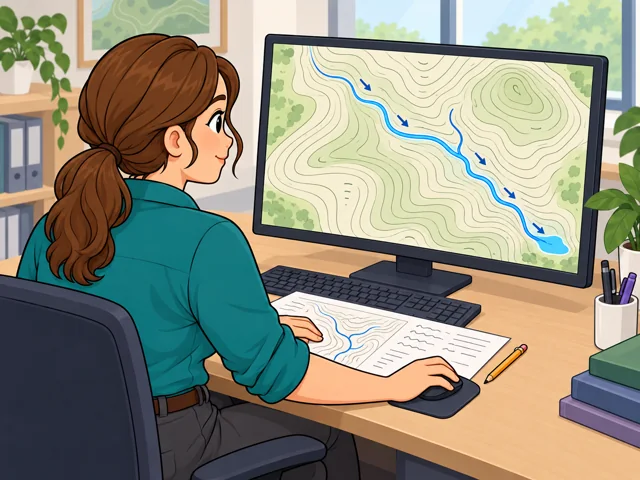
Use survey heights to work out water flow, then lay out the drainage in computer design software.
Career profile
Civil engineers design bridges, roads and water systems, then help get them built right.
When a new road goes in, where does the rain go? You answer questions like that with math, plans and decisions about how to build.
Use survey heights to work out water flow, then lay out the drainage in computer design software.
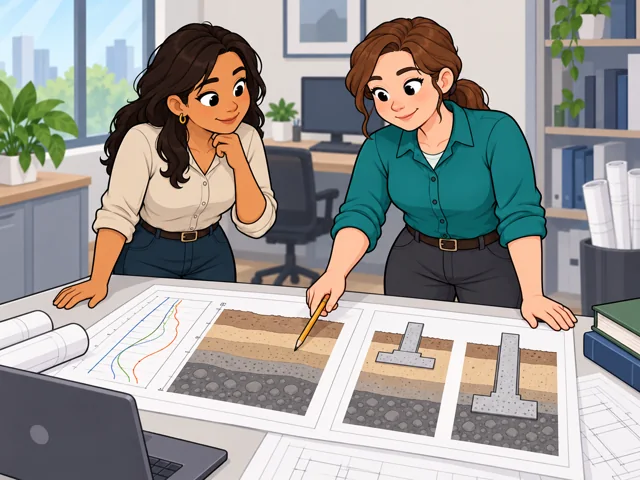
In ground-focused work, read soil test results and choose a foundation the soil can support.

Add up materials in a spreadsheet and estimate equipment and labor costs against the budget.
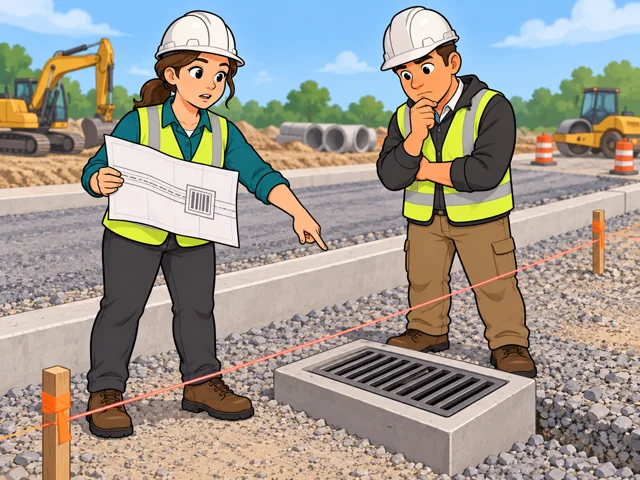
Check the work against the plans and bring any mismatch, with a fix, to the construction manager.
United States
United States · May 2025
United States · 2025–2035
Quick orientation
Usually civil engineering or a related field.
National median; $48.48 per hour.
Projected employment growth over the decade.
On highway projects, shared three-dimensional models let designers and construction crews use the same project information instead of exchanging separate drawing files.
You still decide whether the inputs describe the site correctly and whether the proposed design meets its requirements.
How far model data can drive construction automatically depends on data quality and the project. The balance between preparing models and checking automated results may keep shifting.
Pay in context
The national median describes the middle of the occupation, not a starting offer.
Median pay was $100,840 a year, or $48.48 an hour. The 10th and 90th percentile thresholds were $68,240 and $163,220 annually. These describe the wage distribution, not beginner and senior salaries.
Annual medians were $117,790 in federal government, $113,640 in local government, $100,620 in engineering services, and $82,400 in nonresidential building construction. Federal figures exclude postal service; local figures exclude education and hospitals.
About 22,700 openings are projected annually, including replacements for people leaving the occupation. Public-project funding can affect employment.
A degree is the usual starting point. Entry-level civil engineers do not need a professional license.
After entry
This starts where the entry routes leave off: early work, growing capability, and advancement or specialization. This path also has a credential or licensing boundary; see the requirements and limits.
Learn to trace a calculation back to its survey data and record how you arrived at a drawing detail.
In geotechnical work, deepen your understanding of soil behavior so you can tackle foundation choices, unstable slopes, and water moving through the ground.
In transportation engineering, senior roles can involve supervising engineers or becoming the specialist who handles complex designs and technical reviews.
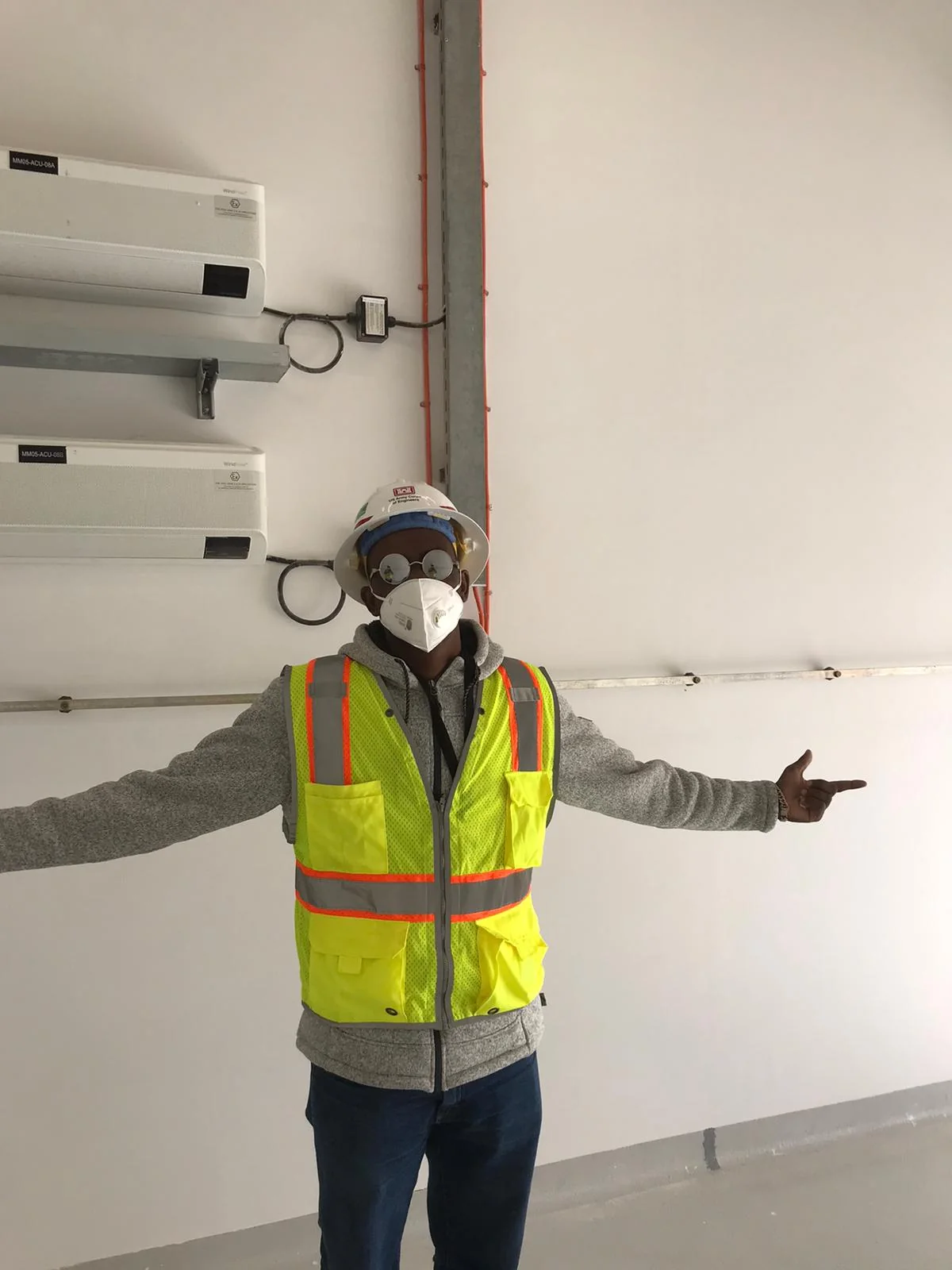
Your main workspace is a desk with drawings and design software. Site visits connect the plans to actual conditions.
You work close to the build, checking progress and resolving problems. A temporary site office may be your base.
At the U.S. Army Corps of Engineers, projects include dams and levees. Geotechnical work connects foundation design and seepage control with monitoring how structures perform.
Try it
From a public sidewalk, sketch a short stretch of street. Mark slopes, drains, and where you think rainwater would collect. List the measurements you would need before proposing a change. Notice whether figuring out the missing information interests you.
Stay safe: Stay out of traffic and construction areas; observe without opening drains or entering waterways.