
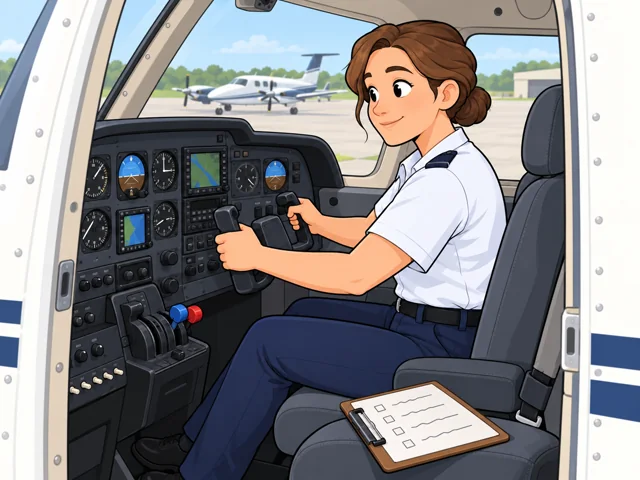
Check the plane before flying
Check the gauges, controls and onboard systems before you agree to take the plane up.
Career profile
Commercial pilots fly charter trips, sightseeing tours and other flights outside scheduled airline service.
As the pilot, you fly the plane and also judge when weather, fuel on board or the aircraft's condition calls for a change of plan.
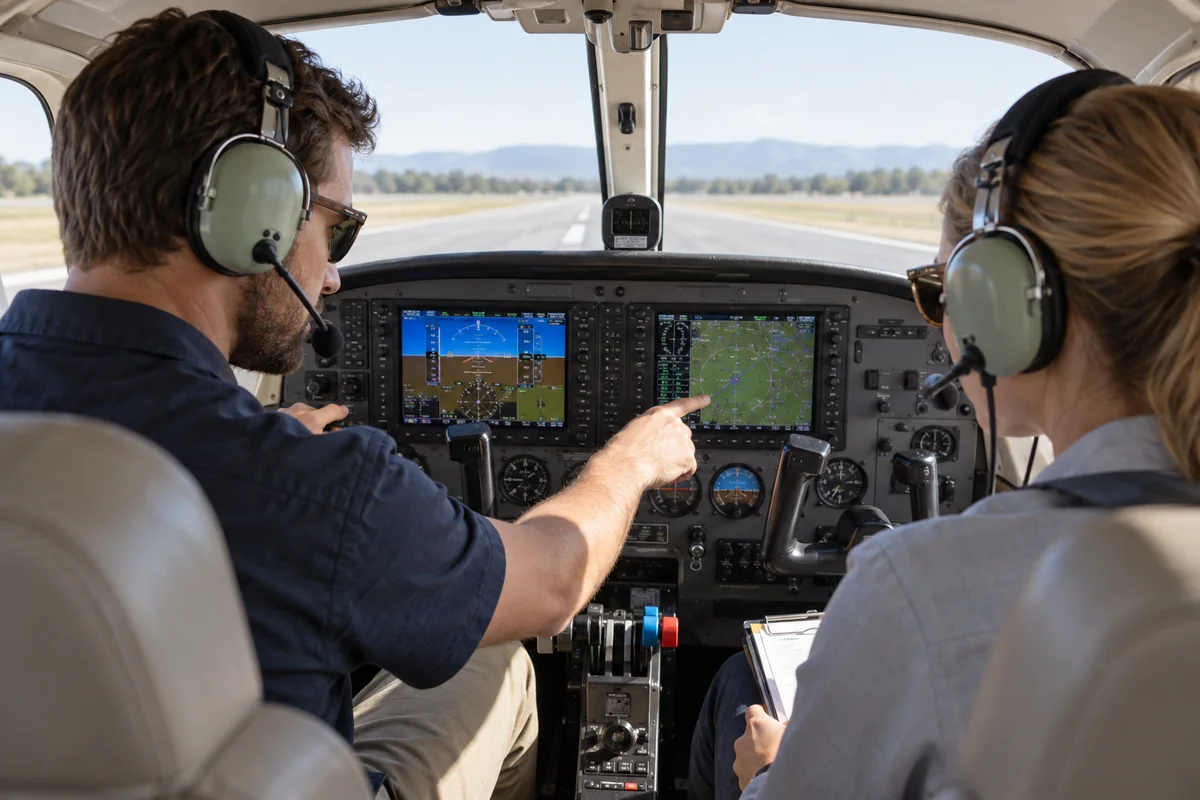
Check the gauges, controls and onboard systems before you agree to take the plane up.
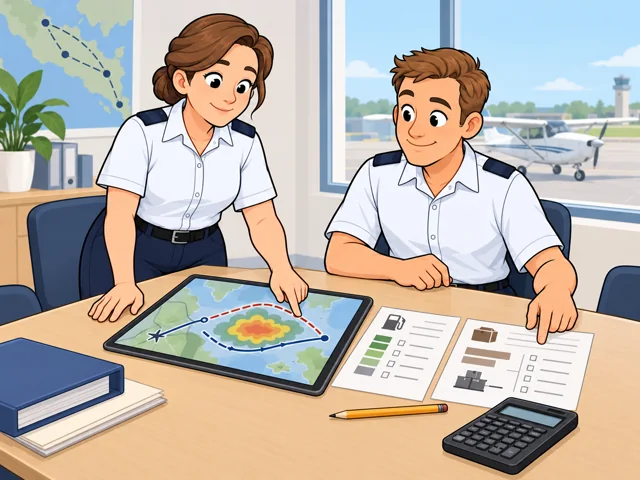
Compare weather with fuel and cargo weight, changing route or takeoff time when numbers do not add up.
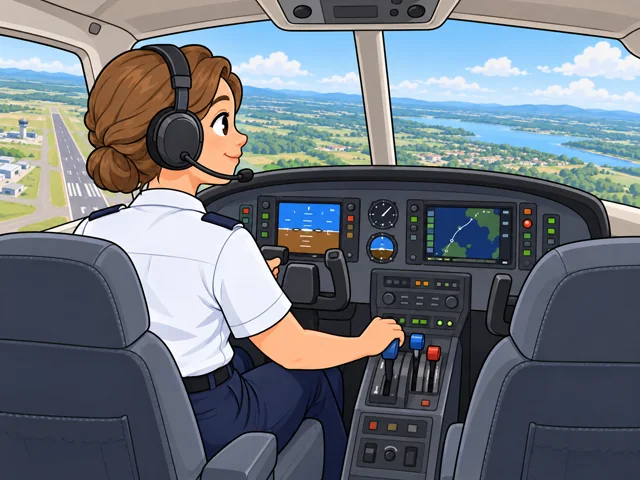
Fly the planned route by gauges and controls, and radio any control tower to arrange departure and landing.
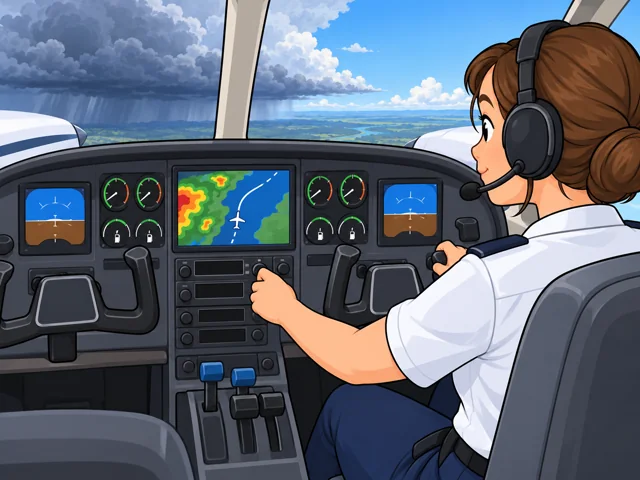
Track fuel burn and engine gauges, and request a new route or altitude if weather ahead gets worse.
United States · Current requirements checked October 2026
United States · May 2025
United States · 2025–2035
Quick orientation
Earn a Federal Aviation Administration (FAA) commercial pilot certificate with the ratings for your aircraft.
National median for commercial pilots; this is not a starting salary.
About 5,200 openings per year nationwide, including replacement openings.
In equipped aircraft, automation can hold a selected flight path and reduce the need for continuous control inputs.
You choose what to ask the system to do, check its response, and recognize when its behavior no longer fits the situation.
How much more flying will shift to automation remains uncertain, especially when conditions demand a change from the programmed plan.
Pay in context
These figures cover commercial pilots, excluding airline pilots. Pay varies widely across this occupation.
The annual median was $123,220. The 10th and 90th percentiles were $58,850 and $266,620; these are wage positions, not beginner and senior salaries. An hourly equivalent is not published for this occupation.
Annual medians were $133,150 in nonscheduled air transportation and $93,820 in private technical and trade schools.
Employment is projected to grow 5.2%. The roughly 5,200 annual openings include workers leaving the occupation, not just newly created jobs.
For civilian beginners, both routes lead through private-pilot training toward the commercial certificate and its tests.
After entry
This starts where the entry routes leave off: early work, growing capability, and advancement or specialization. This path also has a credential or licensing boundary; see the requirements and limits.
At an on-demand operator, complete company ground and flight training to learn its aircraft and procedures.
Build experience and train for additional aircraft, earning the ratings they require.
Add a flight instructor certificate and teach students to plan flights, handle the aircraft, and recognize mistakes.
Passenger trips shape the day. You may also greet travelers, load luggage, and arrange aircraft maintenance.
Low flying brings power lines and other obstacles close. Chemical handling and unpaved landing strips add different demands.
Try it
On paper, plan a pretend charter trip between two airports. List the weather, fuel, aircraft, and passenger information you would need before agreeing to depart. Then add a storm near the destination and explain what you would reconsider. Notice whether that decision-making interests you as much as flying.
Stay safe: This is a thinking exercise, not a flight plan for actual use.