
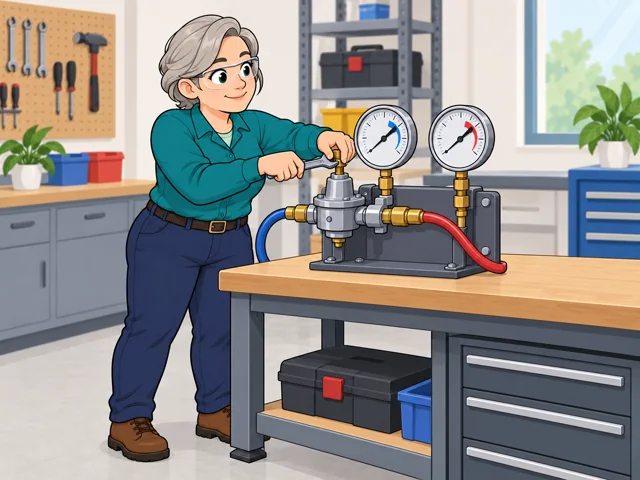
Tune a regulator on the stand
Hook the regulator to a test stand and adjust it until the gauges match its target pressures.
Career profile
Control and valve repairers fix and tune meters, regulators and valves governing flow and pressure.
A device that leaks or gives wrong readings sends you hunting for the cause. You fix it, then test to confirm the problem is gone.
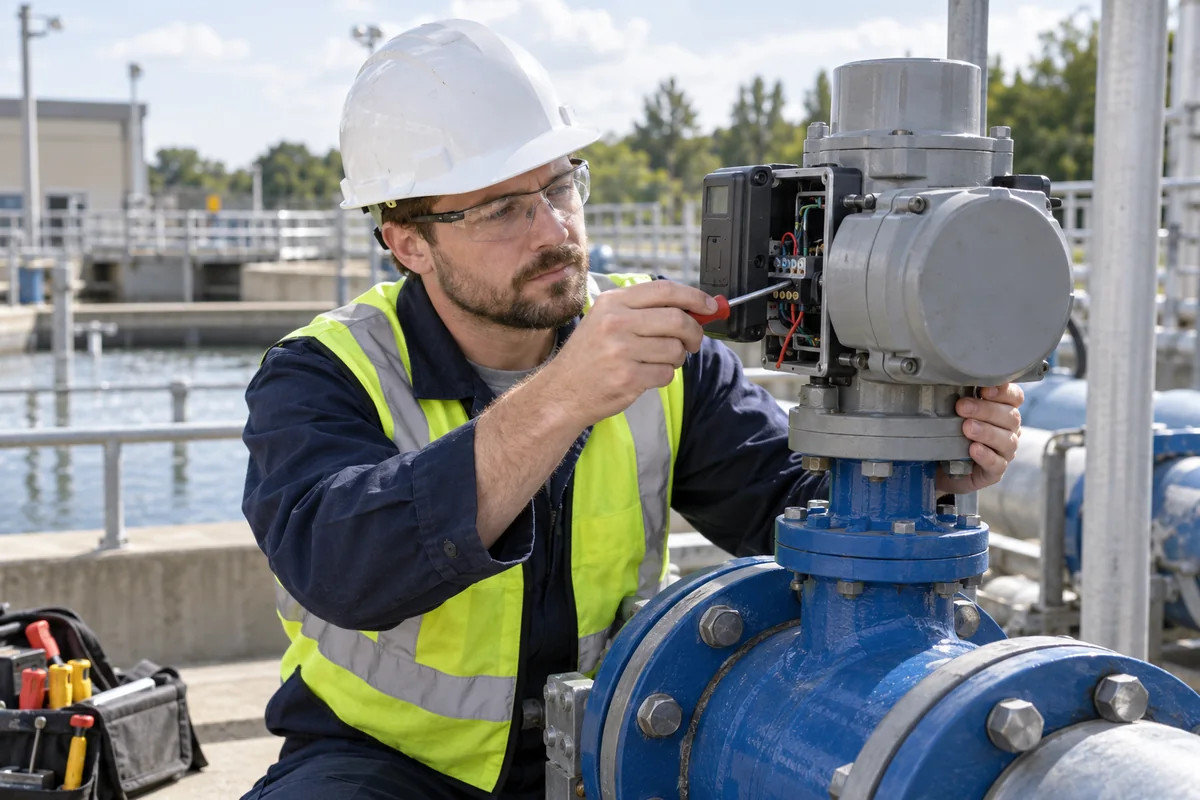
Hook the regulator to a test stand and adjust it until the gauges match its target pressures.
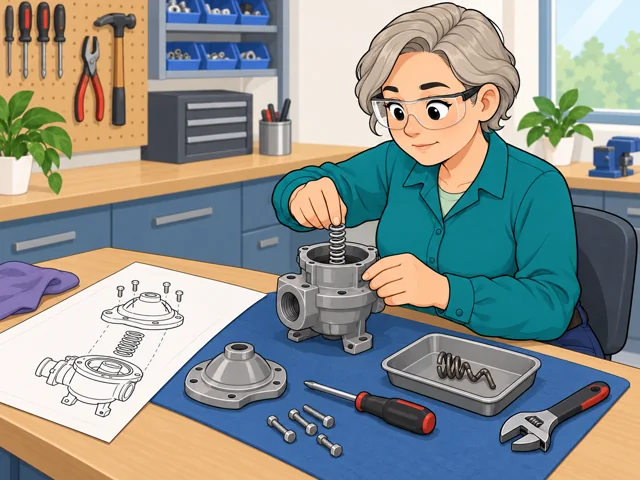
Take the control device apart, swap out the broken spring, then rebuild it following the drawing.
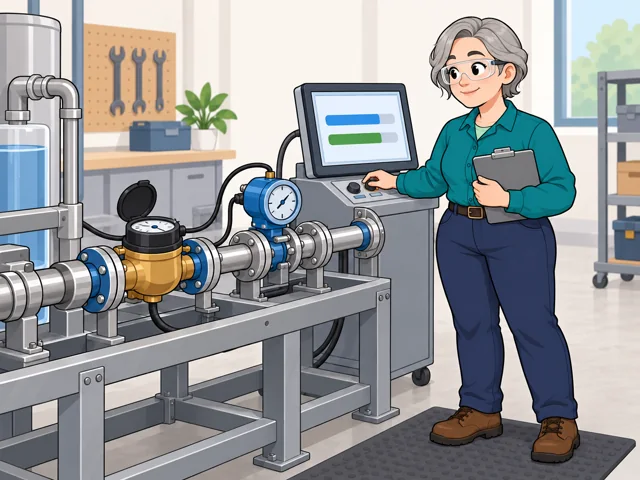
In utility work, you verify and tune water or gas meters with computer-aided testing gear.
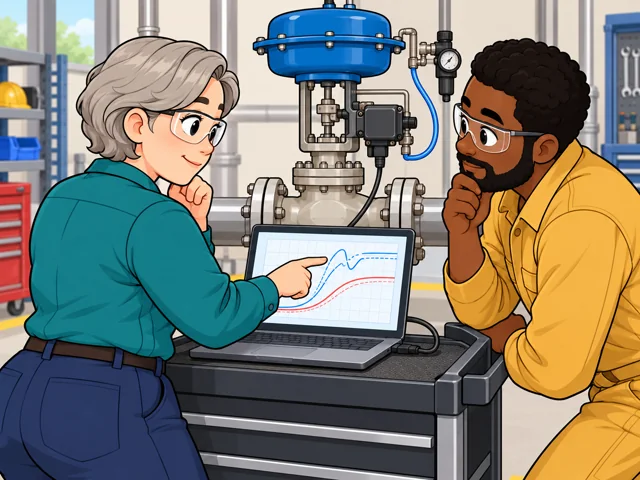
On equipped industrial valves, you spot excess friction or limited air supply in on-screen movement graphs.
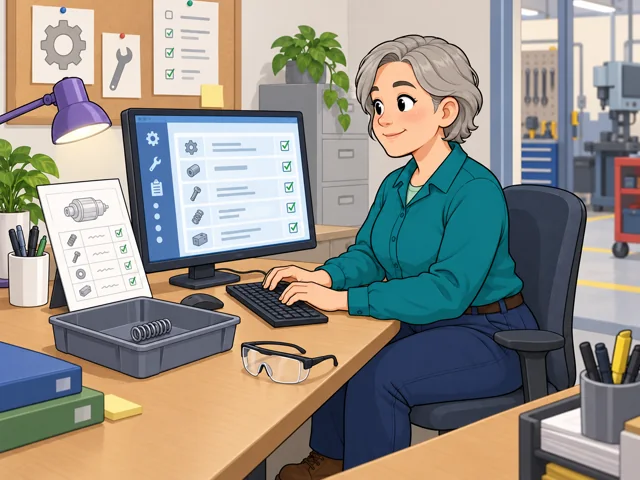
Enter the test results, the parts you installed and the repairs you made into the maintenance record.
United States · 2025
United States · May 2025
United States · 2025–2035
Quick orientation
Typical entry preparation is a high school diploma or equivalent, followed by moderate-term training on the job.
National median pay, equivalent to $35.74 an hour.
About 3,600 openings a year are projected nationwide, including replacement openings.
For compatible industrial valves, software can schedule tests, monitor performance while equipment runs, and help check a rebuilt valve.
You still connect the findings to a repair: use the manufacturer's drawings and procedures, fix the hardware, and verify the result.
How much diagnosis will happen automatically or from a central workstation remains uncertain. The balance will depend partly on which valves have connected controls.
Pay in context
The national median is $74,340 a year, or $35.74 an hour. Use it as a comparison point when reading offers.
In May 2025, the 10th-percentile annual wage was $45,910 and the 90th-percentile wage was $112,500. These mark the lower and upper ends of the wage distribution; they are not starting and senior pay rates.
A historical comparison shows different pay levels: May 2023 annual averages were $80,470 in natural gas distribution and $94,220 in electric power generation, transmission and distribution. These are industry means for this occupation, not current offers or the newer national median.
Employment is projected to grow 4.3% from 2025 to 2035, with about 3,600 openings annually. The openings total includes people leaving the occupation as well as newly added jobs.
Choose between learning through employment and studying instrumentation first. For covered gas-pipeline tasks, you must pass the operator's qualification evaluation or work while directed and observed by a qualified person.
After entry
This starts where the entry routes leave off: early work, growing capability, and advancement or specialization.
Learn to test and adjust the smaller meters in your workplace. Aim for consistent results before tackling more complicated instruments.
Learn the manufacturer's repair procedures and technical drawings. Add diagnostic skills so you can confirm that a repair resolved the fault.
Work toward a senior specialty such as electric actuators—the devices that move valves—or pressure-relief valves.
Travel between customer properties and utility sites. You work with field crews, investigate measurement problems, and handle meters and regulators outdoors as well as at service facilities.
Work where large machine tools, overhead cranes, and valve-testing machines are available. Some shops handle large, high-pressure valves that need substantial equipment for repair and retesting.
Bring a repair trailer with machine tools and test equipment to the plant. During an outage, the crew can remove, repair, test, and reinstall valves without shipping them away.
Try it
Make a paper valve-test record. Write requested openings of 0%, 25%, 50%, 75%, and 100%, then invent measured positions with one mismatch. Circle the mismatch and write what you would want to check before blaming a part. Notice whether comparing response with a target interests you.
Stay safe: Keep this exercise on paper; do not adjust utility meters, gas regulators, or pressurized equipment.