
Career profile

Coroner

Coroners investigate violent or unexplained deaths and help set the official cause of death.

What can the scene, the doctors' findings and the witnesses prove? You combine all three and say how far that evidence honestly supports a conclusion.
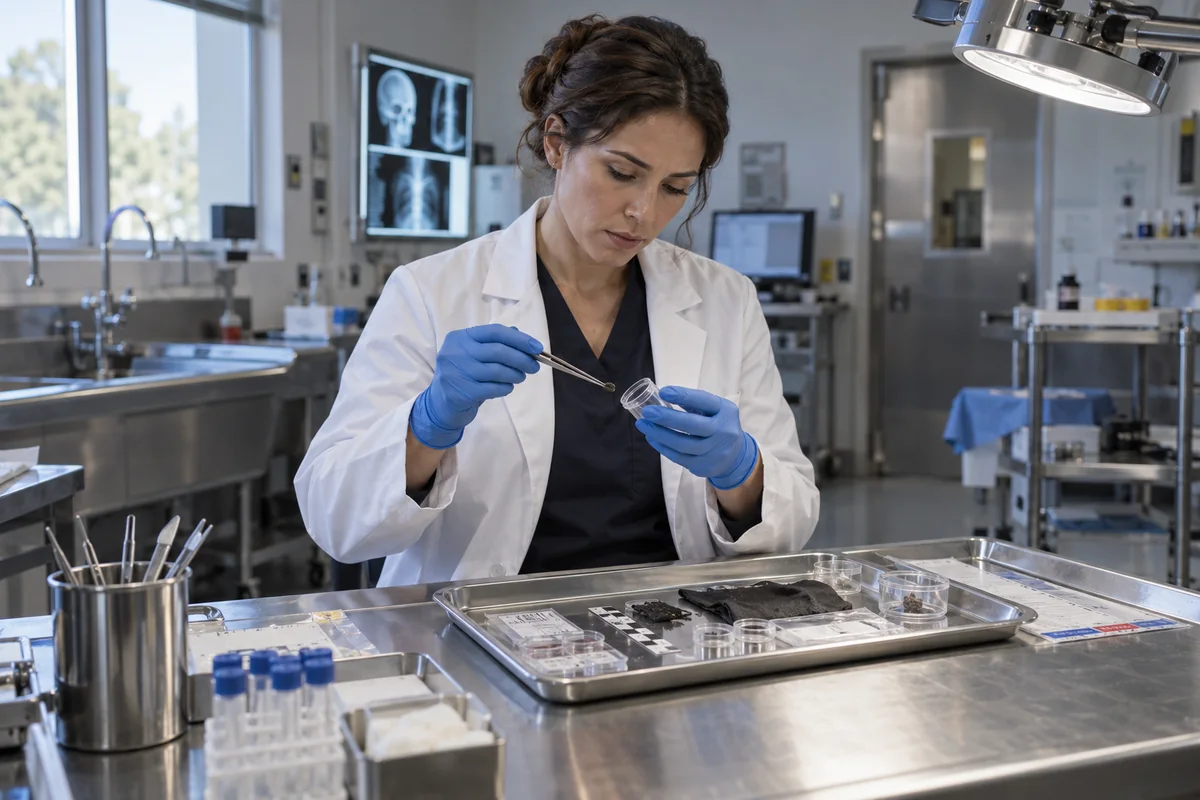
An adult coroner documenting evidence in a respectful, non-graphic forensic examination room, using gloves and examining a sample tray rather than a body.

A day in the life

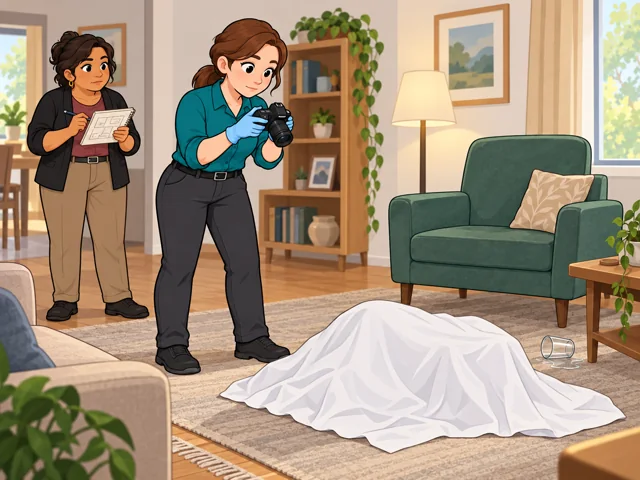
1A coroner photographs a covered deceased person and nearby objects in a living room while a colleague records the scene.

Photograph the death scene

Take photos and field notes that keep a lasting record of the body's position and nearby evidence.
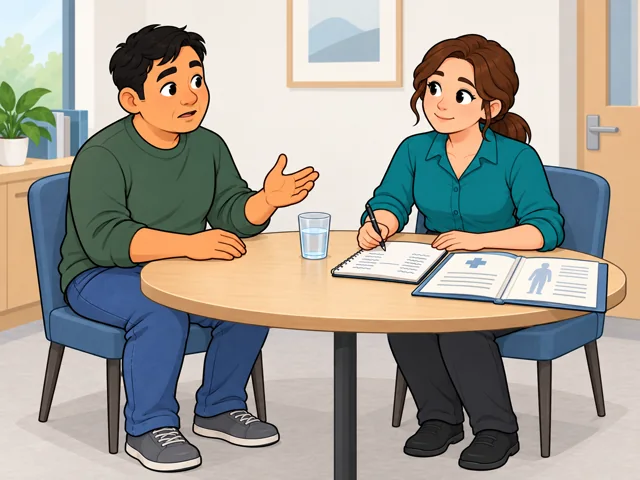
2A seated coroner listens closely as an adult witness clarifies his account beside an open medical-history folder and interview notes.

Fill gaps in the timeline

Talk with witnesses, read past health records, and where stories leave gaps, ask each what they saw firsthand.
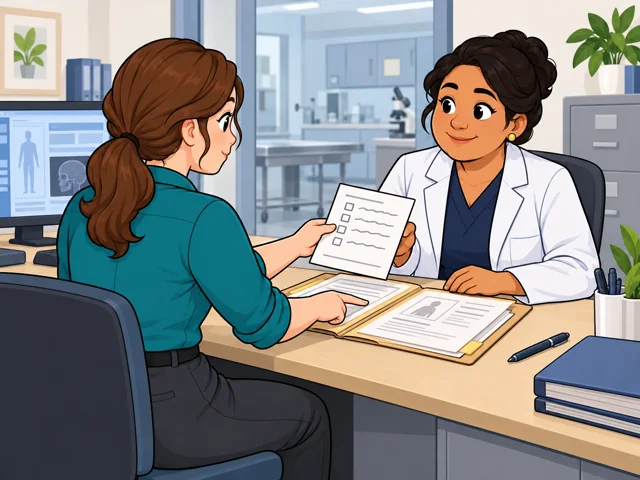
3A coroner hands an examination request to a colleague and points out supporting information in the case folder.

Ask for an autopsy or tests

Request an autopsy from a pathologist, or drug and poison tests, when the case needs those answers.
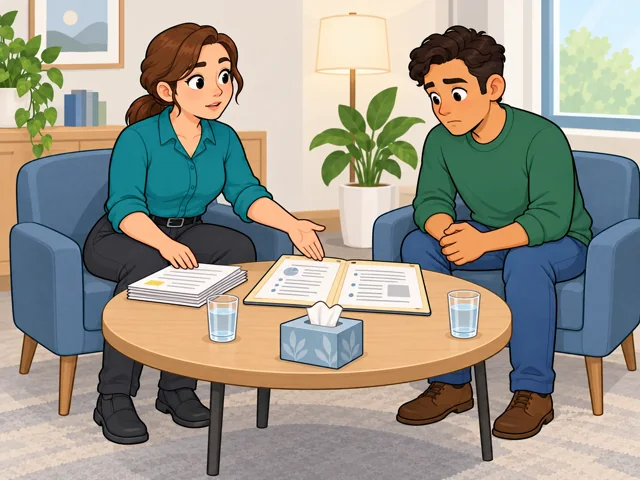
4A coroner gently explains documented findings and remaining questions to a relative in a private consultation room.

Update the family

Tell the family what has been confirmed about the death, and keep that apart from questions still open.
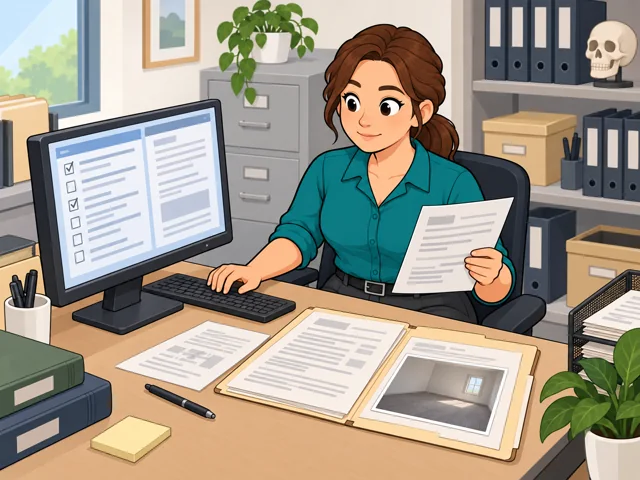
5A coroner checks case evidence while writing the official report at her office workstation.

Put the findings on record

File the case report naming cause and manner of death, and present the evidence in court or hearings.

Quick facts

Preparation

Requirements vary locally

United States

Pay

Not displayed

Compare the salary range for the specific county position you want.

Outlook

Not displayed

Plan around local hiring and election opportunities, rather than a national growth estimate.

Quick orientation

Preparation, pay & outlook

Preparation

Requirements vary locally

Education and death-investigation training depend on the state and position. Most states do not require coroners to be physicians.

Geography
United States
Period
Not applicable

Pay

Not displayed

Compare the salary range for the specific county position you want.

Geography
United States
Period
Not applicable

Outlook

Not displayed

Plan around local hiring and election opportunities, rather than a national growth estimate.

Geography
United States
Period
Not applicable

Fit, tradeoffs & changing tools

Things to weigh

  • Calls can interrupt nights, weekends and holidays. Conversations with grieving relatives can be emotionally demanding.
  • Handling bodies brings physical strain, strong odors and exposure to biological hazards.

Where AI may help

Digital photographs and electronic records help preserve case information. In equipped facilities, computed tomography (CT) scans give specialists images from inside the body.

What people still lead

You still connect the scene and interviews with medical findings. Specialists must interpret scans carefully to avoid premature conclusions.

What we can’t predict yet

How much imaging can replace a full autopsy depends on the case and setting; it may answer some questions while leaving others unresolved.

Pay in context

Earnings

County and job level matter. These local salary ranges give you concrete comparisons, not a national typical wage.

Sacramento County deputy positions

The 2026 monthly salary range is $6,232.68–$7,953.50 for Level I and $6,838.17–$8,729.58 for Level II.

Geography
Sacramento County, California
Period
2026 recruitment
Pay basis
Advertised monthly salary for permanent full-time positions; not total compensation

Riverside County entry classification

Deputy Coroner I lists $69,461.84–$100,527.03 annually. The classification range is not a guaranteed starting offer.

Geography
Riverside County, California
Period
Not stated
Pay basis
Annual classification salary range; effective date not stated

Getting started

Train in a hired deputy position

What the route involves
Riverside County's entry classification accepts a high-school diploma or equivalent without prior experience. Hires learn through closely supervised investigations.
What it can lead to
You build practical death-investigation experience in a deputy role.
What to check
Applicants must meet state peace-officer standards and pass screening; required training includes arrest and firearms and coroner investigation courses.

Use college coursework to qualify

What the route involves
For Sacramento County, complete 60 semester units, including nine in criminal justice, life science, health science or a related field.
What it can lead to
You meet the education minimum to compete for a deputy position; a bachelor's degree is desirable, not required.
What to check
Hiring includes background and psychological/medical screening. Level I hires must complete Peace Officer Standards and Training (POST) certified arrest/firearms and coroner investigation courses within one year.

County coroners are usually elected; deputies are hired. Check local candidate or hiring rules first. Coroners usually rely on pathologists for autopsies, and deputies' authority to sign findings depends on local rules.

After entry

Career paths

This starts where the entry routes leave off: early work, growing capability, and advancement or specialization.

  1. Get established

    Work through cases with an experienced deputy, learning how interviews, medical records and scene evidence fit together.

  2. Handle more of the investigation

    Take on more independent casework. In Riverside County, progression to Deputy Coroner II requires satisfactory probation and the additional qualifications.

  3. Lead investigations and staff

    A chief deputy role can add difficult cases, review of investigative records, staff supervision and coordination of autopsies.

Where you can work

Death scenes across the county

You travel to the scene and work around weather, uneven ground or confined spaces. The location shapes how you reach and document evidence.

  • Field work
  • Travel
  • Vehicle
  • Physical demands
  • Safety-sensitive

County morgue and office

You work near examination staff, prepare reports and answer case inquiries. Indoor work still includes a morgue environment and exposure precautions.

  • Indoors
  • Office
  • Safety-sensitive

Try it

See whether the job clicks before you commit to the path.

Make a paper-only practice file: someone was found unresponsive at home, a relative reports recent illness, and no medical records are available yet. List what is known and what you would ask the relative, physician and scene investigator. Notice whether you enjoy finding gaps without rushing to a cause of death.

Stay safe: Use only this fictional setup; do not investigate a real death or seek private records.

Explore more careers

Sources

  1. O*NET OnLine. 13-1041.06 — Coroners. Accessed 2026-10-03.
  2. Centers for Disease Control and Prevention. Coroner and Medical Examiner Laws. Accessed 2026-10-03.
  3. Centers for Disease Control and Prevention. Medicolegal Death Investigation Systems, by County. Accessed 2026-10-03.
  4. Sacramento County. Deputy Coroner Level I/II — 2026 recruitment. Accessed 2026-10-03.
  5. County of Riverside. Deputy Coroner I — Class Specification. Accessed 2026-10-03.
  6. County of Orange. Deputy Coroner — Class Specification. Accessed 2026-10-03.
  7. National Institute of Justice. Death Investigation: A Guide for the Scene Investigator, 2024. Accessed 2026-10-03.
  8. National Institute of Justice. Postmortem CT: Applications in Clinical and Forensic Medicine. Accessed 2026-10-03.
  9. County of Yolo. Chief Deputy Coroner — Class Specification. Accessed 2026-10-03.

Your message goes to the Great Jobs team. How we use your information