
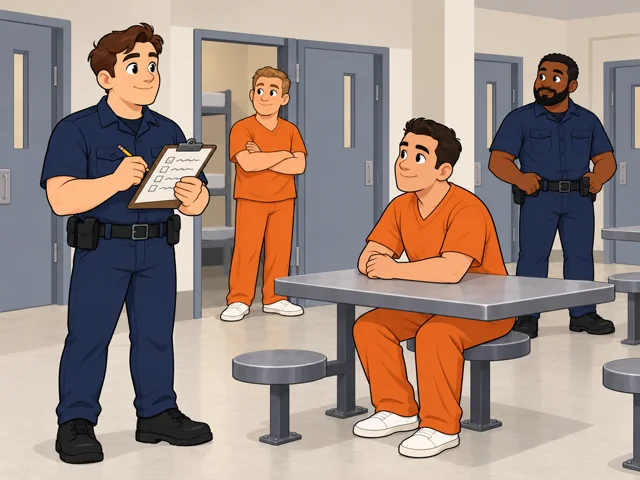
Count everyone in the unit
Count every person living in one housing unit to make sure nobody is missing.
Career profile
Correctional officers track every person in a jail or prison and keep daily routines orderly.
A shift might mean checking a cell door, answering someone's worry, or catching an argument early. You stay alert and treat everyone the same.
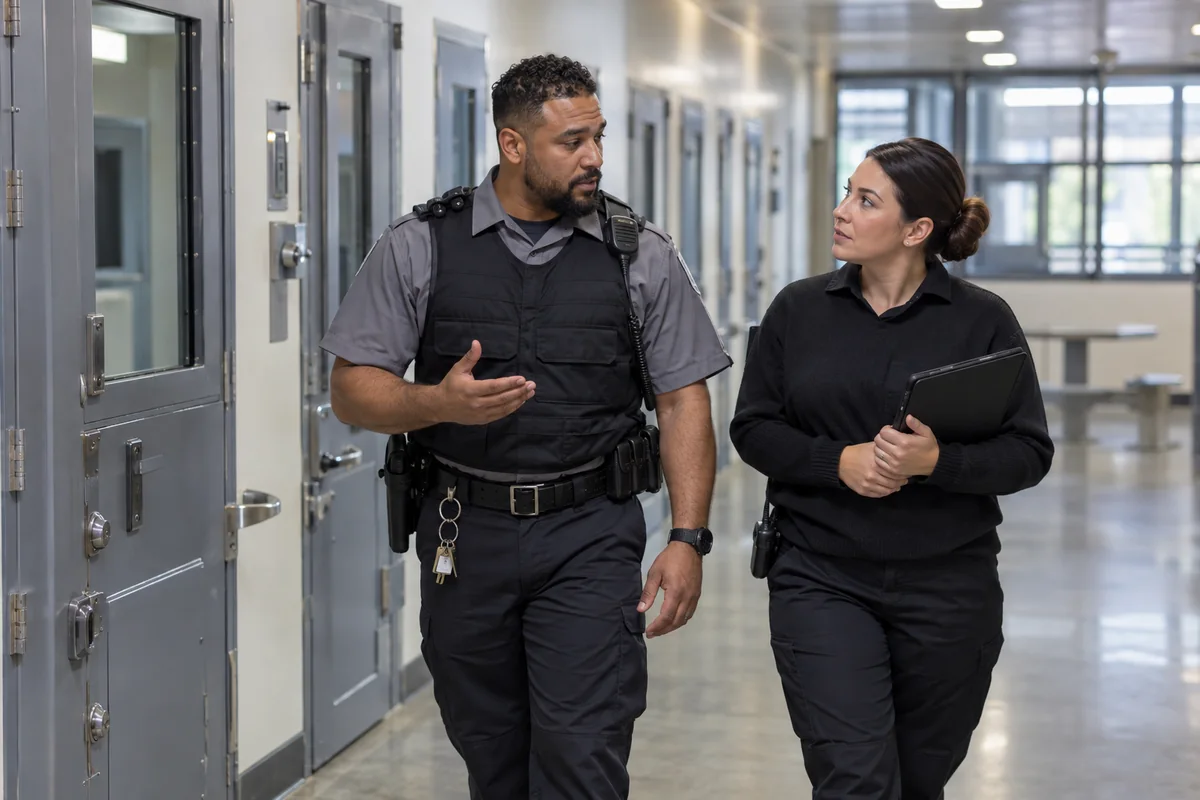
Count every person living in one housing unit to make sure nobody is missing.

You hunt for banned items and inspect the bars and locks for damage that could weaken security.

During recreation, watch how people interact, hear their worries and try to settle disputes before fights start.
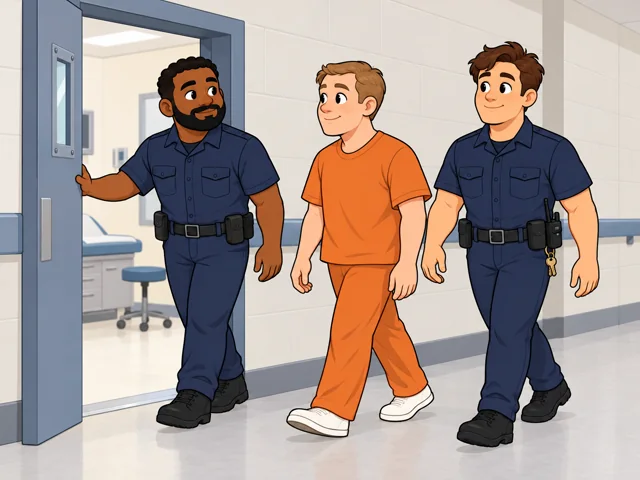
Take someone securely across the facility, and at certain posts, drive people to a hospital or court.

Enter incidents in the day's computer log from what you personally saw, and alert a supervisor to disturbances.
United States
United States · May 2025
United States · 2025–2035
Quick orientation
A high school diploma or equivalent is typical; employer requirements differ.
National median, equivalent to about $28.34/hour at 2,080 hours a year.
About 28,400 openings a year are projected for correctional officers and jailers despite the decline.
Camera systems help staff watch areas and review events. Upgrades can improve what officers can see and hear.
You still speak with people, assess what is happening, and respond in person when a situation changes.
How much monitoring tools can take over depends on camera coverage and system limits. A clearer view does not automatically explain why someone is acting differently.
Pay in context
Compare an employer's actual offer with the national figures before planning around the pay.
The median was $58,940 annually. The lowest-paid 10% earned below $42,760; the highest-paid 10% earned above $93,220. These are wage positions, not career stages.
Annual medians were $74,630 in federal government, $59,990 in state government, $58,500 in local government, and $46,910 in facilities support services. State and local figures exclude education and hospitals.
Employment is projected to fall 7.4%, with 28,400 openings annually on average. Openings and employment growth measure different things: employers still replace departing workers.
Check the agency before choosing training: entry rules vary, and some states require certification.
After entry
This starts where the entry routes leave off: early work, growing capability, and advancement or specialization.
Learn the facility's routines with experienced officers, practicing counts, searches, and clear records.
Use continued training and experience to handle different posts, from housing units to escorts, with consistent decisions and reports.
Seek a supervisory role such as sergeant, or compete for a specialized unit such as hostage negotiation.
You work around arrivals, releases, and transfers, with people awaiting court decisions as well as people serving shorter sentences. Processing people through custody is part of the setting.
People generally stay longer after conviction. Posts can extend beyond housing units: in Texas prisons, officers also supervise laundry, food service, and outdoor work, sometimes without air conditioning.
Try it
Try a fictional custody log: two people argue during recreation, one walks away, and another officer arrives. Write only what was observed, then list what you would need to ask. Notice whether precise, neutral reporting holds your interest.
Stay safe: Keep this a writing exercise; do not stage a confrontation.