
Career profile

Cytogenetic Technologist

Cytogenetic technologists inspect chromosomes, the cell parts holding hereditary code, for wrong counts or shapes.

Line up chromosome pictures side by side, and even a small difference can help pin down a genetic diagnosis. This job makes those differences visible.
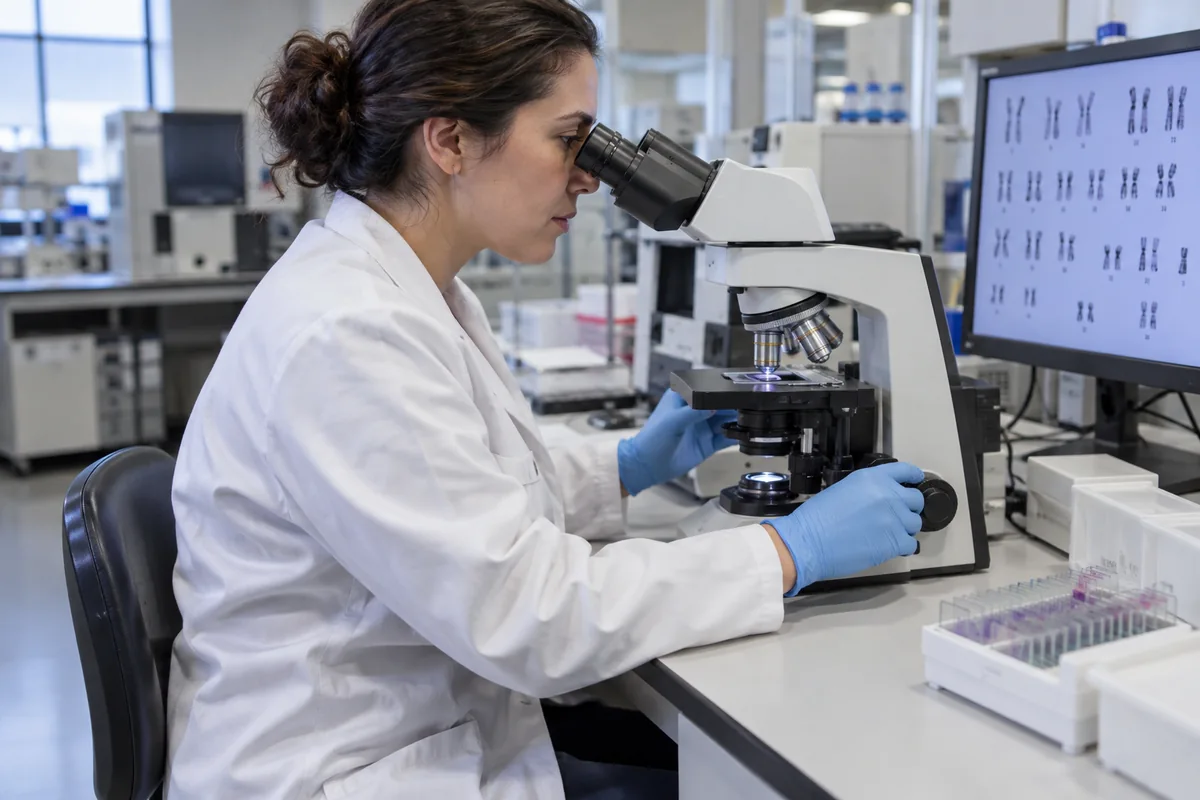
cytogenetic technologist examining a chromosome slide with a microscope in a clinical lab.

A day in the life

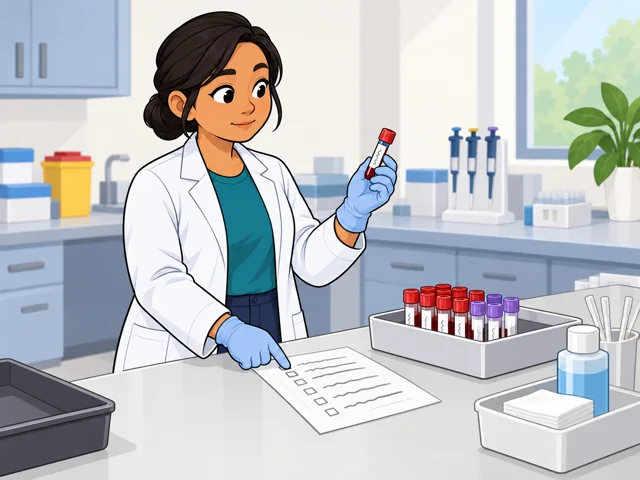
1A technologist checks a sealed specimen tube against its test request at the laboratory reception bench.

Check specimens before work begins

Confirm the incoming specimen suits the test ordered, and if it doesn't, tell the sender what needs fixing.
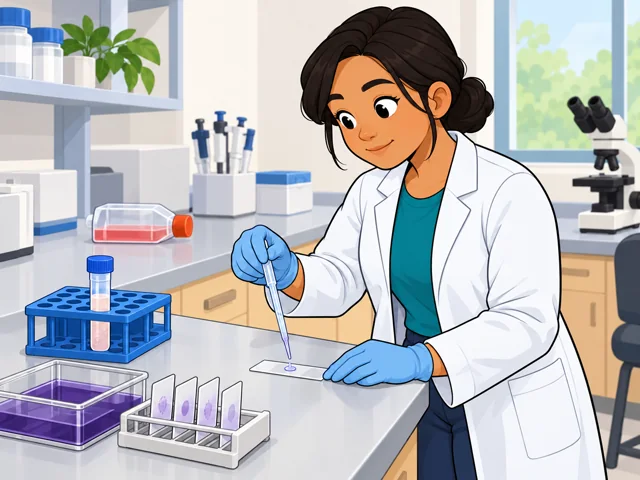
2The technologist transfers harvested cells onto a glass slide beside a rack of stained slides.

Grow cells and make slides

You keep cells growing in culture, harvest them, then make and stain slides so the chromosomes show up.
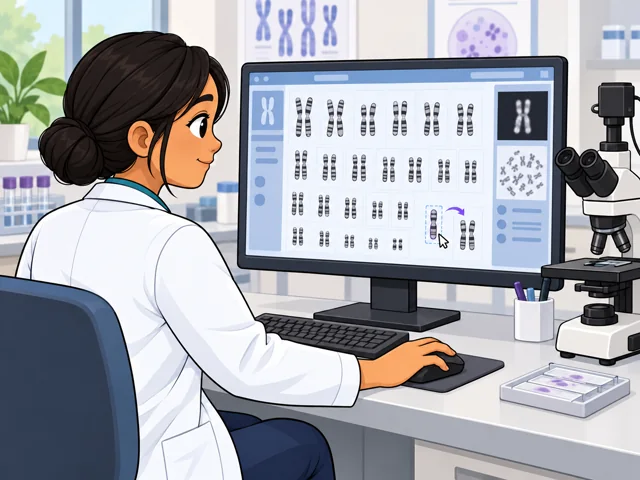
3The technologist arranges chromosome images into pairs on a computer, comparing their bands and shapes.

Arrange a karyotype on screen

With imaging software, arrange chromosomes into a numbered karyotype, then check their banding and shapes for changes.

4The technologist discusses differences between earlier and current chromosome findings with a male colleague while recording an observation.

Track changes from past results

In cancer labs, set past results beside the new analysis, log changes, and discuss hard cases with coworkers.

Quick facts

Preparation

Bachelor’s + laboratory preparation

United States

Pay

Not available

National pay is not reported separately for cytogenetic technologists. Broader laboratory wages appear below.

Outlook

Not available

National growth and annual openings are not reported separately for this specialty.

Quick orientation

Preparation, pay & outlook

Preparation

Bachelor’s + laboratory preparation

Combine a degree with cytogenetics training or qualifying clinical experience.

Geography
United States
Period
Not applicable

Pay

Not available

National pay is not reported separately for cytogenetic technologists. Broader laboratory wages appear below.

Geography
United States
Period
2025

Outlook

Not available

National growth and annual openings are not reported separately for this specialty.

Geography
United States
Period
2025–2035

Fit, tradeoffs & changing tools

Things to weigh

  • Repeated hand movements and close visual work take patience. Handling biological specimens also means consistent protective-equipment habits.
  • Some cancer-lab jobs extend into evenings or Saturdays, which can limit your free time when friends are off.

Where AI may help

Automated equipment can harvest cells and scan slides for digital chromosome analysis, reducing some manual preparation and image capture.

What people still lead

You still evaluate sample quality, investigate unusual findings, and help check whether new tests or instruments work reliably.

What we can’t predict yet

How much image review becomes automated—and how much time shifts toward checking difficult cases—will depend on the tests and tools each lab adopts.

Pay in context

Earnings

There is no separate national pay estimate for cytogenetic technologists. The closest official comparison includes clinical laboratory technologists and technicians across specialties.

A broader laboratory pay benchmark

In May 2025, that broader group had a median of $62,930 a year, or $30.26 an hour. Its national 10th–90th percentile range was $38,910–$100,990 annually. These are wage-distribution points, not starting and senior salaries.

Geography
United States
Period
May 2025
Pay basis
Annual and hourly employee wages; clinical laboratory technologists and technicians, not a cytogenetics-specific estimate

Openings across the wider field

For clinical laboratory technologists and technicians overall, employment is projected to grow 3% from 2025 to 2035, with about 20,800 openings annually from growth and replacement. That total does not tell you how many cytogenetics jobs will be available.

Geography
United States
Period
2025–2035
Pay basis
Employment projections, not compensation; broader SOC 29-2010 population

Getting started

Complete an accredited cytogenetics program

What the route involves
Earn an accredited bachelor’s degree and complete a cytogenetic technologist program accredited by the National Accrediting Agency for Clinical Laboratory Sciences. Practice techniques in supervised clinical training.
What it can lead to
Program completion within the past five years meets the education-and-training route to exam eligibility.

Combine a science degree with clinical experience

What the route involves
Earn an accredited bachelor’s in biology or chemistry, or another bachelor’s with 30 semester hours in those subjects combined. Add one year of full-time acceptable clinical cytogenetics experience within the past three years.
What it can lead to
Documented qualifying experience provides another route to exam eligibility.
What to check
Confirm the laboratory and experience meet ASCP criteria before relying on this route.

Two routes toward the American Society for Clinical Pathology (ASCP) cytogenetics examination combine college study with practical laboratory preparation.

After entry

Career paths

This starts where the entry routes leave off: early work, growing capability, and advancement or specialization. This path also has a credential or licensing boundary; see the requirements and limits.

  1. Get established

    Build consistency in cultures, slide preparation, and quality-control records using your laboratory’s procedures.

  2. Handle harder cases

    Develop your analysis of unusual chromosome findings and learn to help validate new tests or instruments.

  3. Lead laboratory work

    Move toward supervising technologists or training new staff while keeping your own analysis skills current.

Where you can work

Cancer-center laboratories

Your case mix can focus on blood cancers and solid tumors, connecting chromosome findings with earlier results and the patient’s diagnosis. Some positions include evening or Saturday shifts.

  • Indoors
  • Lab
  • Shift work
  • Safety-sensitive

Academic research cores

You may study chromosome changes in human or animal cells for research projects, including how pharmaceutical compounds affect chromosomes. The species and experimental question shape the analysis.

  • Indoors
  • Lab

Try it

See whether the job clicks before you commit to the path.

Try a classroom karyotype worksheet: pair chromosome pictures by size and band pattern, then mark any pairing you are unsure about. Notice whether patient comparison and explaining your uncertainty hold your interest.

Stay safe: Use teaching images, not personal genetic-test results.

Explore more careers

Sources

  1. O*NET OnLine. Cytogenetic Technologists — 29-2011.01. Accessed 2026-10-09.
  2. O*NET OnLine / U.S. Bureau of Labor Statistics. National Wages: Cytogenetic Technologists — broader clinical laboratory population. Accessed 2026-10-09.
  3. U.S. Bureau of Labor Statistics. Clinical Laboratory Technologists and Technicians. Accessed 2026-10-09.
  4. American Society for Clinical Pathology Board of Certification. CG — Scientist in Cytogenetics. Accessed 2026-10-09.
  5. American Society for Clinical Pathology Board of Certification. State Licensure. Accessed 2026-10-09.
  6. UT MD Anderson Cancer Center. Cytogenetic Technology. Accessed 2026-10-09.
  7. UT MD Anderson Cancer Center. Cytogenetic Scientist — Tues–Sat — Mid-Shift, requisition 183364. Accessed 2026-10-09.
  8. UT MD Anderson Cancer Center. Cytogenetics and Cell Authentication Core — Services. Accessed 2026-10-09.

Your message goes to the Great Jobs team. How we use your information