
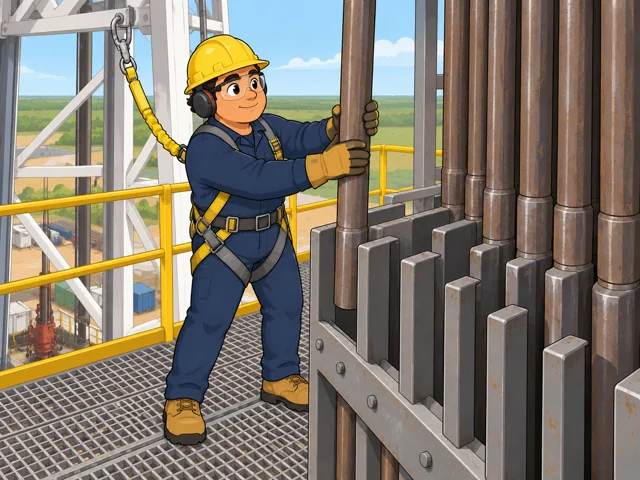
Rack drill pipe up high
On rigs with manual pipe handling, you guide upright drill pipe into its rack high above the floor.
Career profile
Derrick operators keep drill pipe moving and drilling mud circulating on oil and gas rigs.
You work between the tall derrick and the mud pumps. It suits people who enjoy machines, stay focused and coordinate hands-on work with the crew.
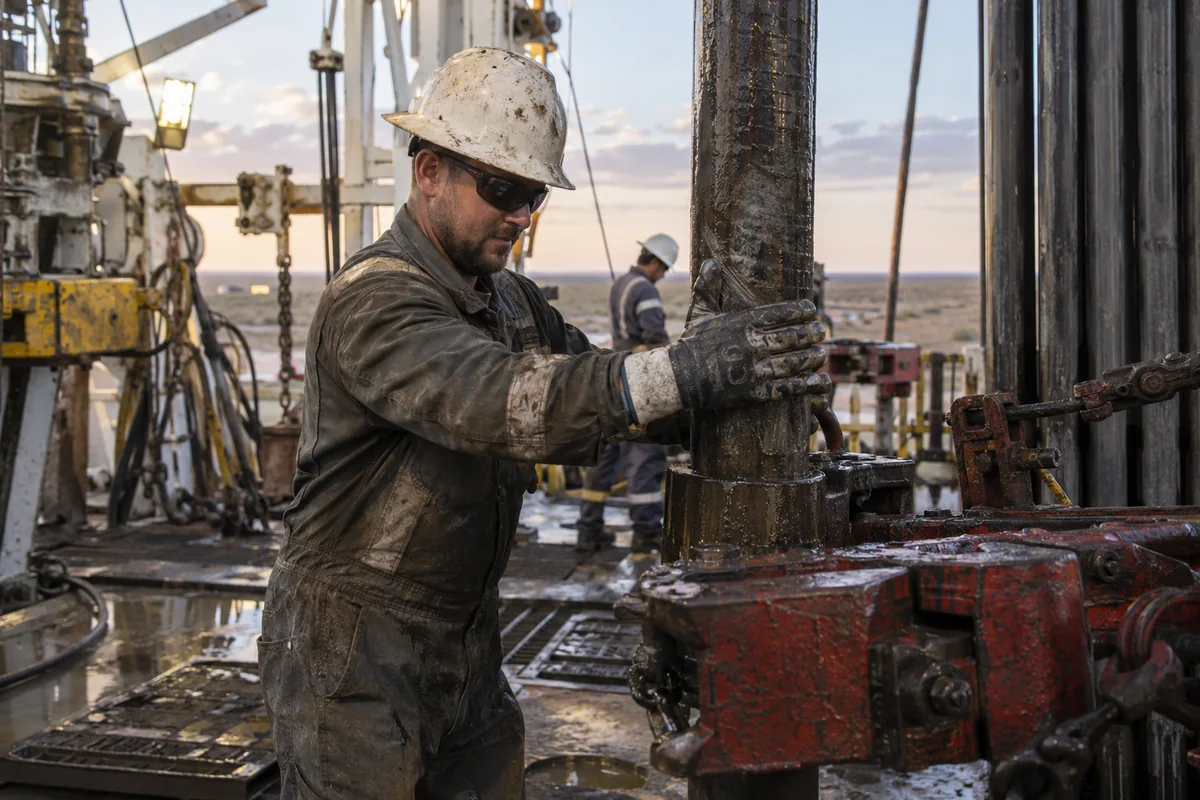
On rigs with manual pipe handling, you guide upright drill pipe into its rack high above the floor.
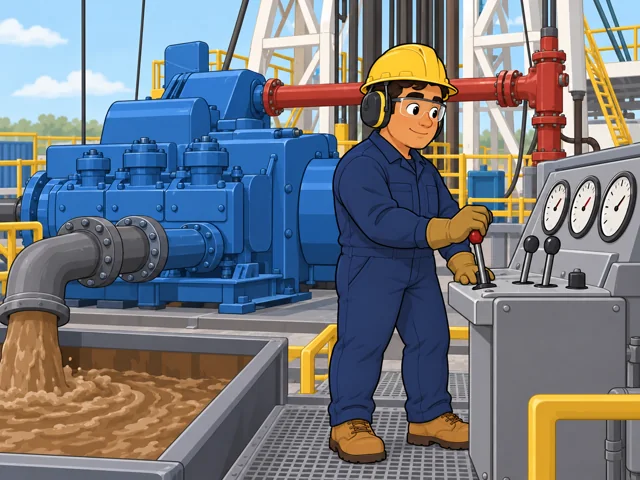
Run the pumps that send drilling mud down the pipe, cooling the bit and lifting rock cuttings away.
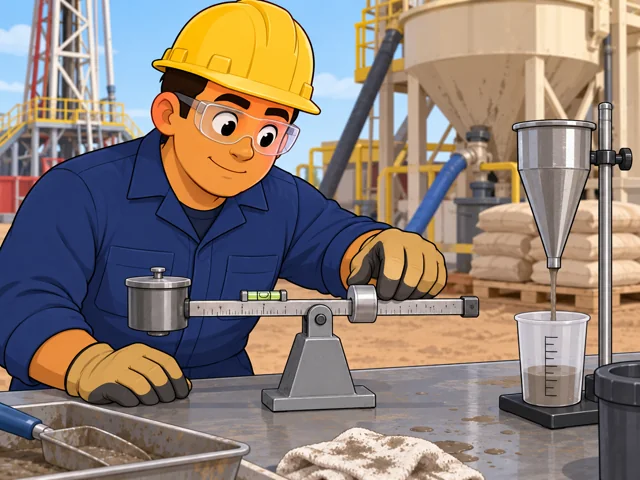
Measure the mud's weight and thickness first, then blend in clay, water and additives to adjust them.
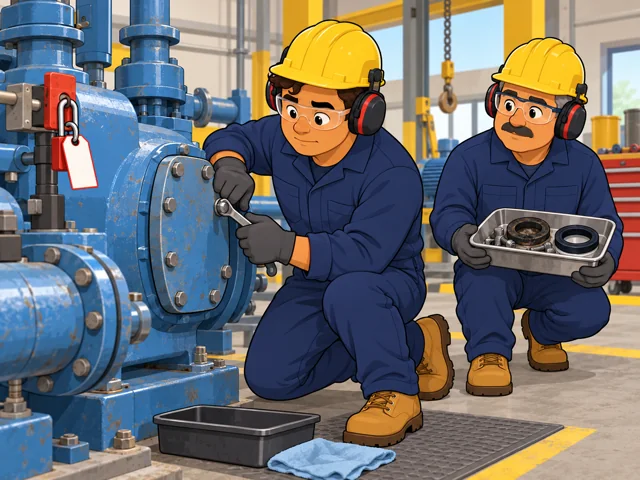
You listen for odd pump sounds and check vibration, then fix any worn or faulty equipment.
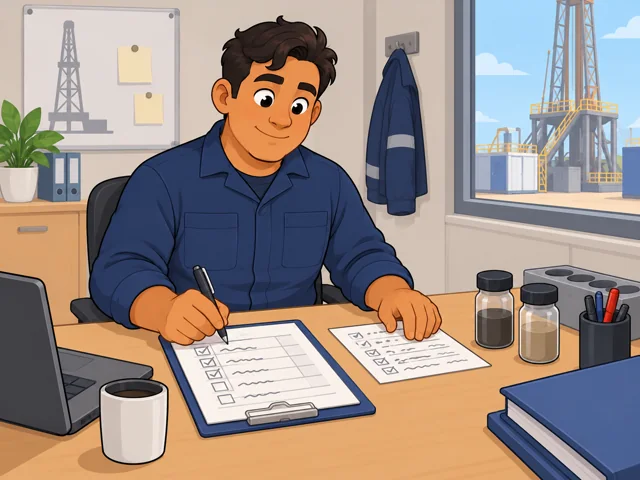
Fill in the mud report, giving the crew a written record of the fluid's condition from your checks.
United States · 2025–2035
United States · May 2025
United States · 2025–2035
Quick orientation
No formal educational credential is typical; employers may require a diploma or related experience.
National median for derrick operators, equivalent to $28.18 an hour.
About 900 openings a year are projected nationally, including replacement openings.
On equipped rigs, powered machines transfer and rack pipe. Automated controls can coordinate pipe movements and track where individual sections are located.
Operators still oversee the surrounding operation and control its pace and execution, even when machines perform the movement sequence.
How much pipe handling remains manual will depend on the rig and future upgrades. The balance between climbing, operating controls, and watching machinery may keep changing.
Pay in context
Use the national figures as a starting point. When comparing offers, ask about the hourly rate, scheduled hours, and how overtime is paid.
The median was $58,620 a year, or $28.18 an hour. The 10th–90th percentile range was $43,380–$81,800 annually. These are wage-distribution points, not starting and senior pay rates.
Employment is projected to grow 1.6% over 2025–2035, with about 900 openings annually from growth and replacement needs. Openings are not all newly created jobs.
Build rig experience before taking on derrick work. You learn from experienced workers, and the driller directs derrick operations. Check each employer’s education and safety-training requirements.
After entry
This starts where the entry routes leave off: early work, growing capability, and advancement or specialization.
Learn your rig’s pipe-handling equipment and mud-system checks until the routines become dependable.
Get better at connecting changing fluid readings or pump behavior to the checks and repairs needed.
With further training and experience, aim for driller responsibilities: operating drilling controls and supervising the crew.
You may travel long distances to a remote rig and stay in a work camp. Rotating shifts shape both your workday and time away.
Assignments can involve weeks offshore with long daily shifts. Pipe handling may use mechanized racks and transfer systems, depending on the rig.
Try it
Sketch a drilling-fluid loop: tank, pump, drill pipe, bit, and return to the surface. Mark where you would want a reading or observation to notice a change. Does tracing a moving system hold your interest?
Stay safe: Keep this a paper exercise; it is not a guide to operating rig equipment.