

Check in at a prenatal visit
Open the chart, take blood pressure, check the baby's growth, and ask what's changed since you last met.
Career profile
Midwives see clients through pregnancy, a home or birth-center delivery, and the baby's first weeks.
Over many visits, you get to know one household well. Later, once labor begins, you put that knowledge to work at the birth.
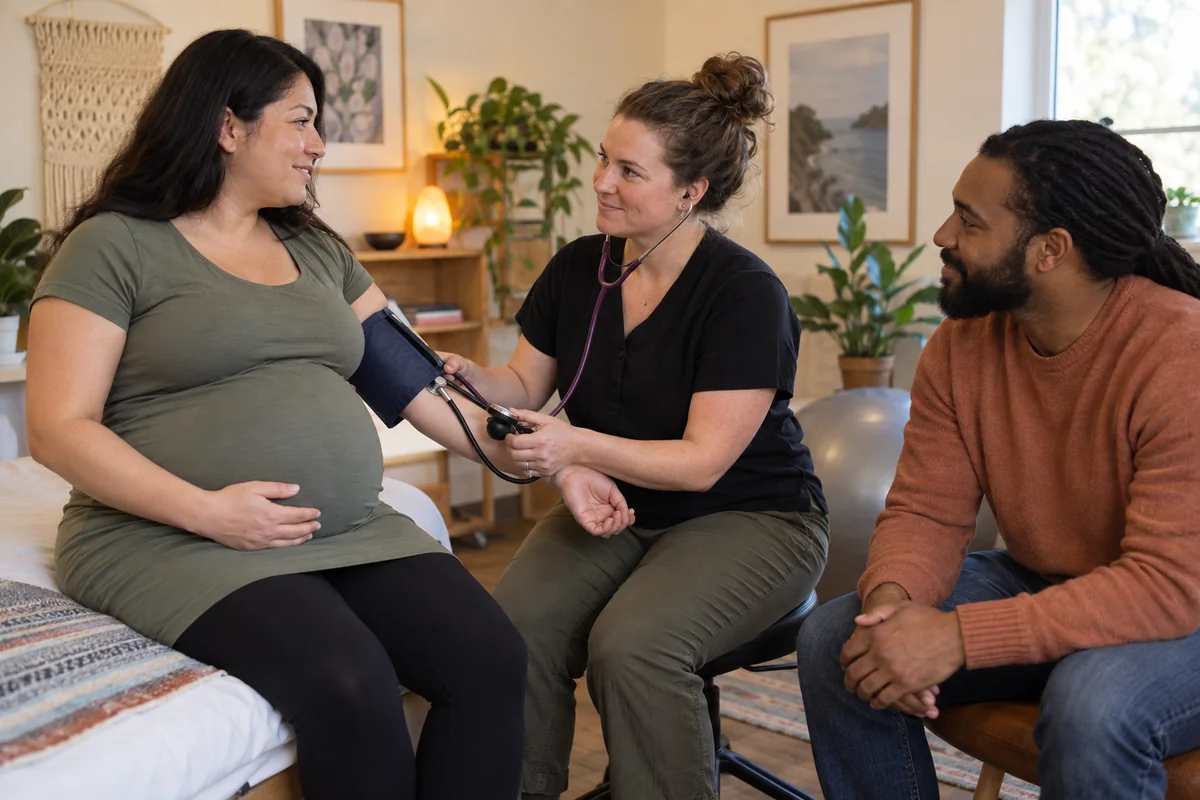
Open the chart, take blood pressure, check the baby's growth, and ask what's changed since you last met.

Track the baby's heart rate and the parent's condition while you help them shift positions and deliver.

Once a problem needs a hospital, tell the client, follow their existing emergency plan, and coordinate the handoff.

Examine the parent's healing and the baby, talk about feeding, and log worries for follow-up.
United States
Pay depends on the position and its call commitment; see the local salary range below.
Explore licensed-midwife positions in the area where you hope to practice.
Quick orientation
Build knowledge and hands-on experience with an experienced midwife before seeking certification.
Pay depends on the position and its call commitment; see the local salary range below.
Explore licensed-midwife positions in the area where you hope to practice.
Electronic charts let some community practices record visits on a tablet and keep client information together.
You still examine the person and interpret changes that may require different care.
How much future software can take over charting without missing important context remains uncertain.
Pay in context
Read a salary alongside its call schedule: time available for births can be a substantial part of the commitment.
A full-time licensed Certified Professional Midwife (CPM) position in Kirkland listed $70,000–$90,000 annually in July 2026, with 15 call days per month plus clinic work and postpartum home visits. This is a local advertised range, not a national average.
These routes lead toward the CPM credential through midwifery education and supervised practice. Before enrolling, check the licensing requirements where you intend to work.
After entry
This starts where the entry routes leave off: early work, growing capability, and advancement or specialization. This path also has a credential or licensing boundary; see the requirements and limits.
Build dependable routines for client updates, handoffs, and emergency contacts so information is ready when care changes.
Discuss cases in peer review, refresh emergency skills, and use continuing education to improve your care.
With additional experience and the required registration, become a preceptor who teaches students and verifies their clinical skills.
You may combine office appointments with travel to births and early postpartum visits. Birth assistants and regular meetings help a small practice keep track of each family.
A center can provide a shared base with other midwives and administrative staff. The schedule may still include call and visits to clients’ homes.
Try it
Sketch an emergency-contact sheet for a fictional home-birth client: include a receiving hospital, care contacts, and a family contact. Explain why each belongs there. Notice whether preparing for a change of plan interests you as much as attending the birth.
Stay safe: Use invented personal details. This is a coordination exercise, not a clinical emergency plan.