

Career profile

DJ

DJs pick recorded tracks, and each DJ blends them for people at a live event.

The next track is your call, and the way dancers react tells you whether that pick is working.
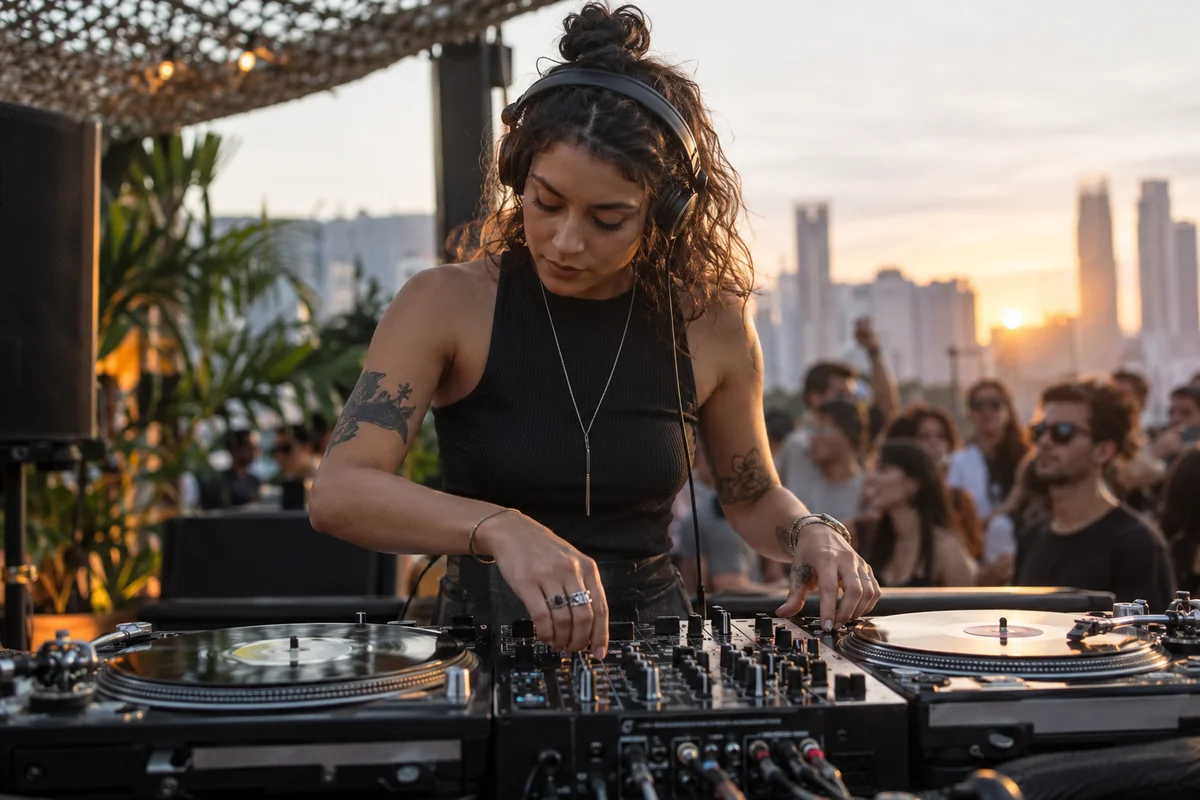
DJ mixes music on turntables at a live event.

A day in the life

1A DJ listens to an adult male client as they review music choices on a phone, a laptop playlist, and a paper event schedule.

Plan the music with the client

Discuss the client's song requests and the event timeline, then build a song list that suits the event.
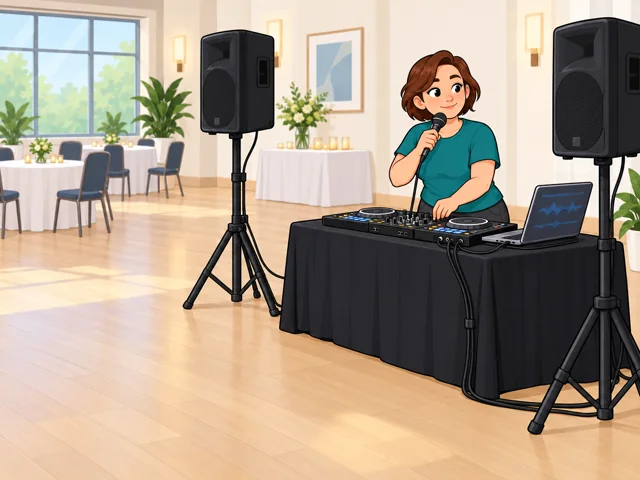
2Before guests arrive, a DJ tests a microphone and adjusts the controller beside connected speakers facing an empty dance floor.

Set up gear before guests arrive

Connect the mixing controller, speakers and mic, then play a track and test the mic before guests arrive.
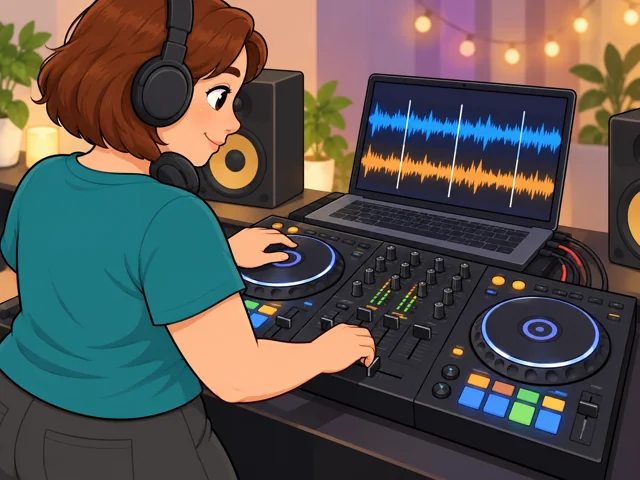
3Seen over her shoulder, a DJ listens through one headphone earcup while using a jog wheel and crossfader to blend two tracks.

Blend one song into the next

Pick the next track's entry point, line up the two beats, and crossfade, letting software help sync tempo.
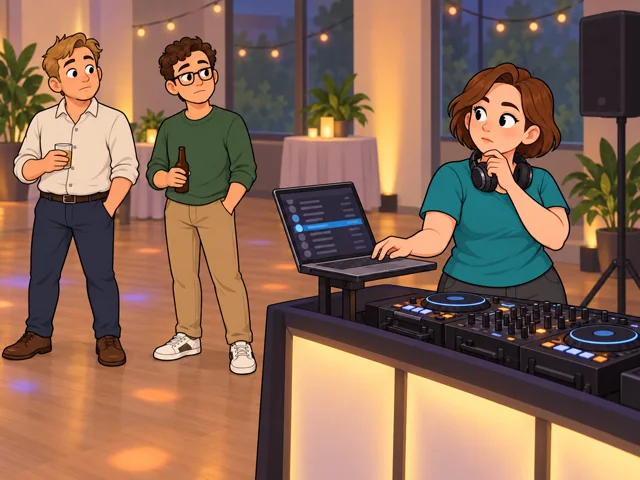
4A DJ watches two guests pause their dancing while selecting a different next track on her laptop.

Watch the floor and adjust

Notice who reacts to a track, and if energy drops, change direction rather than sticking to the list.
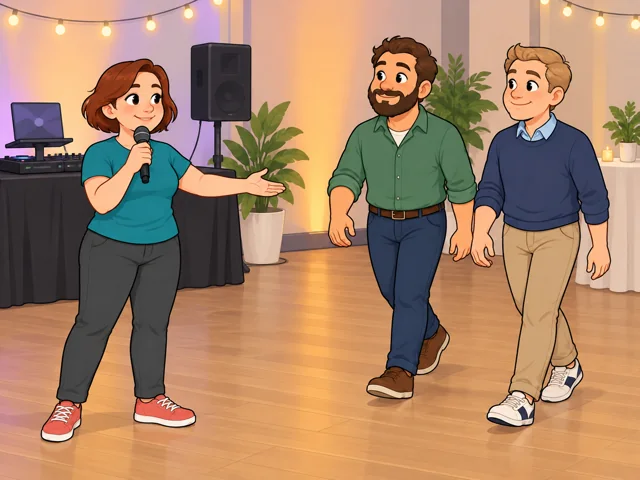
5Standing beside her booth, a DJ speaks into a microphone and welcomes two adult guests into an open space for the next activity.

Get guests into the games

In hosting jobs, you also grab the mic to run games or call guests into the next activity.

Quick facts

Preparation

High school + workplace training

United States · 2025–2035

Pay

$21.61/hour

United States · May 2025

Outlook

3.8% projected growth

United States · 2025–2035

Quick orientation

Preparation, pay & outlook

Preparation

High school + workplace training

Typical entry preparation is a high school diploma or equivalent followed by short-term on-the-job training.

Geography
United States
Period
2025–2035

Pay

$21.61/hour

May 2025 median for non-radio DJ employees; self-employed earnings are excluded.

Geography
United States
Period
May 2025

Outlook

3.8% projected growth

About 1,700 openings a year, on average, are projected for non-radio DJs during 2025–2035.

Geography
United States
Period
2025–2035

Fit, tradeoffs & changing tools

Things to weigh

  • Nights, weekends, and holidays can be working time; some jobs are part time.
  • Expect standing and loud sound. Wedding work can also include equipment setup and teardown.

Where AI may help

Software such as Serato can match two tracks' speeds and align their beats, reducing the manual work in a transition.

What people still lead

You still decide whether a song suits these guests and this moment.

What we can’t predict yet

How much of a live mix can run automatically remains an open question. Even beat matching gets harder when a recording's tempo changes.

Pay in context

Earnings

Employee wages and freelance booking fees tell different stories. A booking fee must also cover your business costs.

The hourly spread

In May 2025, non-radio DJ employees had a $21.61 hourly median. The lowest 10% earned below $13.50; the highest 10% earned above $60.17. These are wage percentiles, not beginner and expert rates.

Geography
United States
Period
May 2025
Pay basis
Hourly employee wages; excludes self-employment

Pay differs by industry

Hourly medians were $24.98 in performing arts, spectator sports, and related industries; $20.00 in food services and drinking places; and $16.86 in amusement, gambling, and recreation.

Geography
United States
Period
May 2025
Pay basis
Industry median hourly employee wages for non-radio DJs

Openings include replacements

The projected 1,700 annual openings include replacement needs as well as growth. They are a national average for 2025–2035, not a count of jobs currently advertised.

Geography
United States
Period
2025–2035
Pay basis
Employment projection, not compensation

Getting started

Train with a wedding entertainment team

Paid
What the route involves
Start as an assistant, helping an experienced DJ set up, pack equipment, and manage guests while learning the wedding workflow.
What it can lead to
An assistant-to-DJ training program gives you a route toward running weddings yourself.
What to check
Look for employers that explicitly train assistants into DJ roles; assistant work alone does not guarantee advancement.

Build mixing skills and a demonstration

What the route involves
Use structured lessons or individual coaching to learn song timing, transition points, and mixing. Practice complete sets and record your work.
What it can lead to
A demonstration lets you show your mixing and microphone skills when applying for performance work.
What to check
Host-DJ applications may also ask for audience interaction and stage presence. Mixing ability is only part of that role.

A high school diploma or equivalent is typical preparation. You can build the practical skills through employer training or lessons and performance practice.

After entry

Career paths

This starts where the entry routes leave off: early work, growing capability, and advancement or specialization.

  1. Become dependable

    Make setup and pack-down routine. Use a gear checklist so a missing cable does not disrupt your next event.

  2. Improve your mixes

    Record practice sets and listen back. Work on awkward transitions, then learn when a simple song change works better than a long blend.

  3. Lead events or specialize

    With stronger event skills, work toward leading wedding performances and coordinating an assistant.

    • Develop scratching techniques if you want more of your performance to come from manipulating the recordings themselves.

Where you can work

Wedding entertainment teams

You work around a couple's celebration, with guest interaction alongside the music. Teams may pair a lead DJ with an assistant who helps set up and pack equipment.

  • Physical demands

Cruise-ship entertainment

Some shipboard roles combine nightclub sets with deck parties, trivia, and other hosting. You work within an entertainment department and participate in shipboard drills.

  • Indoors
  • Outdoors
  • Travel

Try it

See whether the job clicks before you commit to the path.

Choose five school-appropriate songs for an imaginary school celebration. Pick their order and mark where each change should happen. Ask a friend which transition feels awkward, then revise it. Notice whether you enjoy shaping a set for someone else's ears.

Explore more careers

Sources

  1. O*NET OnLine. 27-2091.00 — Disc Jockeys, Except Radio. Accessed 2026-10-04.
  2. U.S. Bureau of Labor Statistics. Occupational projections and worker characteristics, 2025–2035. Accessed 2026-10-04.
  3. U.S. Bureau of Labor Statistics. Announcers and DJs — non-radio DJ sections. Accessed 2026-10-04.
  4. Turn Up Nashville. Join Our Team. Accessed 2026-10-04.
  5. Scratch DJ Academy. Learn to DJ. Accessed 2026-10-04.
  6. Algoriddim. Learn How to DJ — djay School. Accessed 2026-10-04.
  7. Carnival Entertainment. Host DJs Opportunities. Accessed 2026-10-04.
  8. Serato. Sync. Accessed 2026-10-04.

Your message goes to the Great Jobs team. How we use your information