
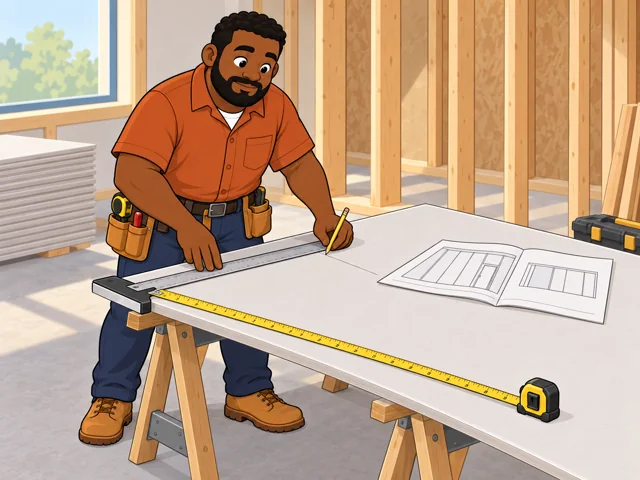
Mark where each board goes
Read the plan, then carry its measurements over with a tape measure and square, marking each board's spot.
Career profile
Drywall installers hang boards on a building's open frame to make finished walls and ceilings.
Enjoy getting pieces to line up neatly? Here you get to watch a bare space turn into a room, one board at a time.
Read the plan, then carry its measurements over with a tape measure and square, marking each board's spot.
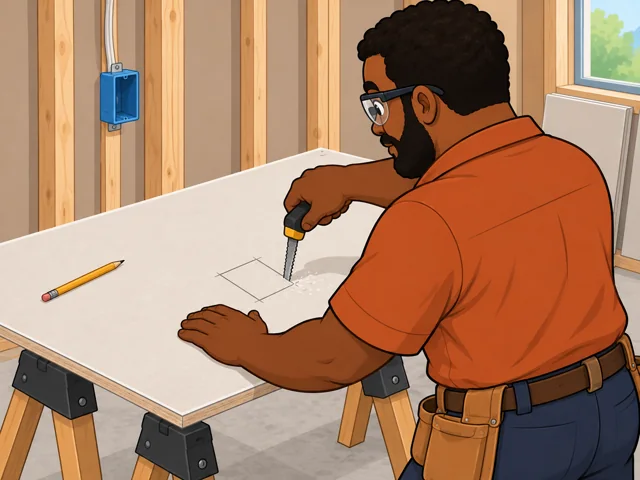
Outline the hole, then saw it out with a keyhole saw so the outlet box stays reachable.
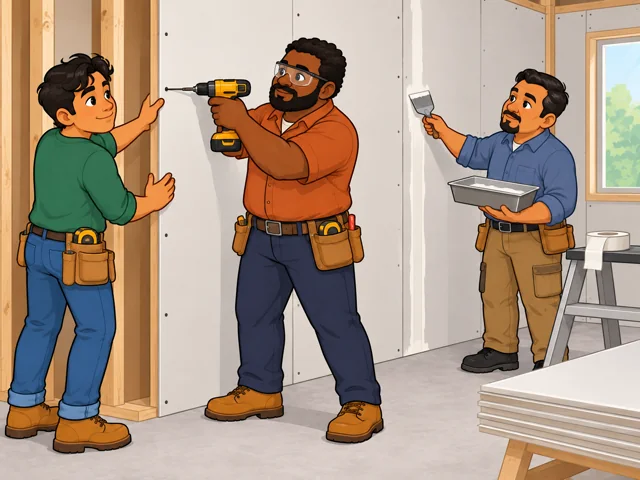
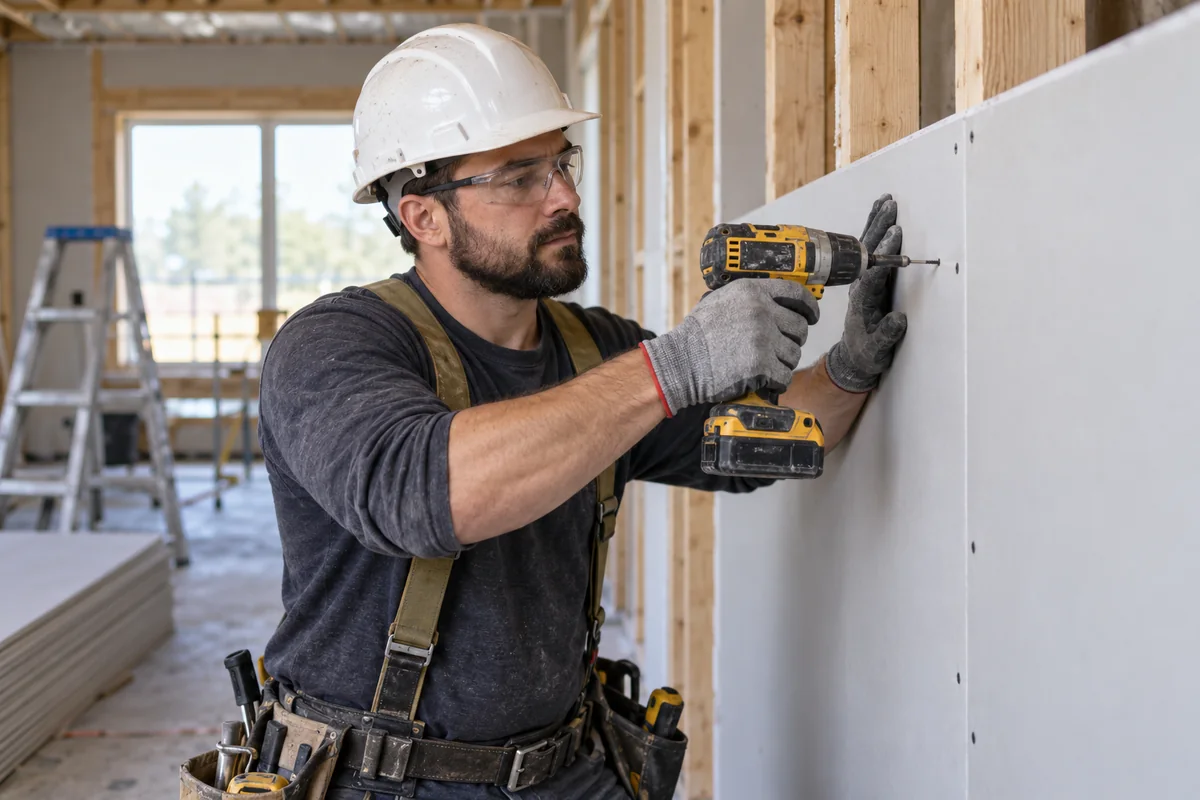
Hold each board on the frame and drive in screws, working alongside finishers who hide the joints.
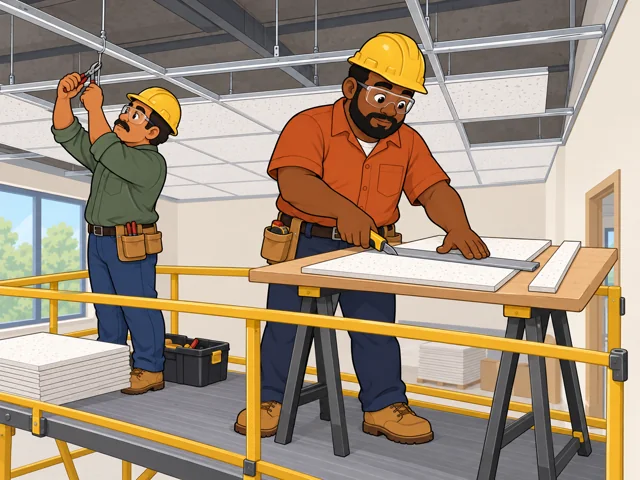
Hang the ceiling grid on wire, and once part is up, trim border tiles to the room's edges.
United States · 2025
United States · May 2025
United States · 2025–2035
Quick orientation
No formal educational credential is typically needed to enter; employer requirements vary.
National median, equivalent to $28.33 an hour.
About 6,600 openings a year are projected nationally, including replacement openings.
Digital layout tools can transfer wall positions from plans to the floor. On suitably equipped projects, drilling robots can mark and drill overhead holes.
You still need to fit the actual building, resolve installation problems and coordinate work around other people.
How much setup and repetitive layout or drilling shifts to machines will depend on the project and equipment. Learning these tools may become part of the work.
Pay in context
The national median is a midpoint across workers, not a starting offer.
The median was $58,930 a year, or $28.33 an hour. The lowest-paid 10% earned $38,460 or less; the highest-paid 10% earned $102,010 or more. Those groups are not beginner and experienced pay bands.
A historical comparison shows annual mean wages of $72,180 in nonresidential building construction and $53,310 in residential building construction. These May 2023 averages describe different worker groups; they are not current offers or guaranteed premiums.
Employment is projected to grow 2.5% from 2025 to 2035, with about 6,600 openings annually. Openings include replacements as well as growth; they do not indicate how many jobs are available near you today.
Most installers learn beside experienced workers.
After entry
This starts where the entry routes leave off: early work, growing capability, and advancement or specialization.
Practice accurate cuts and secure installation before taking on more difficult areas.
Develop layout and metal-framing skills, then learn more demanding ceiling systems with unusual shapes or details.
With experience, you could move into supervising crews or estimating project costs.
In schools or offices, you may hang panels on metal framing and use lifts to reach ceiling height.
Interior renovation adds people and furnishings to work around. Protecting furniture and adjusting schedules to limit disruption become part of installing walls and ceilings.
Try it
Draw a wall on graph paper with a door and an outlet. Use paper rectangles as wallboard panels and plan the cuts. Notice whether you enjoy measuring carefully and solving awkward fits.
Stay safe: Keep this a tabletop paper exercise; it does not require cutting wallboard or opening a wall.