
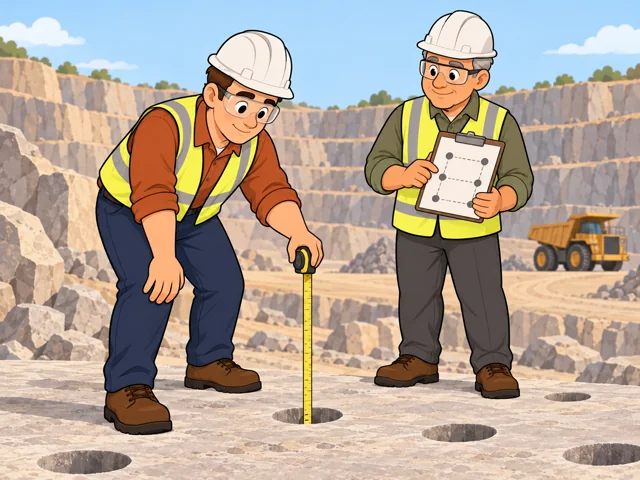
Measure each drilled hole
Lower a weighted tape into each hole for its depth, and match hole positions to the drill plan.
Career profile
Blasters set off explosives to break up rock or bring down structures.
Quarry blasting aims for rock pieces the crusher can handle. That takes thorough prep, warnings anyone understands, and a crew that knows when to stop.
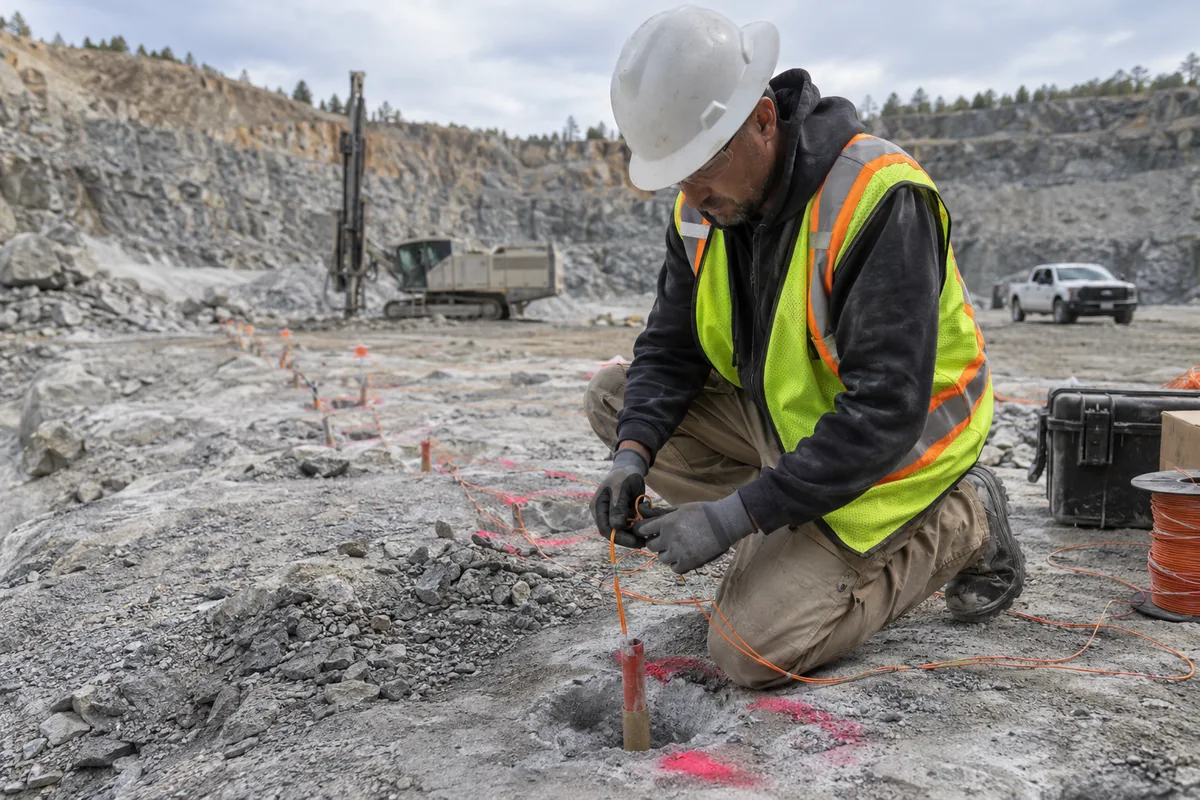
Lower a weighted tape into each hole for its depth, and match hole positions to the drill plan.
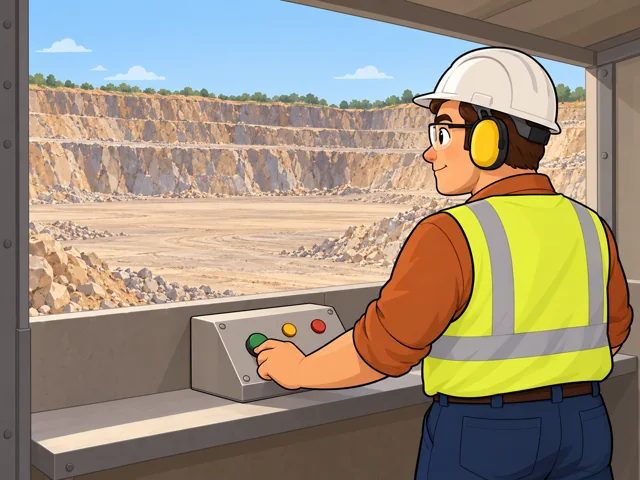
Set charges in the spots chosen in advance, and fire the blast when the area is ready.
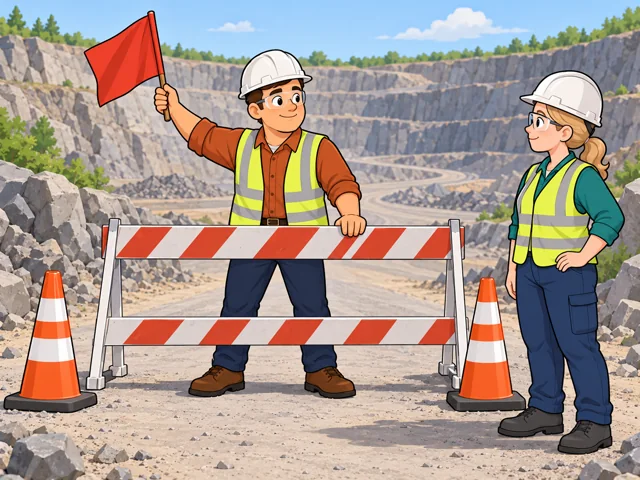
You put up barriers and give warning signals so other workers stay out of the blast zone.

Record explosive used and still in storage, then check the log and look into any unexplained gap.
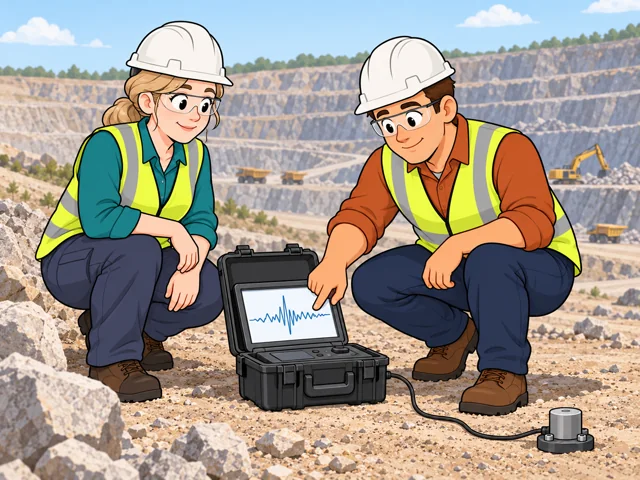
In certain quarry roles, you review ground-vibration monitor data to judge effects past the broken rock.
United States
United States · May 2025
United States · 2025–2035
Quick orientation
A typical starting point; blasting also requires job-specific training and demonstrated competence.
National median, or $29.51/hour, for explosives workers, ordnance handling experts, and blasters.
About 400 openings a year projected across the same occupation group.
Digital tools can combine rock surveys, blast designs, and monitoring results. Some quarry crews already use laser measurements and electronic blasting systems.
You still have to recognize an unsafe condition and communicate what the crew must do. A digital plan does not establish that the site is ready.
How much design checking will become automated remains uncertain, especially when the actual ground differs from the model.
Pay in context
These national figures cover explosives workers, ordnance handling experts, and blasters together, including specialties beyond commercial rock blasting.
The median was $61,390 a year, or $29.51 an hour. The 10th-to-90th-percentile range was $40,480–$99,360 annually, or $19.46–$47.77 hourly. Those are wage-distribution points, not starting and senior pay grades.
Employment is projected to change by 0% from 2025 to 2035, with about 400 openings annually. Openings can arise as people leave the occupation even when its total size stays level.
Start by identifying the kind of blasting you want to learn. Training and legal requirements depend on the work and its location.
After entry
This starts where the entry routes leave off: early work, growing capability, and advancement or specialization. This path also has a credential or licensing boundary; see the requirements and limits.
Get consistent at site preparation and accurate blast and inventory records.
Build skill interpreting rock-face surveys and borehole tracking so you can spot differences between the plan and the drilled site.
With the required qualifications, work toward leading a blasting crew. Another direction is deeper skill in vibration monitoring and blast evaluation.
Your blast helps produce rock for crushing. Survey information, hole tracking, and vibration monitoring can connect your crew's work with the quarry's longer-term excavation plan.
You may clear rock for a foundation or highway. Existing buildings, roads, and utilities can constrain the work and require extra precautions against flying fragments.
Blasting breaks the rock above coal so excavation equipment can remove it. Nearby residents, warning schedules, and limits on vibration are part of the working setting.
Try it
Try a paper-only inventory check: invent an opening stock count, a delivery, an amount used, and a closing count, then plant one mismatch. Write the question you would ask before signing the log. Notice whether you enjoy finding and explaining the discrepancy.
Stay safe: Use imaginary numbers only; do not obtain or handle explosives or blasting equipment.