
Career profile

Crop, Nursery, or Greenhouse Worker

Farmworkers plant, tend and harvest crops, or grow nursery plants for sale.

Young plants in a row become a harvest or stock shipped to buyers. That takes both steady, repetitive handwork and noticing how plants change.
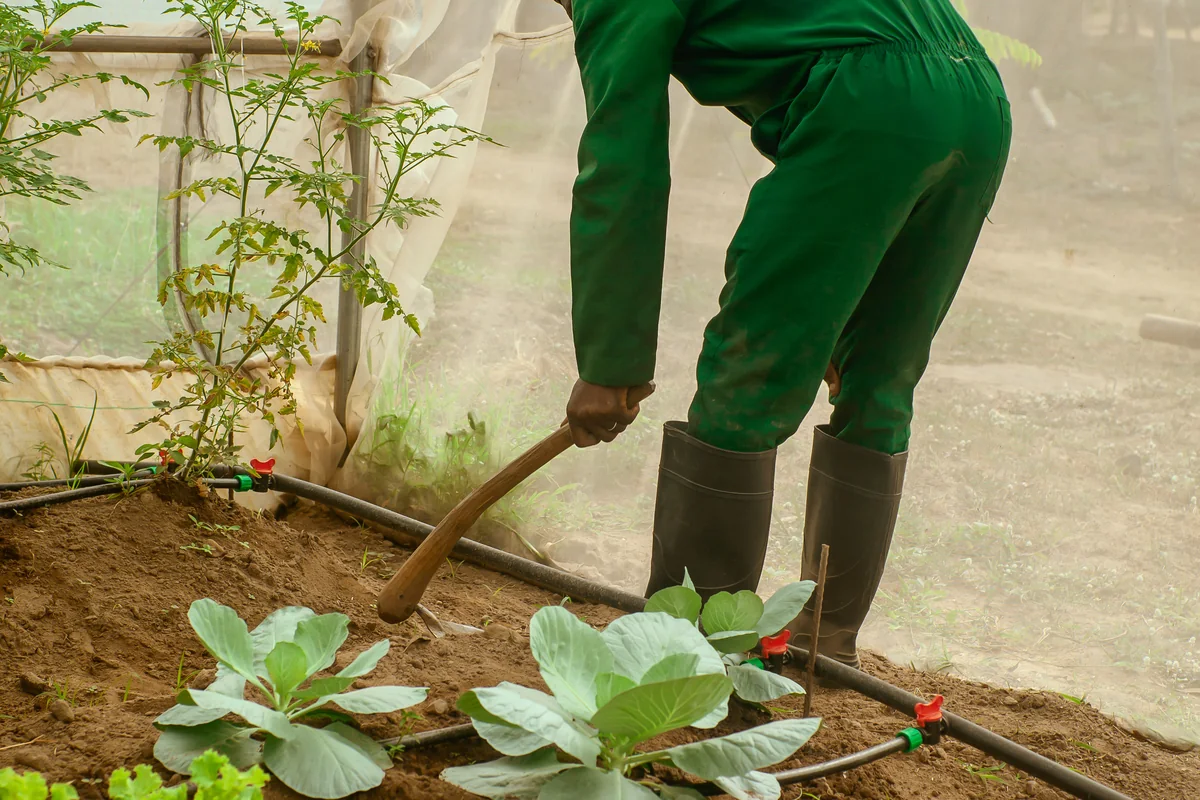
A farmworker weeds plants inside a greenhouse.
Oluwole Ekundayo Sofunde / Wikimedia Commons. CC BY-SA 4.0

A day in the life

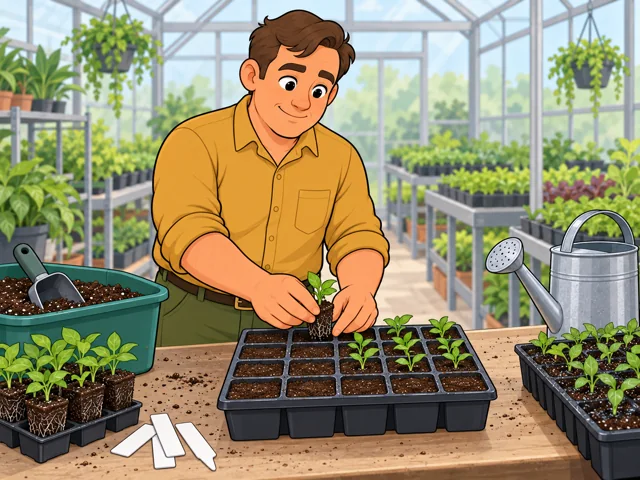
1A greenhouse worker gently places a seedling into a tray of growing mix, beside blank plant tags and a watering can.

Pot up seedlings and tag them

Fill containers with growing mix, set a seedling in each, tag it, and water trays once they're full.
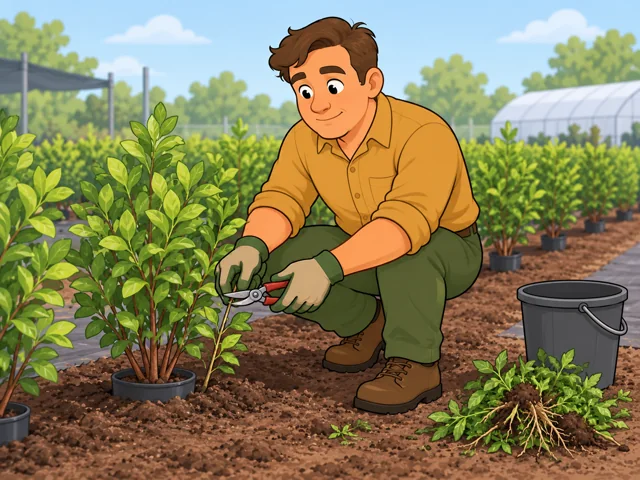
2A worker crouches beside a nursery shrub and trims a small shoot, with pulled weeds gathered beside the cleared row.

Weed the rows, then prune

Pull weeds by hand or with a hoe, then trim plants back with pruning shears.

3A worker lifts a yellowing leaf and points out small insects to a woman grower who examines the affected plant.

Spot trouble on the leaves

Watch leaves for bugs or color changes, and tell the grower which plants seem to have trouble.
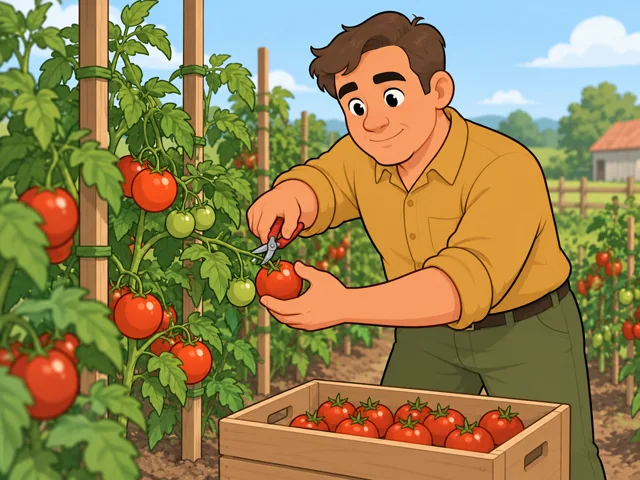
4A worker supports a ripe red tomato while snipping its stem, leaving green fruit on the vine and keeping harvested tomatoes in a shallow crate.

Pick ripe vegetables down each row

In vegetable-picking jobs, judge size, color and ripeness before picking, and handle produce gently so it won't bruise.

Quick facts

Preparation

Learn on the job

United States

Pay

$17.15 an hour

United States · 2025

Outlook

2% decline

United States · 2025–2035

Quick orientation

Preparation, pay & outlook

Preparation

Learn on the job

Usually no formal educational credential is needed; employer requirements vary.

Geography
United States
Period
Not applicable

Pay

$17.15 an hour

The 2025 national median was $35,660 annually.

Geography
United States
Period
2025

Outlook

2% decline

National employment is projected to decrease from 2025 to 2035.

Geography
United States
Period
2025–2035

Fit, tradeoffs & changing tools

Things to weigh

  • Repeated bending and carrying can be tiring. Fieldwork also exposes you to heat and changing weather.
  • Seasonal jobs can mean long days during busy periods and gaps between jobs.

Where AI may help

Timers, moisture sensors and computer controls can switch irrigation valves on and off.

What people still lead

You still inspect plants and report problems that need attention.

What we can’t predict yet

How much watering and harvesting becomes automated will vary with the crop and equipment a farm adopts.

Pay in context

Earnings

Compare the wage rate with how much of the year the job lasts.

The middle and the spread

The 2025 median was $17.15 an hour, or $35,660 annually. The 10th and 90th percentiles were $15.82 and $21.96 an hour ($32,900 and $45,690 annually). These describe the wage distribution, not starting and experienced pay.

Geography
United States
Period
2025
Pay basis
National hourly and annual median, 10th percentile and 90th percentile

Workplace type can matter

In May 2023, this occupation averaged $17.25 an hour ($35,880 annually) in crop-production support businesses and $19.30 ($40,130 annually) in beverage manufacturing. These are historical industry averages, not current offers.

Geography
United States
Period
May 2023
Pay basis
Industry mean hourly and annual wages for the same occupation

A season is not a full year

Annualized wages assume 2,080 paid hours. A seasonal job may provide fewer. Ask about expected weekly hours and the season's end date.

Geography
United States
Period
Not stated
Pay basis
Annualized wages versus actual paid hours

Openings despite decline

The earlier 2024–2034 projection estimated 71,700 openings annually, including replacements. That is a separate forecast period from the 2025–2035 decline shown above.

Geography
United States
Period
2024–2034
Pay basis
Projected annual job openings; not a wage measure

Getting started

Start with a field crew

What the route involves
Learn tool use and safety while doing planting or harvest work.
What it can lead to
You build crop-specific experience recognizing harvest readiness and handling produce carefully.

Join nursery production

What the route involves
Learn the nursery's routines for potting, watering and preparing plants for shipment.
What it can lead to
You gain experience taking container plants from transplanting through preparation for sale.
What to check
Some commercial nursery jobs require previous nursery experience; check the posting before applying.

You usually learn from an employer after hiring, working with a farm manager or supervisor.

After entry

Career paths

This starts where the entry routes leave off: early work, growing capability, and advancement or specialization.

  1. Get consistent

    Learn what a usable plant or harvest looks like, and handle it carefully through a full batch.

  2. Learn the growing systems

    Build skill in recognizing plant problems and managing watering or greenhouse temperatures.

  3. Move toward crew leadership

    A nursery lead may teach new workers, divide the workload and check completed work. Growing plants well becomes only part of the responsibility.

Where you can work

Vegetable fields

You work along outdoor rows with a harvest crew. Crop maturity determines what gets picked, and some tasks require coordinating your movements with others.

  • Outdoors
  • Field work
  • Physical demands

Commercial nurseries

Outdoor growing areas and potting lines hold plants at different stages. Moving containers and packing orders are part of getting living plants ready to ship.

  • Outdoors
  • Physical demands

Production greenhouses

You work inside an enclosed growing space, sometimes with plants on raised benches. Watering, heating and ventilation help control conditions; sunny weather can still make the space hot.

  • Indoors
  • Physical demands

Try it

See whether the job clicks before you commit to the path.

Choose a plant you already care for and inspect it daily for a week. Record leaf color, visible damage and new growth. Notice whether you enjoy checking the same living thing carefully and keeping a useful record.

Stay safe: Observe without applying pesticides or diagnosing a treatment.

Explore more careers

Sources

  1. O*NET OnLine / U.S. Department of Labor. Farmworkers and Laborers, Crop, Nursery, and Greenhouse. Accessed 2026-10-03.
  2. O*NET OnLine / U.S. Department of Labor. National Wages: 45-2092.00. Accessed 2026-10-03.
  3. U.S. Bureau of Labor Statistics. Agricultural Workers. Accessed 2026-10-03.
  4. U.S. Bureau of Labor Statistics. May 2023 Occupational Employment and Wage Estimates: Farmworkers and Laborers, Crop, Nursery, and Greenhouse. Accessed 2026-10-03.
  5. Dennis Nursery & Greenhouses Inc / U.S. Department of Labor. Nursery Worker — H-300-26156-985723. Accessed 2026-10-03.
  6. SOL Harvesting LLC / U.S. Department of Labor. Farmworker: Diversified — H-300-26181-068165. Accessed 2026-10-03.
  7. Penn State Extension. Drip Irrigation for Vegetable Production. Accessed 2026-10-03.
  8. Penn State Extension. Greenhouse Production. Accessed 2026-10-03.
  9. Iowa Department of Administrative Services. Nursery Worker 2. Accessed 2026-10-03.

Your message goes to the Great Jobs team. How we use your information