

Trace assets back to loan files
Hold the bank's asset totals against loan files and backup accounts, and probe numbers that do not match.
Career profile
Financial examiners study bank files and decisions to judge financial risk and legal compliance.
A bank says it is earning well, but do its lending and management support that? Examiners weigh the evidence and explain which problems need action.

Hold the bank's asset totals against loan files and backup accounts, and probe numbers that do not match.
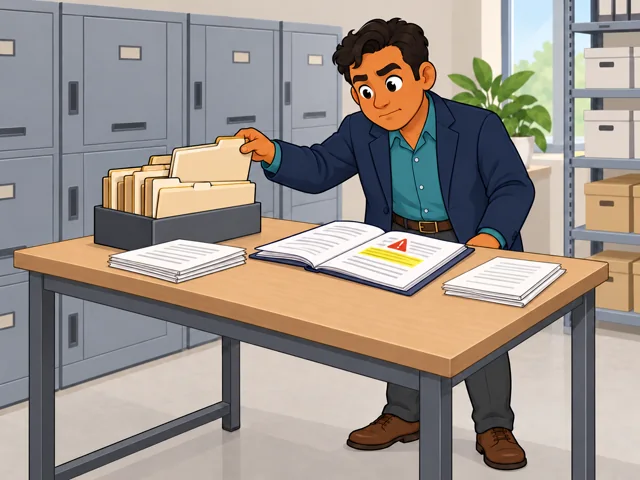
Scan an audit report for gaps in the bank's own controls, then choose which files to open next.

Talk through questionable loan growth with the bank's managers, then pick which risks deserve a deeper look.
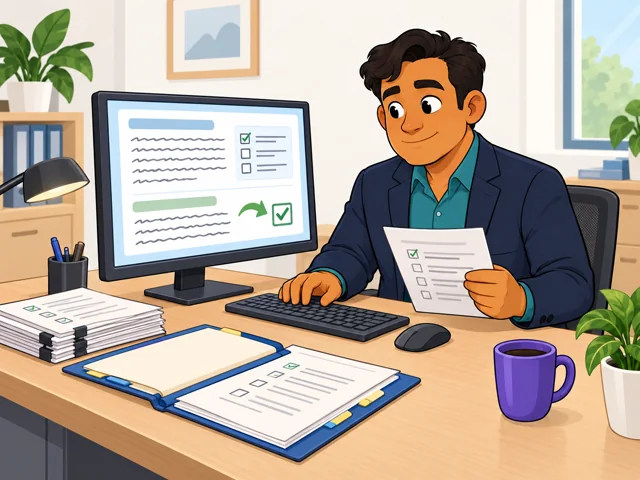
Tie checked files to a clear verdict on the bank's financial health or compliance, then suggest a fix.
United States
United States · May 2025
United States · 2025–2035
Quick orientation
Include accounting coursework; job training follows.
National median; equivalent to $45.27/hour.
About 4,500 openings annually, including replacements.
Spreadsheets and financial-analysis software help you calculate, organize, and compare records.
You decide whether records are reliable and which risks warrant more testing.
In community-bank examinations by the Office of the Comptroller of the Currency, greater reliance on existing bank reports can change how much fresh testing you do. The balance depends on the bank's risks and the reliability of its reports.
Pay in context
Use the national median as a comparison point, not a starting-salary offer.
The median was $94,160 a year, or $45.27 an hour. The 10th and 90th percentiles were $56,230 and $174,200 annually. These describe the pay distribution, not beginner and senior salaries.
Annual medians were $151,360 in federal government, $85,610 in state government excluding education and hospitals, and $80,240 in credit intermediation and related activities.
The 9% growth projection includes about 4,500 openings per year from growth and workers leaving the occupation.
College preparation usually leads into an entry-level job with substantial training.
After entry
This starts where the entry routes leave off: early work, growing capability, and advancement or specialization.
Learn to turn bank records into supported findings and clear examination-report sections.
Deepen your loan-risk knowledge or move into technology examinations, checking whether a bank's electronic records are valid and reliable.
With experience, pursue senior examiner work handling harder cases and leading teams.
At the Office of the Comptroller of the Currency, community-bank work combines off-site financial monitoring with bank visits. You tailor the review to each bank's activities and risks.
At the same federal regulator, teams work continuously with the largest, most complex banks. You coordinate with specialists and other regulators as you follow risks across the institution.
Try it
Make a fictional table of ten bank loans, listing each balance, payment status, and business sector. Calculate how much lending is concentrated in one sector. Write two questions for the bank manager and one conclusion the table cannot justify. Notice whether you enjoy tracing risk without overstating the evidence.