
Career profile

Fire Service Supervisor

Fire captains lead firefighting crews, place their people, and keep gear working between alarms.

Between emergencies, you teach and coach firefighters. It could suit someone who wants physical emergency work and ownership of how well the crew works together.
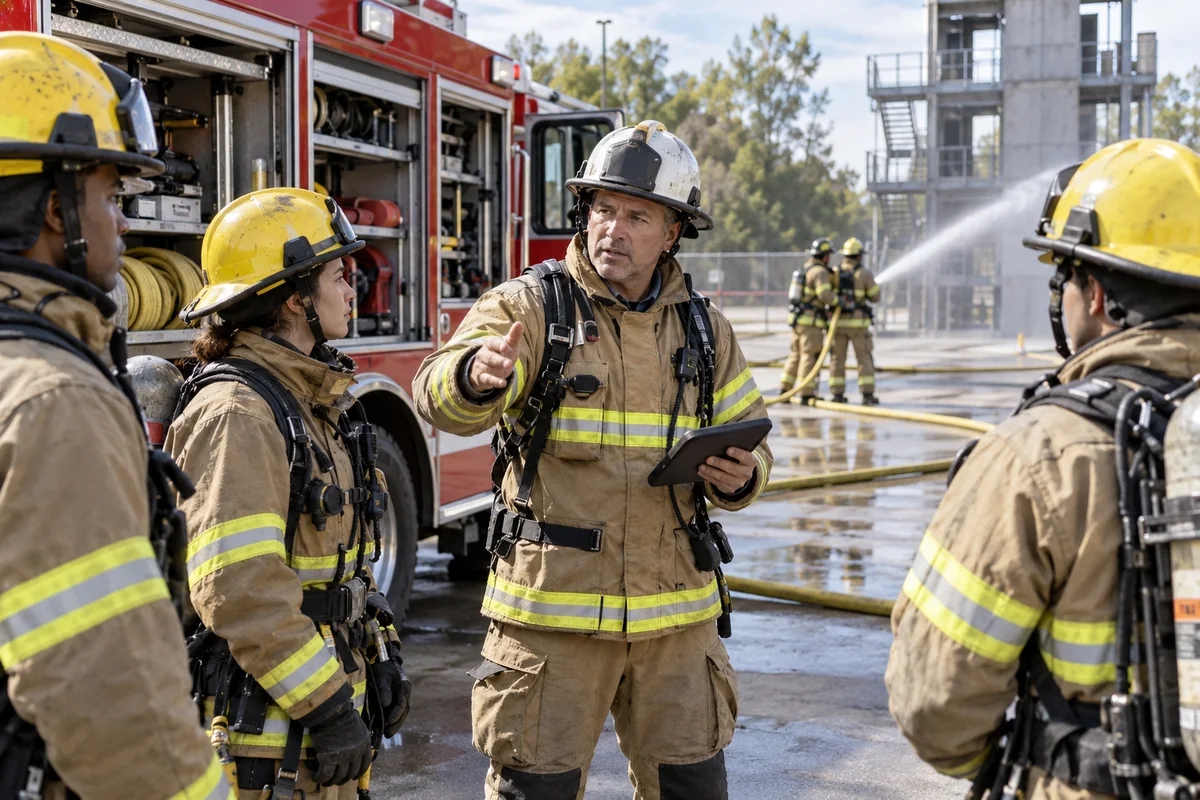
An adult fire service supervisor directing a training exercise with firefighters beside a fire engine, no emergency casualties or real insignia.

A day in the life

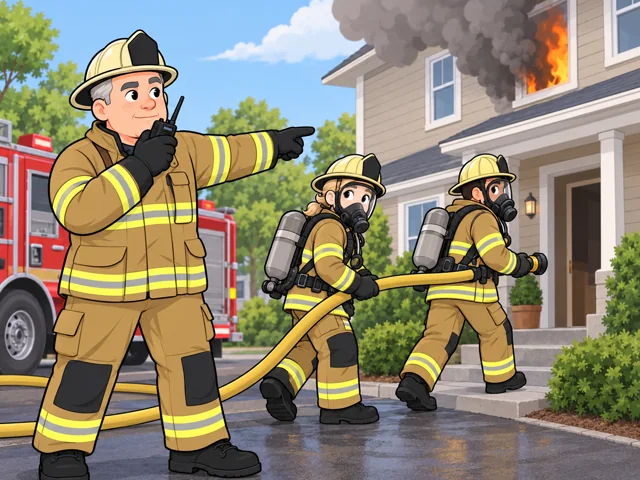
1A fire service supervisor watches smoke from an upper window, gives radio directions and points a crew toward the building's entrance approach.

Direct the crew by radio

Size up the fire and building, then radio people where they're needed and reassign them as things shift.
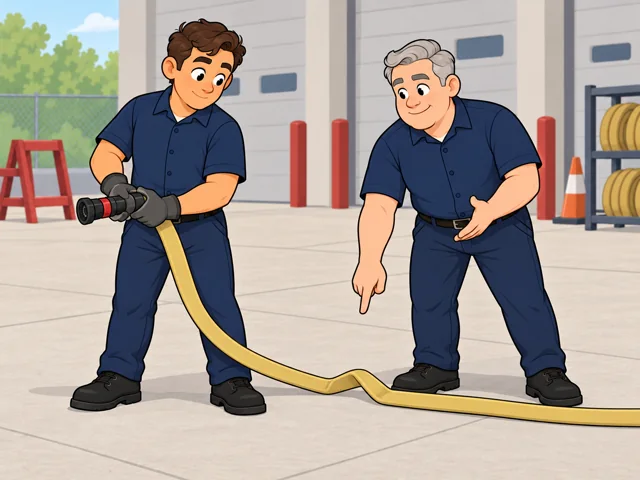
2During a dry drill, a supervisor points out a kink in a firefighter's hose and explains the correction before another attempt.

Coach firefighters during drills

Watch firefighters drill, name a step someone skipped, and say what to fix before they try again.
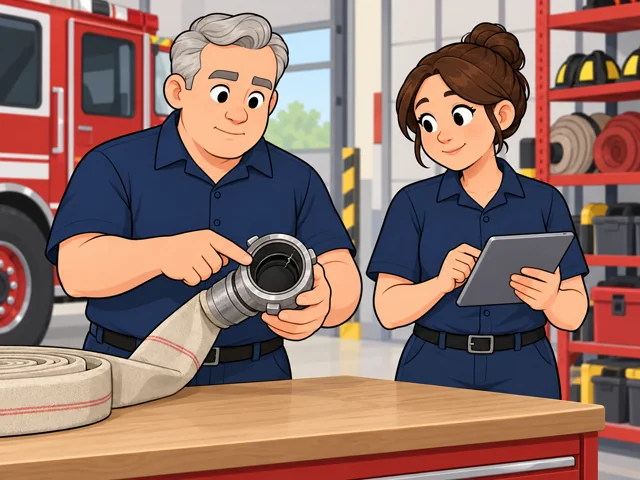
3A supervisor shows a coworker a split gasket in a hose coupling while she records the needed repair.

Inspect gear before alarms

Inspect the firefighting equipment, find faults, and arrange repairs so the crew's tools work.
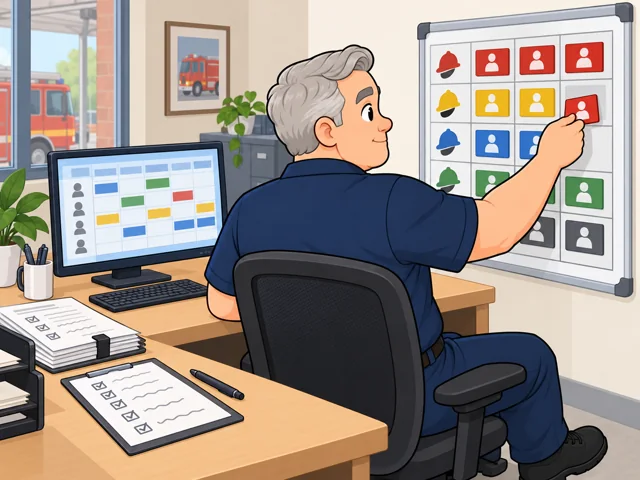
4At the station desk, a supervisor fills a gap on a staffing board while checking the shift schedule and reports.

Fill gaps in the schedule

Between alarms, review who's on duty, fill coverage gaps, and keep reports current so the station runs.

Quick facts

Preparation

Training plus fire-service experience

United States · 2025

Pay

$93,530 a year

United States · May 2025

Outlook

3.7% projected growth

United States · 2025–2035

Quick orientation

Preparation, pay & outlook

Preparation

Training plus fire-service experience

Typical preparation includes a certificate or other nondegree training after high school, related work experience, and training on the job. Department promotion requirements vary.

Geography
United States
Period
2025

Pay

$93,530 a year

National median for fire-service supervisors, equivalent to $44.96 an hour.

Geography
United States
Period
May 2025

Outlook

3.7% projected growth

About 6,600 openings a year are projected nationally; that does not indicate vacancies in a particular department.

Geography
United States
Period
2025–2035

Fit, tradeoffs & changing tools

Things to weigh

  • Your decisions affect the crew's safety, often under time pressure.
  • Leading coworkers includes performance problems and difficult conversations.
  • Some station assignments use 24-hour shifts, which can mean long stretches away from home.

Where AI may help

Digital maps and incident records help organize information. Researchers are also developing sensors and software that could warn crews about dangerous fire conditions.

What people still lead

You still weigh the scene and crew reports, choose assignments, and communicate decisions people can act on.

What we can’t predict yet

How much crews can safely rely on automated warnings remains unsettled, especially as artificial intelligence enters safety equipment.

Pay in context

Earnings

These figures describe supervisors, so they are not starting-pay estimates for a new firefighter.

The national middle and spread

The median was $93,530 a year, or $44.96 an hour. The lowest-paid 10% earned $53,430 or less; the highest-paid 10% earned $140,010 or more. Those cutoffs are not entry and senior pay steps.

Geography
United States
Period
May 2025
Pay basis
Annual and hourly median wages; annual 10th and 90th percentiles

Employer setting matters

In a separate May 2023 comparison, annual mean pay was $92,060 in local government and $84,880 in state government, excluding schools and hospitals. These older averages describe groups of jobs, not competing offers.

Geography
United States
Period
May 2023
Pay basis
Annual industry mean wages for first-line firefighting and prevention supervisors

Openings extend beyond new jobs

Employment is projected to grow 3.7% over 2025–2035, with 6,600 openings per year on average across the occupation. Openings include replacement needs as well as growth.

Geography
United States
Period
2025–2035
Pay basis
Employment projection, not compensation

Getting started

Join a department and work toward promotion

What the route involves
Meet firefighter recruitment requirements, complete academy training and probation, and build experience responding with a crew.
What it can lead to
Experience can support promotion toward lieutenant or captain when you meet the department's requirements.
What to check
Firefighter applicants typically need a high school diploma, must be at least 18, and face written, physical, and medical screening. Emergency medical technician certification may be required. Check both entry and promotion rules locally.

Build through a state fire-engine role

What the route involves
For one California Department of Forestry and Fire Protection (CAL FIRE) route, complete 36 months as a qualifying fire apparatus engineer and the corresponding California Fire Fighter Joint Apprenticeship Committee program.
What it can lead to
Meeting the requirements allows you to compete in the captain examination. Passing places you on an eligibility list from which you can pursue vacancies.
What to check
This is an experienced-worker route, not direct entry from school. A valid driver's license with applicable endorsements is required; paramedic positions have additional licensing requirements. Exam success does not guarantee appointment.

Plan on building fire-service experience before supervising a crew. A common route begins as a firefighter; specialized employers may have their own experience and examination tracks.

After entry

Career paths

This starts where the entry routes leave off: early work, growing capability, and advancement or specialization.

  1. Get established

    Learn your crew's strengths and make staffing, equipment checks, and shift records dependable.

  2. Build your judgment

    Develop your coaching and incident assessment: recognize when a response needs more resources and give feedback that helps firefighters improve.

  3. Lead more crews or specialize

    A possible next step is battalion chief, responsible for operations across a larger area. Rank structures and promotion requirements vary.

    • Move toward a training or fire-prevention assignment, leading instruction or specialized safety work.

Where you can work

City or county fire station

You lead a shift that moves between station routines and emergency calls. Some departments use 24-hour tours, combining responsibility for people, vehicles, and the station.

  • Indoors
  • Field work
  • Vehicle
  • Shift work
  • Safety-sensitive

State wildland fire operation

In CAL FIRE wildland assignments, you may lead an engine or hand crew, travel mountainous roads, and oversee projects that help control fire spread. Weather and terrain shape the work.

  • Outdoors
  • Field work
  • Vehicle
  • Physical demands
  • Safety-sensitive

Try it

See whether the job clicks before you commit to the path.

On paper, plan a practice morning for a fictional fire crew: equipment checks, a training drill, and report time. Then remove one person from the schedule and revise it. Notice whether you enjoy coordinating people and explaining changed priorities.

Stay safe: Keep this a scheduling exercise; do not practice emergency tactics or handle firefighting equipment.

Explore more careers

Sources

  1. O*NET OnLine. First-Line Supervisors of Firefighting and Prevention Workers. Accessed 2026-10-03.
  2. O*NET OnLine / U.S. Bureau of Labor Statistics. National Wages: 33-1021.00. Accessed 2026-10-03.
  3. U.S. Bureau of Labor Statistics. Occupational projections and worker characteristics, 2025–35. Accessed 2026-10-03.
  4. U.S. Bureau of Labor Statistics. May 2023 Occupational Employment and Wage Estimates: 33-1021. Accessed 2026-10-03.
  5. City of Vacaville. Fire Captain — Class Specification. Accessed 2026-10-03.
  6. Fairfax County. Fire Captain — Class Specification. Accessed 2026-10-03.
  7. U.S. Bureau of Labor Statistics. Firefighters — Occupational Outlook Handbook. Accessed 2026-10-03.
  8. California Department of Forestry and Fire Protection / CalCareers. Fire Captain — Examination Bulletin EX-04433. Accessed 2026-10-03.
  9. National Institute of Standards and Technology. Smart Fire Fighting for Tactical Decisions. Accessed 2026-10-03.
  10. National Institute of Standards and Technology. Artificial Intelligence in the Fire Service: Considerations for Implementing Artificial Intelligence into Electronic Safety Equipment. Accessed 2026-10-03.

Your message goes to the Great Jobs team. How we use your information