
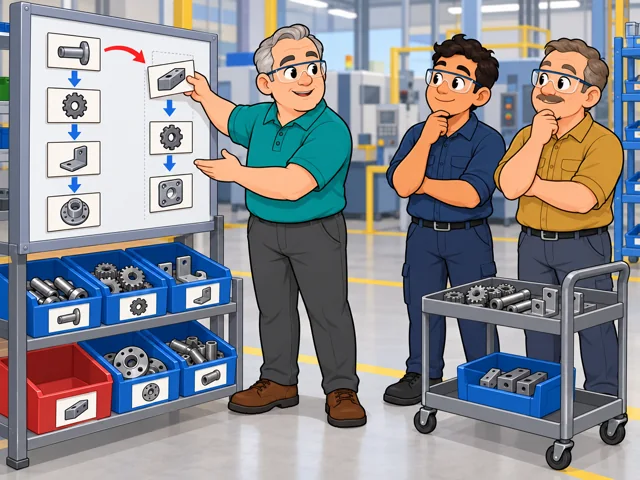
Rework the shift around shortages
Match the schedule to parts on hand, reorder jobs around missing ones, and give the crew new priorities.
Career profile
Production supervisors lead a crew that makes products and keep its output on schedule.
Your crew counts on you to assign stations or tasks, check finished items leaving the line, and help clear problems that stall everyone.
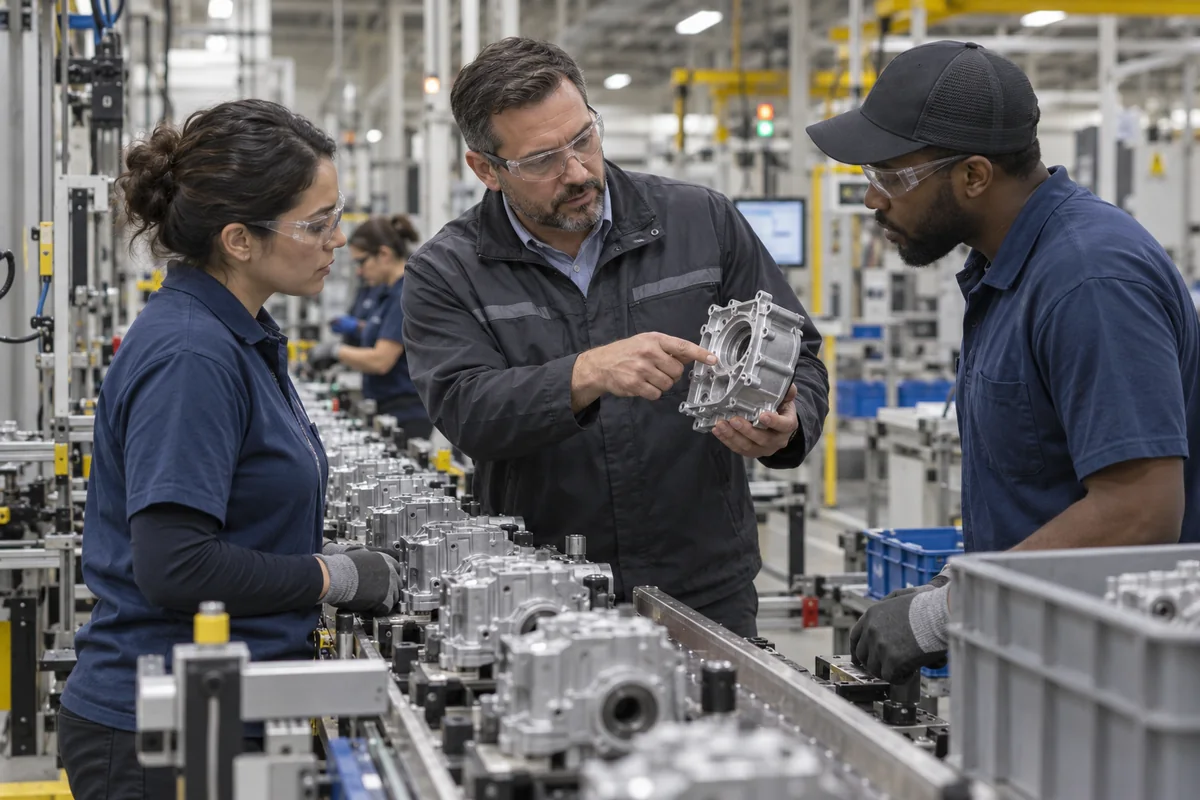
Match the schedule to parts on hand, reorder jobs around missing ones, and give the crew new priorities.
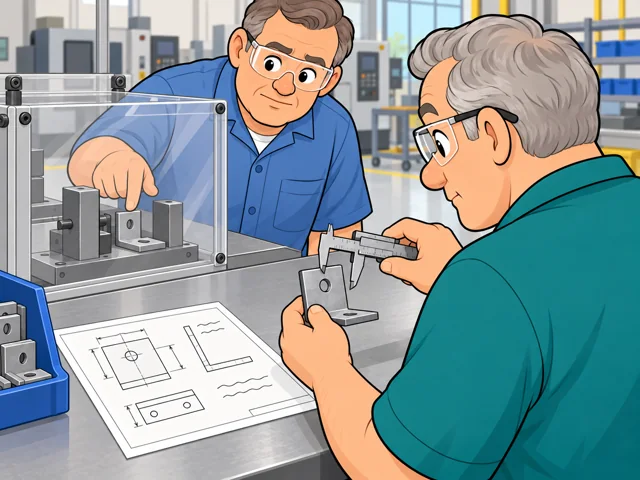
Hold a faulty part against its specifications, then examine the machines involved to help find the cause.
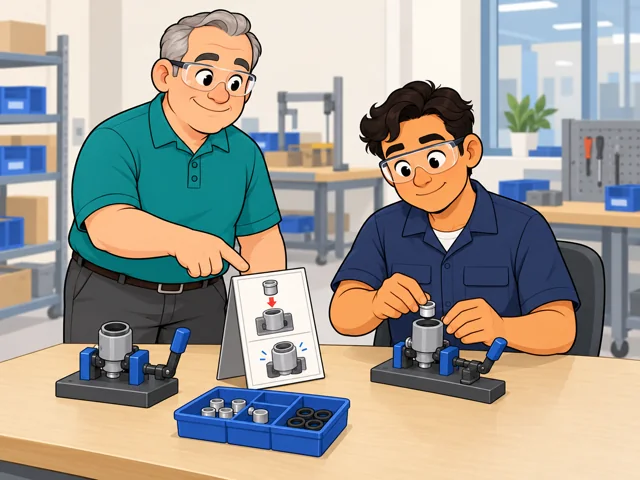
Go over the instructions together with an assembler, demonstrate the task, then watch them try it.
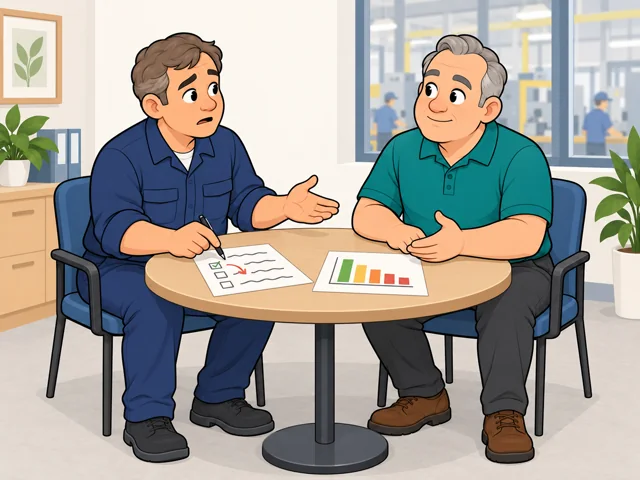
You meet a worker with dropping output, say what needs work, hear what's hard, and agree on changes.
United States · 2025
United States · 2025
United States · 2025–2035
Quick orientation
Typical preparation includes a diploma or equivalent and related work experience; employers set their own requirements.
Equivalent to $35.79 an hour across this occupation nationally.
About 61,000 openings a year are projected across the occupation.
Planning software helps organize materials, schedules, and production records.
You still coach workers and work through performance problems face to face.
How far software will take over rescheduling when materials or staffing change remains uncertain.
Pay in context
The national median is a useful reference, not a starting salary.
Median pay was $74,450 a year, or $35.79 an hour, in 2025. Half earned more and half earned less.
The lowest-paid 10% earned $47,130 or less; the highest-paid 10% earned $108,750 or more. These describe workers across the occupation, not beginner and senior salary steps.
For a historical comparison, supervisors in plastics product manufacturing averaged $67,560 a year in May 2023, versus $95,840 in pulp, paper, and paperboard mills. These are industry averages for this occupation, not current offers or starting salaries.
Employment is projected to grow 1.8% from 2025 to 2035, with about 61,000 openings annually. Openings include replacing workers who leave; they are not all newly created jobs.
This is usually a step after learning production work. Education requirements vary by employer.
After entry
This starts where the entry routes leave off: early work, growing capability, and advancement or specialization.
Learn your crew's work, the product requirements, and how to handle problems with safety or performance.
Take on recurring delays. Work with engineers to improve assembly instructions and remove problems that keep returning.
Industrial production manager is a possible next step, overseeing a larger production area or plant. Employers typically seek several years of experience and a bachelor's degree, though some accept extensive production experience.
Food safety requirements shape the shift alongside output targets. You check that production meets customer specifications; some jobs run on evening shifts.
In electrical assembly, you work closely with assemblers and engineers on detailed work instructions for cable harnesses and other hardware. The work happens on site.
Try it
On paper, plan a three-person crew making 20 folded paper packages: one folds, one checks, and one packs. Halfway through, imagine the checker is absent. Revise the assignments without dropping the quality check. Notice whether coordinating the work interests you.