
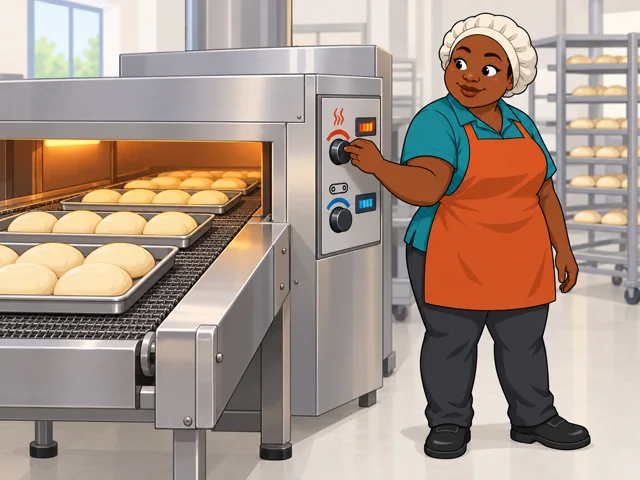
Get the bakery oven ready
Choose oven heat and conveyor speed for the coming run, and confirm the dough has risen before baking.
Career profile
Food machine operators run dryers, roasters and ovens that turn raw food into consistent batches.
Heat and time shape every load, so you watch the results first. Once they start drifting off target, you adjust the machine's settings.
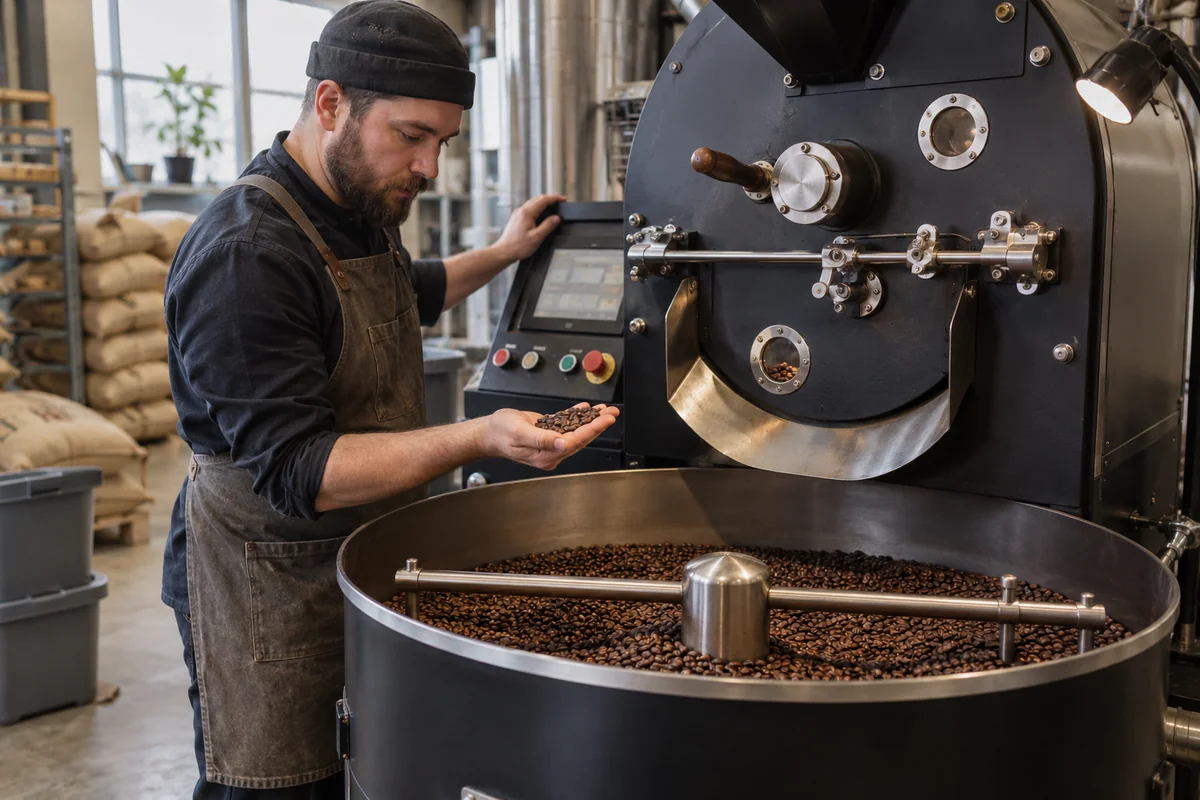
Choose oven heat and conveyor speed for the coming run, and confirm the dough has risen before baking.
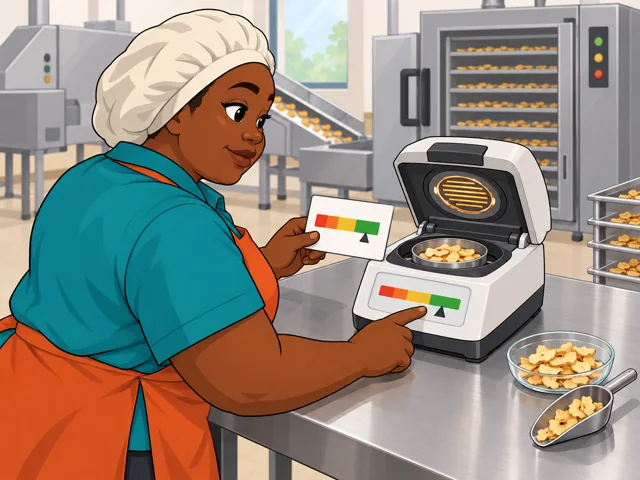
Measure a product sample with a moisture meter, then compare the reading with the required level.
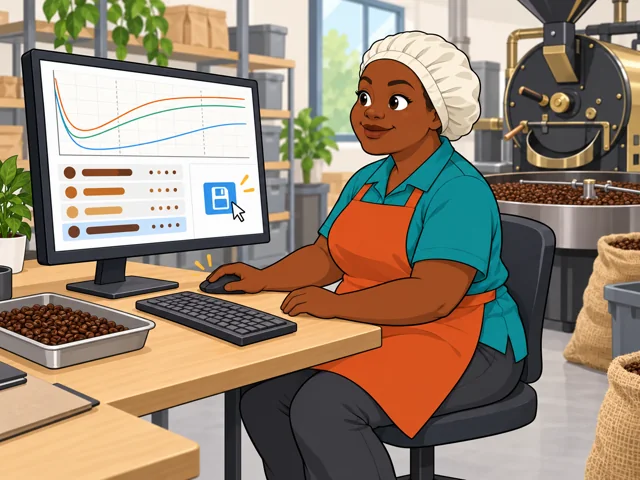
In a coffee roastery, save every roast batch in the roasting software so each result stays traceable.
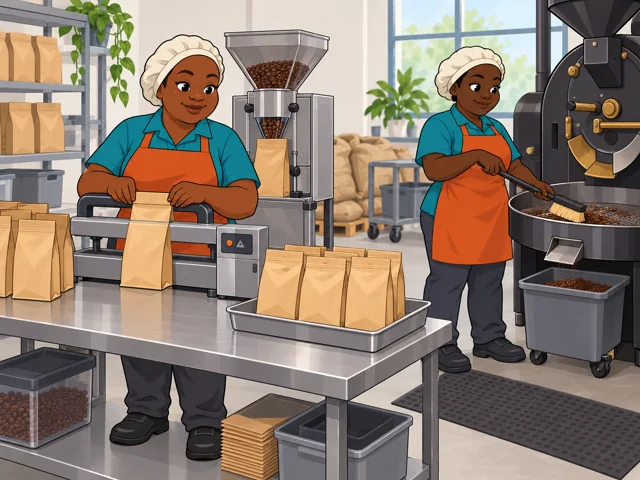
Some roastery jobs have you fill and heat-seal coffee bags, then clean equipment such as the roaster.
United States · 2025–2035
United States · 2025
United States · 2025–2035
Quick orientation
Typical entry does not require a formal educational credential; individual employers can set additional requirements.
National annual median in 2025, equivalent to $21.54 an hour.
Projected growth of 0.4% over 2025–2035, with about 2,500 openings annually, including replacement needs.
In coffee roasteries, software helps keep batch records available for comparison.
Roasters still taste coffee and adjust roast settings when incoming beans behave differently.
How far automated controls will take over those adjustments remains uncertain, especially when ingredients vary.
Pay in context
Use national pay as a reference, then compare the actual shift and responsibilities of a job offer.
The 2025 median was $44,810 a year, or $21.54 an hour. This covers food and tobacco roasting, baking, and drying machine operators and tenders together; it is not a starting wage.
In May 2025, the 10th-percentile annual wage was $33,250 and the 90th-percentile wage was $62,680. These are wage percentiles, not starting and senior salaries.
In 2023, average annual pay for this occupation was $43,230 in bakeries and tortilla manufacturing and $62,340 in tobacco manufacturing. These historical industry averages are not current offers.
A Johnstown, Colorado, bakery oven role lists $2 extra per hour for nights and another $2 per hour for weekends. Ask which premiums apply to your scheduled hours.
Workplace training is the usual preparation. Look closely at experience requirements: an operator title can describe either a beginner opening or an experienced position.
After entry
This starts where the entry routes leave off: early work, growing capability, and advancement or specialization.
Learn repeatable setup and keep accurate batch records.
In coffee roasting, develop the ability to adjust roast settings as beans change and explain quality concerns to the owner or manager.
An experienced bakery operator can pursue production supervisor work, taking responsibility for a wider part of production. Advancement depends on the employer and your qualifications.
Your station connects dough rising with baking. Keeping pans moving and coordinating proofer and oven settings makes this a line-focused job; some positions run at night.
A small team may share roasting, tasting, packing, and shipping. You can move between the roaster and the order bench during the same shift.
Try it
Make a paper drying log with these invented moisture readings: 8%, 8%, 11%, 8%. Set a practice target of 7–9%, flag the batch outside it, and write what you would want checked before changing a dryer setting. Notice whether comparing repeated batches holds your attention.
Stay safe: These are practice numbers, not food-processing targets. Keep this exercise on paper.