
Arrange the visitation room
Set out chairs, flowers and family photos before a visitation, and ready the casket or urn area.
Career profile
Funeral attendants prepare funeral home rooms, greet mourners, and help ceremonies run smoothly.
Before visitors arrive, you prepare the rooms, then guide people during ceremonies. The work suits someone hands-on who stays thoughtful and kind around grief.
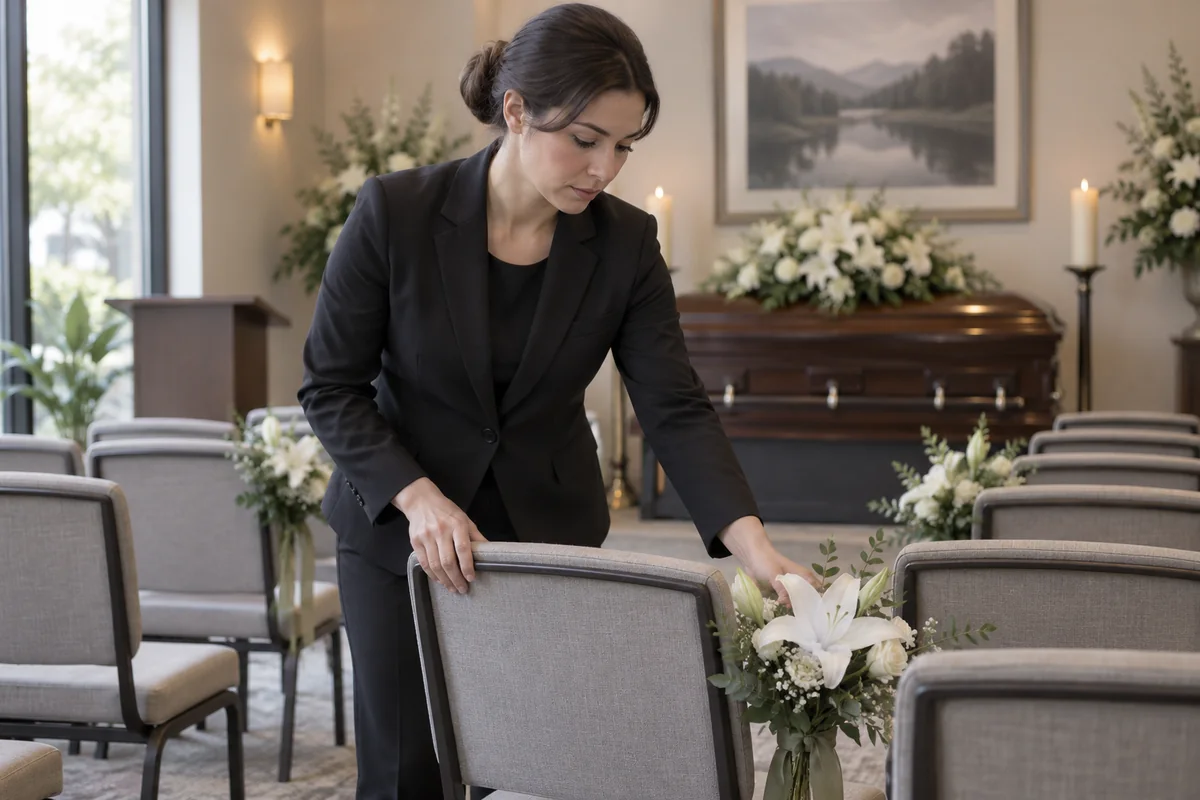
Set out chairs, flowers and family photos before a visitation, and ready the casket or urn area.
Greet mourners, walk them to the chapel, and give plain, calm directions to anyone pausing at the door.
In certain positions, you drive families to the cemetery, help riders, and tidy the vehicle afterward.
Collect the family's flowers and keepsakes to return, then clean and store funeral home equipment.
United States · 2025
United States · May 2025
United States · 2025–2035
Quick orientation
Typical entry requires a high school diploma or equivalent, no related work experience and short-term on-the-job training.
The national median is $17.16 an hour for funeral attendants.
About 5,400 openings a year are projected nationally, including replacement openings.
Computers help prepare service documents; sound and video systems handle music and family presentations.
You still check the room and respond when a family's needs change during a service.
More paperwork may become automated. How much checking and family contact moves with it will depend on each funeral home's tools and service choices.
Pay in context
The national median was $35,680 a year, or $17.16 an hour, in May 2025. Half of funeral attendants earned more and half earned less.
The lowest-paid 10% earned $28,070 or less annually; the highest-paid 10% earned $48,460 or more. The hourly thresholds were $13.50 and $23.30. These are wage percentiles, not starting and experienced pay rates.
An older industry benchmark puts average attendant pay in death care services at $35,170 a year, or $16.91 an hour. This May 2023 average is different from the newer national median above.
Employment is projected to grow 2.6% from 2025 to 2035. The roughly 5,400 annual openings include replacing workers who leave; they do not mean 5,400 newly created jobs each year.
You enter as support staff working with funeral directors. Becoming a funeral director is a separate qualification path.
After entry
This starts where the entry routes leave off: early work, growing capability, and advancement or specialization.
After hiring, practice preparing the room and checking it before families arrive.
Build skill with memorial documents and coordinating service details with the funeral director.
To move into arranging funerals, investigate funeral-service education, supervised training and your state's licensing requirements. Attendant experience alone does not qualify you as a funeral director.
Your work centers on the service space and arriving families. You may switch between room setup, ushering and operating sound or video equipment.
More of your day goes to phones, appointments and documents alongside funeral directors. Service assistance and occasional local trips break up the desk work.
Try it
Sketch a room for an imaginary memorial service, including seats, a guest book and a photo table. Trace how guests would enter, then practice giving a quiet welcome and directions. Notice whether you enjoy both the setup details and helping someone find their way.