
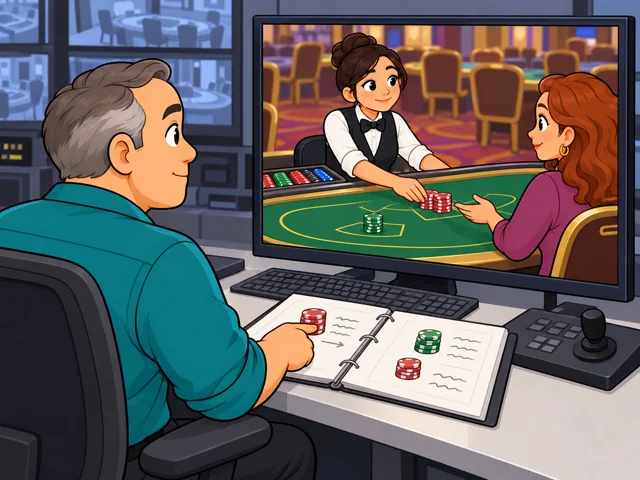
Verify a payout on camera
Follow a table's play and cash handling on camera, checking them against the game's rules and casino procedures.
Career profile
Gambling surveillance officers watch casino play closely enough to spot what does not match.
Camera feeds and saved footage let you look into suspected cheating or theft inside a casino. One reward may be explaining a puzzling moment clearly.
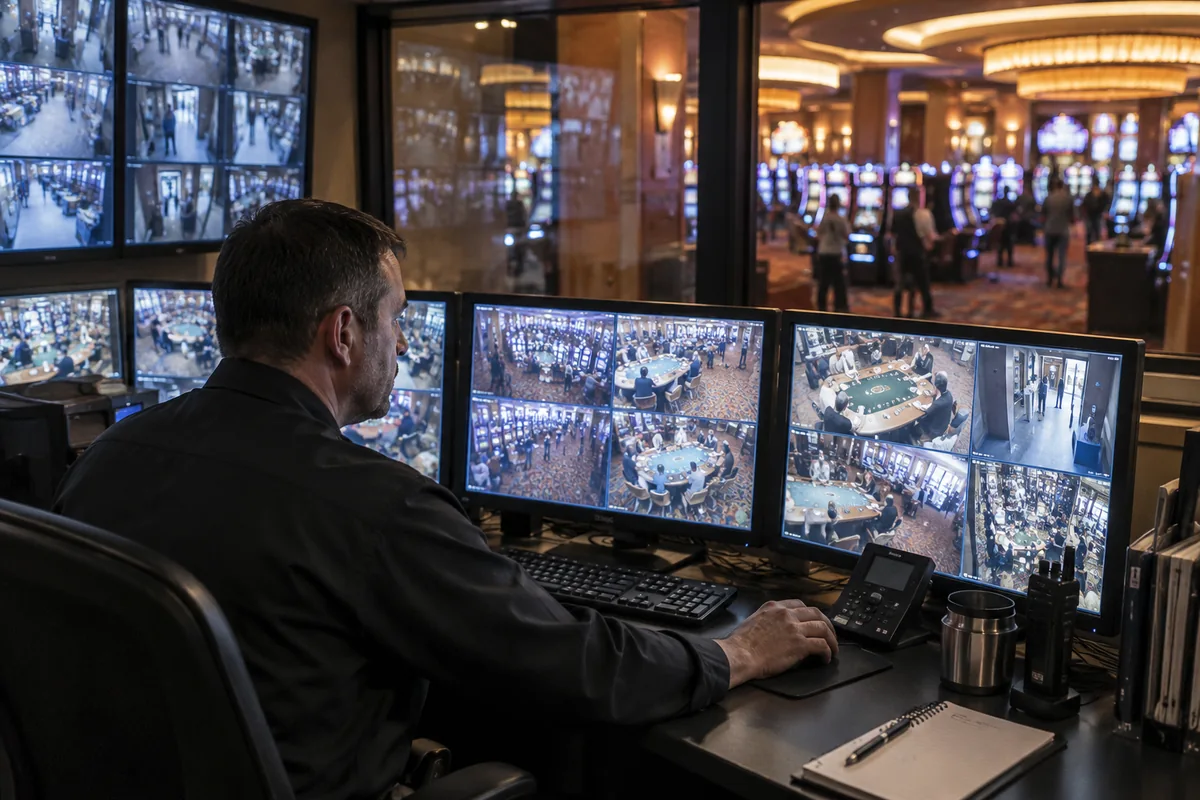
Follow a table's play and cash handling on camera, checking them against the game's rules and casino procedures.
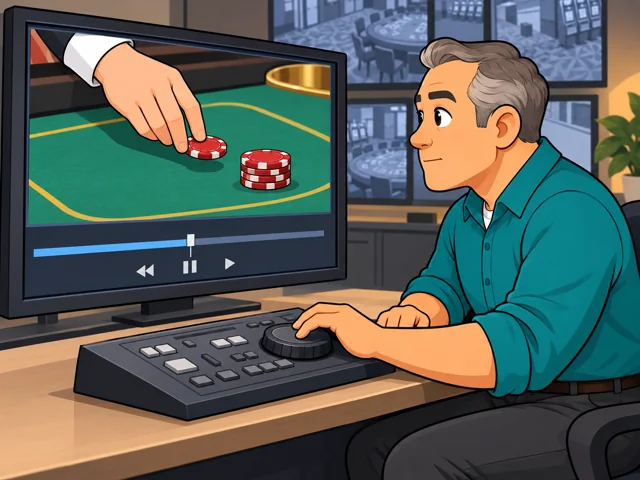
Replay recorded footage of a questionable moment, advancing frame by frame to track the chips or cash.
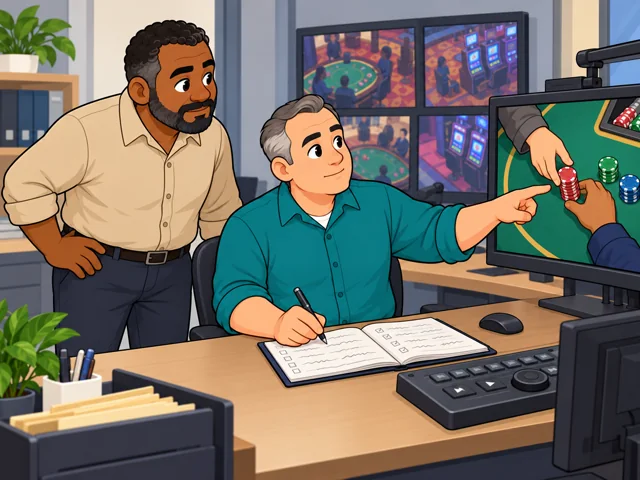
Describe what you saw plainly in the surveillance log and flag anything suspect to your supervisor.
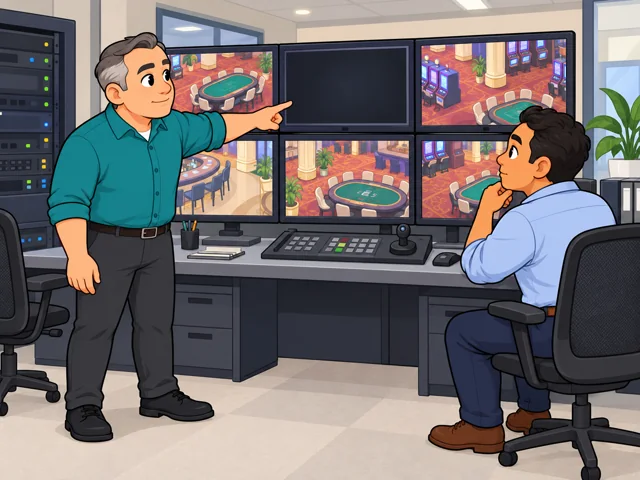
Confirm the cameras work and catch any blank or blurry feed that leaves part of the floor uncovered.
United States
United States · May 2025
United States · 2025–2035
Quick orientation
Related experience and employer training also matter.
National median for gambling surveillance officers and gambling investigators; $20.85 per hour.
About 1,100 openings per year are projected nationally despite the decline.
Some casinos use software that flags sounds associated with aggression, helping staff decide where to look. Video controls also make close replay easier.
You interpret the activity, compare it with game procedures, and explain why an incident needs attention.
How much routine watching automated alerts will take over remains uncertain, especially when an incident needs context from several actions.
Pay in context
National figures cover gambling surveillance officers and gambling investigators together. They describe employee wages, not a guaranteed offer.
The median was $43,370 a year, or $20.85 an hour. The 10th and 90th percentile annual wages were $32,730 and $61,970. Those mark positions in the wage distribution, not beginner and senior pay levels.
Median annual wages were $43,920 in casino hotels and $38,600 in gambling industries excluding casino hotels. A particular offer may differ.
Employment is projected to fall 1.8%, with about 1,100 openings annually on average. Openings and net job growth measure different things; a shrinking occupation can still need replacement workers.
A high school diploma or equivalent is typical. Two useful backgrounds are casino work and video monitoring.
After entry
This starts where the entry routes leave off: early work, growing capability, and advancement or specialization.
After hiring, learn game rules, gaming regulations, and video and radio equipment. Training may take several months.
Develop your ability to connect camera observations with daily audits and other departments' information when investigating a discrepancy.
With experience, you can pursue a role reviewing agents' coverage, coaching staff, and arranging shifts. The work adds responsibility for other people's observations and decisions.
Coverage can extend beyond gaming tables to restaurants, warehouses, and parking areas. You may switch between examining a transaction and reviewing an incident elsewhere on the property.
You may work with tribal gaming rules and internal controls, coordinate with casino security, and help gaming auditors or device technicians. Cash and chip movements receive close attention.
Try it
With a friend's permission, record a minute of them moving tokens between labeled piles. Review the clip and log each transfer, then replay it to check your account. Notice whether you enjoy patient observation and precise reporting.
Stay safe: Use a staged tabletop activity with no money or wagering; do not record strangers.