
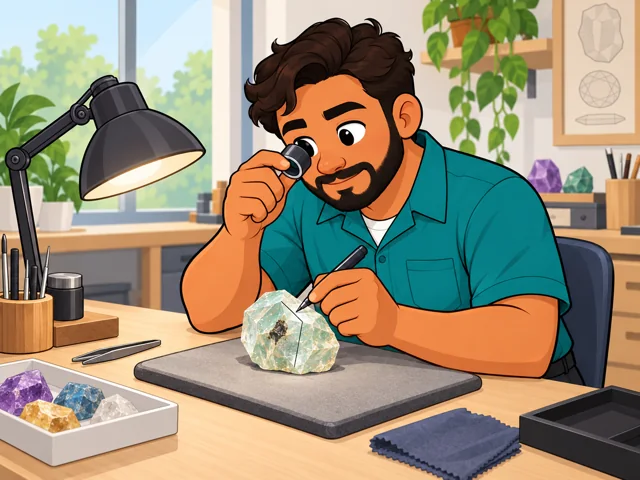
Mark the cut on rough stone
Cutters study a rough stone's shape and flaws before marking a cut that keeps valuable material.
Career profile
Gem and diamond workers cut and polish gemstones, or examine stones and grade their quality.
You might choose where to cut a rough stone or map tiny marks inside a diamond. Success takes close looking and steady, precise hands.
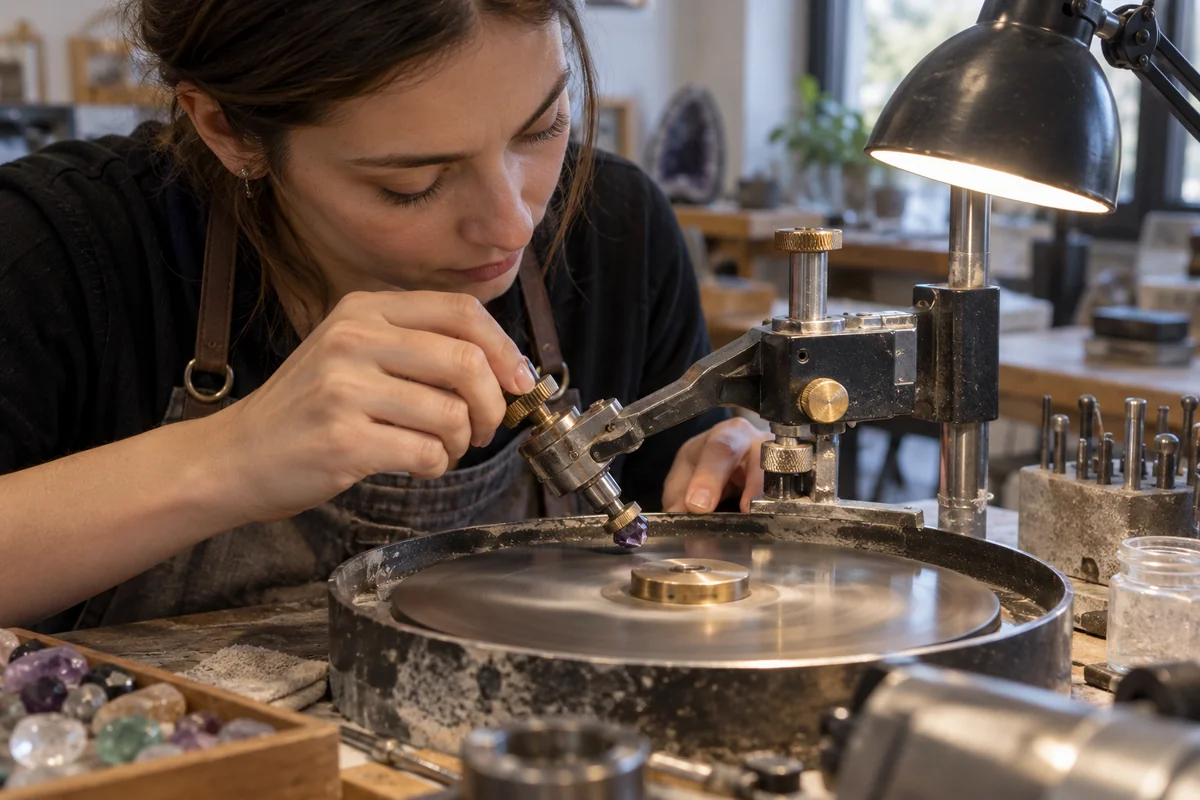
Cutters study a rough stone's shape and flaws before marking a cut that keeps valuable material.
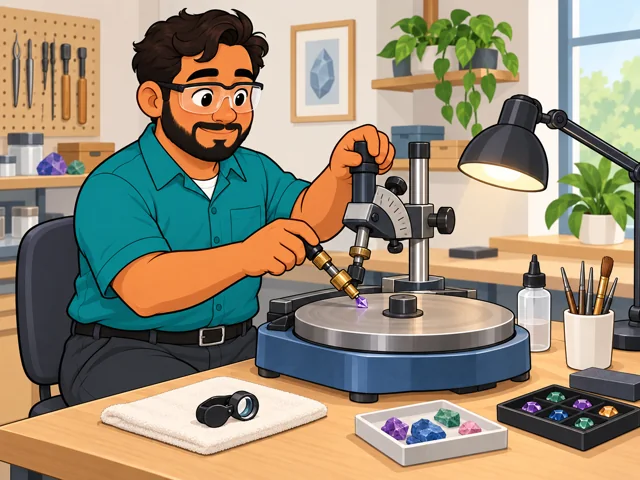
You lock the stone in a holder, polish it on the wheel, then check facet angles under magnification.
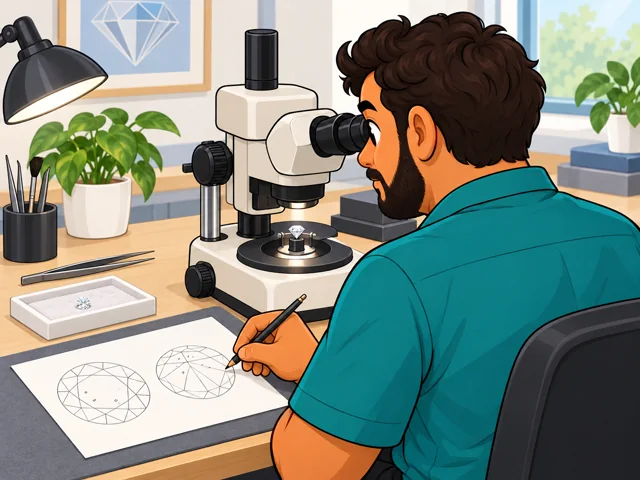
Graders plot features inside and on the surface of a magnified diamond, then rate clarity from them.
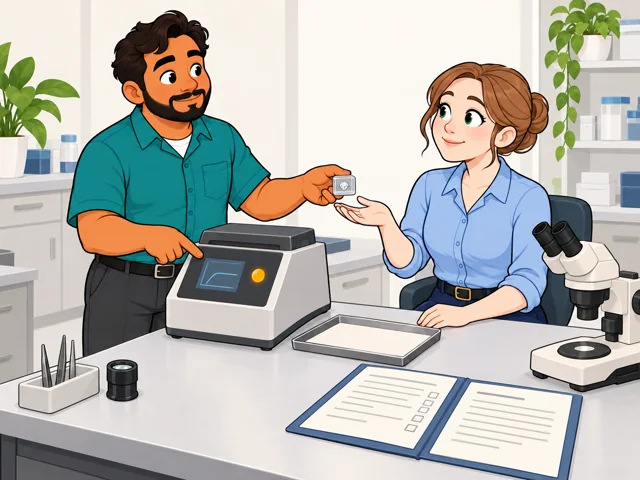
Once a screener flags a diamond, arrange tests for treatment or lab growth before the report is final.
United States
Compare pay for the specific specialty, experience level, and location.
Search openings under gem cutter, diamond grader, and gemologist to see the different kinds of work.
Quick orientation
Learning to shape stones and learning to identify and grade them are different training paths.
Compare pay for the specific specialty, experience level, and location.
Search openings under gem cutter, diamond grader, and gemologist to see the different kinds of work.
Systems can compare diamond images with grading data and calculate clarity grades. The Gemological Institute of America (GIA) has developed this use of artificial intelligence.
Graders also examine stones, investigate signs of treatment, and check one another’s judgments.
How much routine grading moves to automated systems—and how much work shifts toward investigating difficult stones—will depend on the stones and the laboratory.
Pay in context
National figures below cover jewelers and precious stone and metal workers together, not gem and diamond workers separately.
In May 2025, the broader occupation’s median was $52,540 a year, about $25.26 an hour. The lowest-paid 10% earned under $35,580; the highest-paid 10% earned over $87,540. These are wage thresholds, not career stages. Self-employed earnings are excluded.
For the same broader group, annual medians were $53,990 in jewelry, luggage, and leather goods retail and $48,800 in jewelry and silverware manufacturing.
A Staff Gemologist role in Secaucus, New Jersey, advertised $22–$28 an hour when checked October 4, 2026. It requires a Graduate Gemologist qualification and jewelry-product experience. This is a hiring budget for that role, not a trainee wage or national average.
The broader occupation is projected to shrink 3% during 2025–2035, with about 3,700 openings annually from workers leaving the occupation or labor force.
First decide whether you want to shape stones or evaluate them. Gemology education focuses on identification and grading; cutting requires practice with cutting and polishing equipment.
After entry
This starts where the entry routes leave off: early work, growing capability, and advancement or specialization.
After entering evaluation work, learn the workplace’s grading process and record observations clearly enough for another grader to check.
Build your ability to recognize treatments and imitations, use more identification instruments, and spot cases that need advanced testing.
With deeper laboratory experience, you may move into quality assurance or teach new graders how to apply the same standards consistently.
You work within a repeatable examination process, with controlled viewing conditions and other graders checking findings. Accurate records travel with each stone through the laboratory.
Stone inspection shares the day with inventory records, supplier orders, and requests from sales staff. You help find suitable gems for purchases rather than spending the whole day producing grading reports.
Try it
Compare two enlarged photographs of cut gemstones. Sketch their outlines and mark the flat faces and visible surface features. Write a description that would let someone tell the photos apart. Notice whether patient observation and precise description hold your attention.
Stay safe: Use this to explore your interest, not to identify, grade, or price a real gemstone from a photograph.