
Career profile

Glassblower and Glass Forming Worker

Glassblowers shape hot glass into useful things, from drinking glasses to custom lab equipment.

Every turn of the pipe changes the piece. With practice, you read the glass as it softens and stiffens, then choose your next move.
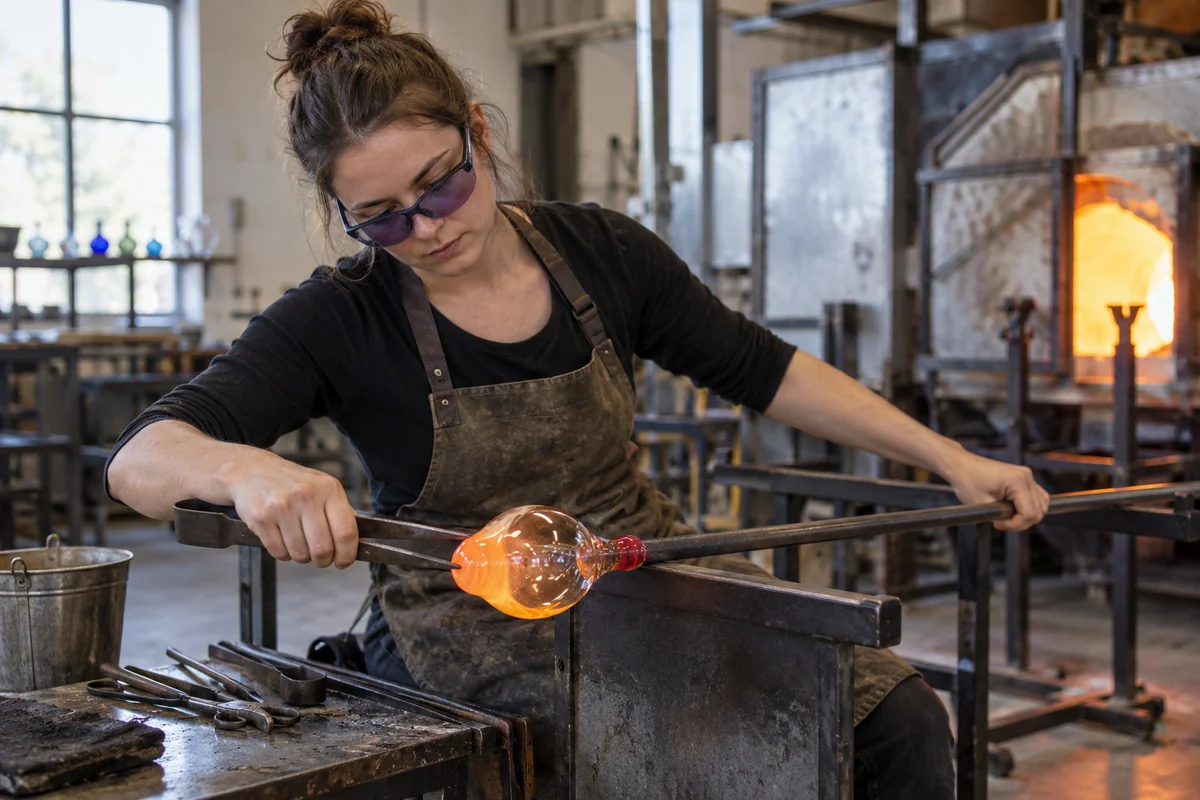
Glassblower shapes hot glass with a blowpipe.

A day in the life

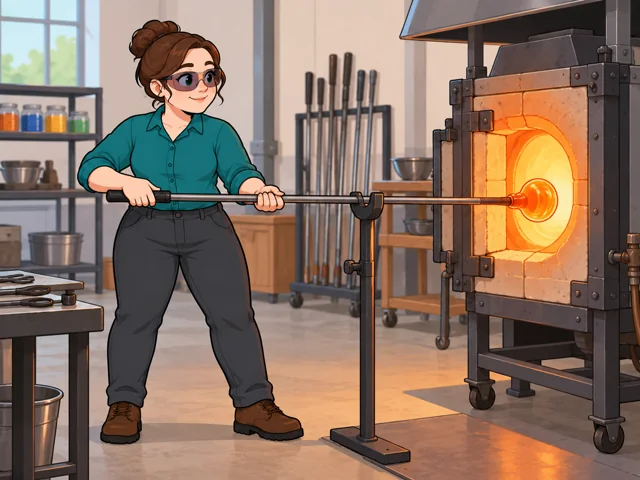
1A glassworker rotates a blowpipe in a reheating furnace to heat the glass evenly.

Heat the glass evenly

Keep turning the glass in a gas flame or oven until it is evenly soft and bendable.
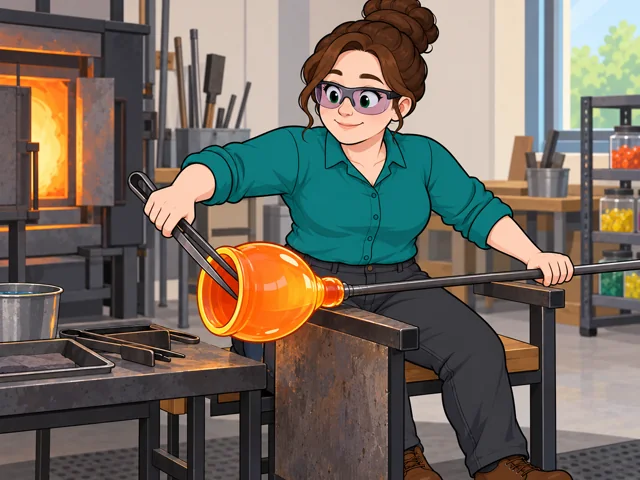
2A seated glassworker turns a hot vessel on a punty rod and uses jacks to open its mouth.

Blow a hollow, open-topped piece

In furnace glassblowing, gather molten glass, then blow air in, move it and shape an open top.
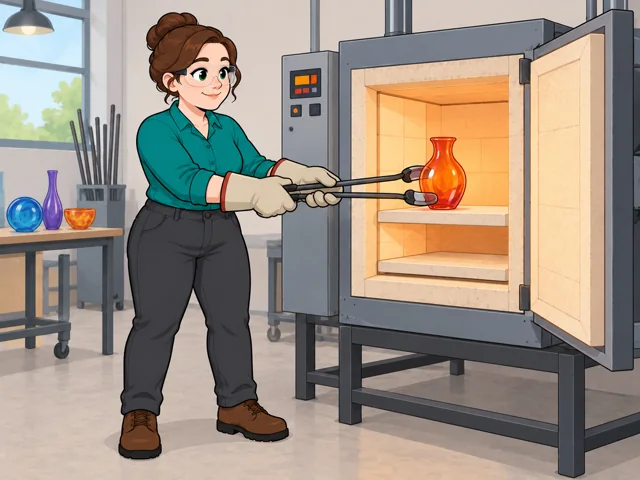
3A glassworker places a newly formed vessel inside an annealing oven for slow, controlled cooling.

Cool it in the annealing oven

Set finished pieces in an annealing oven, where controlled slow cooling eases stress that could crack them later.
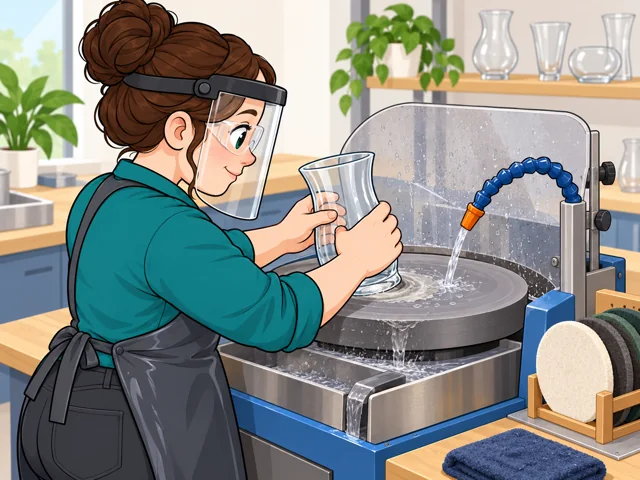
4A glassworker smooths the base of a cooled glass vessel on a water-fed grinding disc.

Grind and polish the surface

Once it has cooled, hold the glass to grinders and polishers until it reaches the required finish.
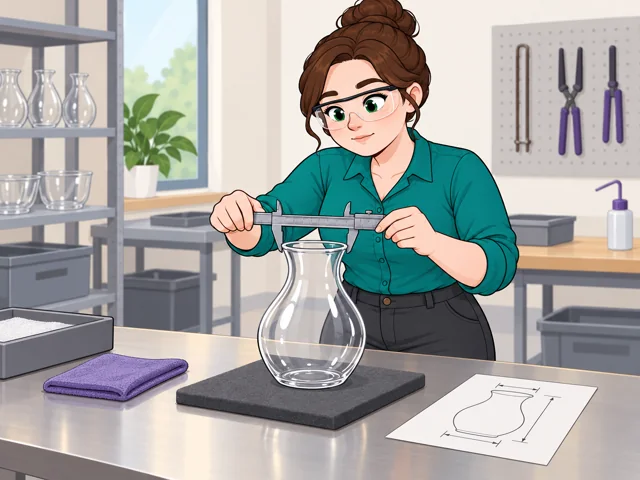
5A glassworker uses calipers to check the rim diameter of a finished glass vessel.

Measure against the specs

Use a ruler or calipers to make sure the piece matches the sizes in its specifications.

Quick facts

Preparation

High school + hands-on training

United States

Pay

Not displayed

Compare pay for the specific shop and specialty.

Outlook

Not displayed

Explore openings by specialty and location.

Quick orientation

Preparation, pay & outlook

Preparation

High school + hands-on training

Developing reliable glassworking skills takes sustained practice with experienced glassworkers.

Geography
United States
Period
Not applicable

Pay

Not displayed

Compare pay for the specific shop and specialty.

Geography
United States
Period
Not applicable

Outlook

Not displayed

Explore openings by specialty and location.

Geography
United States
Period
Not applicable

Fit, tradeoffs & changing tools

Things to weigh

  • Heat, standing and repeated hand movements can make the work physically tiring.
  • A piece can look finished and still break later if internal strain remains. Cooling is part of making it successfully.

Where AI may help

Better heating equipment improves efficiency, while grinding and polishing machines help finish surfaces.

What people still lead

In hand glassworking, you still judge how heat and each movement change the object, then adjust your technique.

What we can’t predict yet

How much forming can move to machines remains an open question, especially when each piece needs a different shape or adjustment.

Pay in context

Earnings

Compare the hourly rate and paid hours together: a part-time studio job can produce a very different annual income from a university salary.

Studio production and workshop work

In 2026, a Holland, Ohio studio advertised $16–$20 an hour for production assistance and teaching, with 15–30 hours a week and one to two years of experience or training required. A Pontiac, Michigan studio advertised $22 an hour for production support, with 20–30 weekly hours and at least three years of glassblowing experience. These are specific part-time roles, not a national pay range.

Geography
Holland, Ohio; Pontiac, Michigan
Period
Advertisements dated 2026-09-25 and 2026-03-19, respectively
Pay basis
Advertised hourly wages for two part-time studio roles; weekly hours vary

Experienced scientific glasswork

California State University's 2026–2027 schedule lists $69,444–$101,160 a year ($5,787–$8,430 a month) for its standard Glassblower pay range, effective October 2025. This is an employer salary scale for a role requiring developed trade skills and experience, not a starting-pay promise.

Geography
California
Period
2026–2027 schedule; rates effective 2025-10-01
Pay basis
Published base salary steps for class 7512, Range A; not observed earnings or a national median

Compare the whole offer

The studio rates and university scale cover different responsibilities, experience requirements and locations; they are not an automatic pay ladder. Check guaranteed weekly hours and months worked. Some California State University appointments spread ten or eleven months of work across twelve paychecks, using separate salary ranges.

Geography
Ohio, Michigan and California
Period
2026 advertisements and 2026–2027 university schedule
Pay basis
Comparison of advertised part-time hourly wages and university salary schedules; no workplace pay premium inferred

Getting started

Learn in a scientific glass shop

What the route involves
In a laboratory glassblower trainee role, learn to cut, join and shape simple tubing with close instruction from an experienced glassblower.
What it can lead to
Build the practical skills needed to fabricate a wider range of laboratory glassware.
What to check
The University of California's trainee classification requires reading, writing, basic arithmetic and demonstrated glassblowing ability. It is not a zero-experience route or a guarantee of an opening.

Study scientific glass technology

What the route involves
At Salem Community College in New Jersey, complete an Associate in Applied Science in Scientific Glass Technology, combining classroom work, technical drawing and laboratory fabrication.
What it can lead to
Develop the ability to read shop drawings and make apparatus to research and industrial specifications.

You can build skills in a trainee job or study scientific glass fabrication before applying to shops.

After entry

Career paths

This starts where the entry routes leave off: early work, growing capability, and advancement or specialization.

  1. Make simple pieces reliably

    After joining a production shop, improve consistency on basic vessels and learn to coordinate your movements with another glassblower.

  2. Handle more demanding shapes

    In scientific work, develop more intricate joins and assemblies, using drawings to keep each part aligned with the intended apparatus.

  3. Design apparatus or lead a shop

    Senior scientific glassblowers tackle complex research equipment. A further step can be managing a glass shop, planning work and coaching other glassblowers.

Where you can work

Handmade tableware production

You make repeated vessels at a furnace, often working with a partner. The challenge is keeping pieces consistent while developing speed and control.

  • Indoors
  • Physical demands
  • Safety-sensitive

University scientific glass shop

Researchers bring equipment needs and rough sketches. You use torches, a glass lathe and drawings to make or repair apparatus that fits a particular experiment.

  • Indoors
  • Lab
  • Safety-sensitive

Museum demonstration hot shop

You shape glass in front of visitors and explain what is happening. Speaking clearly becomes part of the job alongside controlling the hot material.

  • Indoors
  • Physical demands
  • Safety-sensitive

Try it

See whether the job clicks before you commit to the path.

Watch a free online segment from the Corning Museum of Glass's Glassworking Processes and Properties. Sketch the object's outline before and after each shaping move. Notice whether tracking those small changes makes you curious to learn the hand skills.

Stay safe: Keep this exercise observational; hot-glass practice needs an equipped teaching shop and an instructor.

Explore more careers

Sources

  1. O*NET OnLine. Glass Blowers, Molders, Benders, and Finishers — 51-9195.04. Accessed 2026-10-04.
  2. Simon Pearce. Apprentice Glassware. Accessed 2026-10-04.
  3. Salem Community College. Scientific Glass Technology. Accessed 2026-10-04.
  4. University of California. Laboratory Glassblower — Class Specifications. Accessed 2026-10-04.
  5. California State University. Glassblower — Classification and Qualification Standards. Accessed 2026-10-04.
  6. California State University. Salary Schedule 2026/2027, issued September 22, 2026. Accessed 2026-10-04.
  7. California State University. Salary Schedule Definitions. Accessed 2026-10-04.
  8. Corning Museum of Glass. Hot Glass Demos. Accessed 2026-10-04.
  9. Corning Museum of Glass. Bill Gudenrath Brings Ancient Glassblowing Traditions to Life. Accessed 2026-10-04.
  10. Corning Museum of Glass. Annealing. Accessed 2026-10-04.
  11. Corning Museum of Glass. Casting Center Cold Shop. Accessed 2026-10-04.
  12. Corning Museum of Glass. Glassworking Processes and Properties. Accessed 2026-10-04.
  13. Glass Art Society — Firenation Glass Studio employer advertisement. Part-Time Glassblowing Assistant and Instructor | Firenation Glass Studio. Accessed 2026-10-04.
  14. Glass Art Society — epiphany studios employer advertisement. Glass Studio Assistant | epiphany studios, ltd. Accessed 2026-10-04.

Your message goes to the Great Jobs team. How we use your information