

Walk the site with approved drawings
On publicly funded housing projects, walk the site with approved drawings and spot work that does not match.
Career profile
Property inspectors check that government property is maintained and used as regulations and contracts require.
Does construction match the approved plan, and is government equipment where records say? You investigate each mismatch and report what needs fixing.
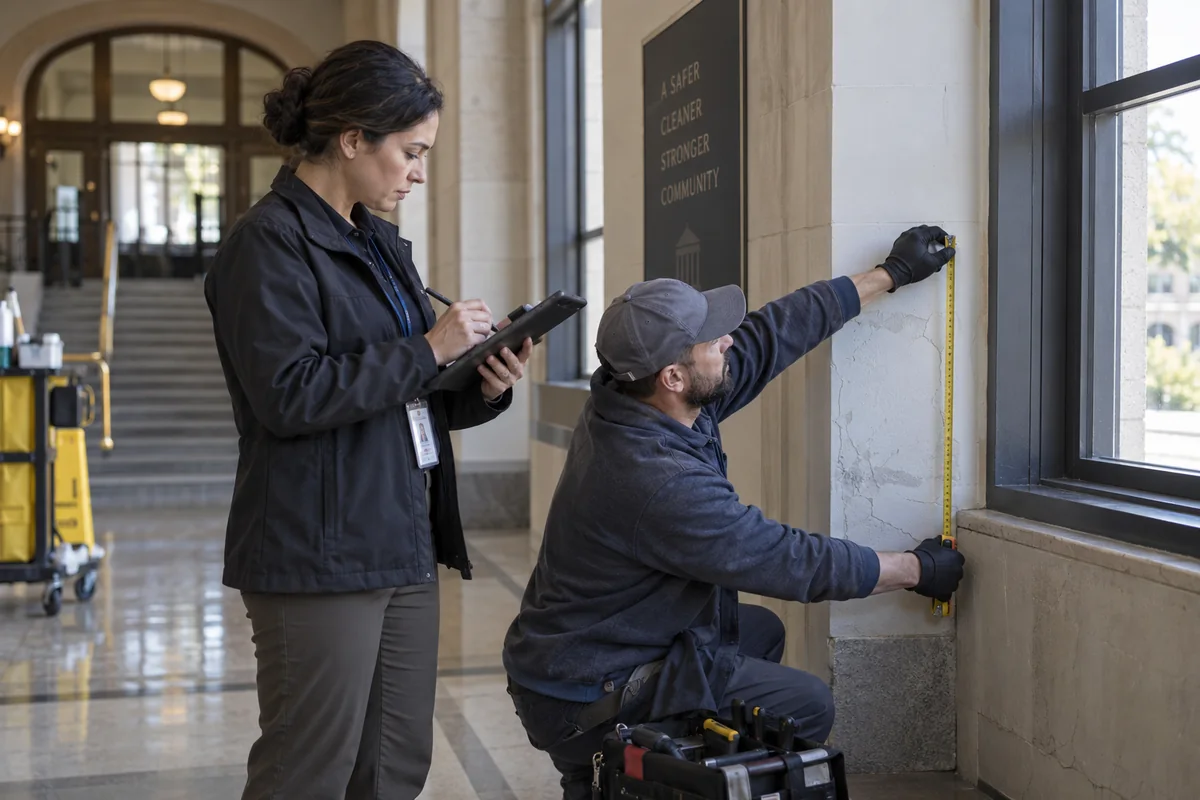
On publicly funded housing projects, walk the site with approved drawings and spot work that does not match.

Check an item's identification number and location against the contractor's inventory, then investigate any mismatch before concluding.
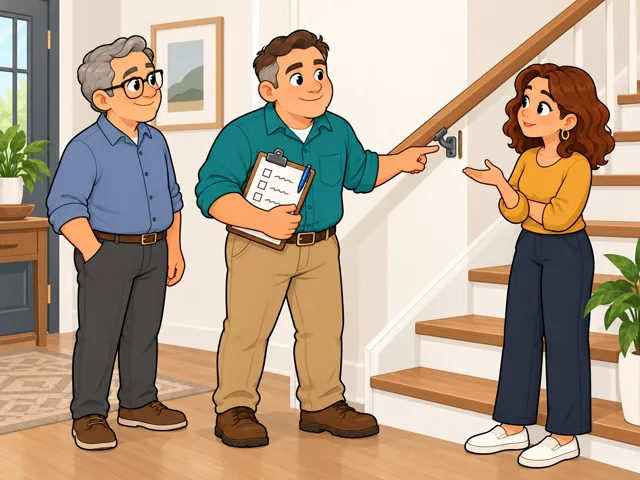
Show the owner which items failed inspection, answer the tenant's questions, and return later to verify repairs.
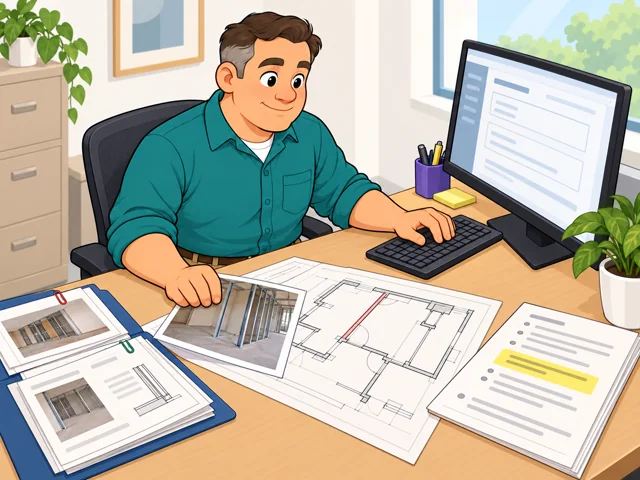
Write down the problem, cite the requirement it breaks, and organize the project files that support your conclusion.
United States
A separate national median is unavailable for this specialty. See the specific pay ranges below.
A separate national growth rate and annual openings estimate are unavailable for this specialty.
Quick orientation
Housing inspection can draw on maintenance experience; federal property work also has qualifying degree routes.
A separate national median is unavailable for this specialty. See the specific pay ranges below.
A separate national growth rate and annual openings estimate are unavailable for this specialty.
Inventory software helps organize property records. Some inspection work also uses drones to gather views remotely.
You connect the evidence to the actual requirement and decide what needs further checking.
How much remote inspection can replace a site visit depends on whether it can verify the condition, identity, and use of the property.
Pay in context
Your pay depends on the agency, location, and job level. The specific ranges below show two settings; the national figures provide context for the broader compliance-officer field, not estimates for government property inspectors alone.
Home Forward in the Portland area lists $34.82–$44.14 an hour for housing inspectors. This is a classification range, not a guaranteed starting rate; the specification was revised in June 2024.
General Schedule (GS) grade 5 is a training level for industrial property specialists. Its 2026 base salary runs from $34,799 at step 1 to $45,239 at step 10, before locality pay. Check the vacancy's grade, step, and location for the applicable salary.
Across compliance officers, the May 2025 median was $80,730 a year, or $38.81 an hour. The lowest-paid 10% earned under $48,220 annually; the highest-paid 10% earned over $133,720. These are wage percentiles, not starting and senior salaries. The government-sector median was $81,540, excluding state and local education and hospitals. All these figures cover the broader field.
The broader compliance-officer field is projected to grow 3.8% from 2025 to 2035, with about 32,700 openings a year on average. Openings include replacing people who leave the occupation. These totals do not tell you how many government property inspector jobs will be available.
Choose the kind of property you want to inspect. Housing and contractor-equipment jobs can have different entry requirements.
After entry
This starts where the entry routes leave off: early work, growing capability, and advancement or specialization.
In federal property work, learn the contract rules through routine record checks and property-control training.
Progress from individual checks to examining how a contractor tracks, maintains, and uses government property.
Pursue responsibility for more complex contractor property systems or supervision.
You enter occupied homes and managed properties, work with residents and owners, and coordinate repairs with office staff.
Government equipment may sit inside a private company's operation. You work with its property records and staff, either at one plant or across several sites.
You move between construction sites and project files, discussing plans, costs, and compliance problems with contractors and property owners.
Try it
Make a mock inventory of five belongings: give each an identifier, location, and condition. Move one item, then compare the record with reality. Write the discrepancy and the question you would ask before concluding it was lost. Notice whether tracing the evidence interests you.
Stay safe: Use only your own belongings; this is a practice exercise, not an official inspection.