
Career profile

Hazardous Materials Removal Worker

Hazmat workers remove asbestos, lead, and similar hazards, then prepare waste for safe disposal.

Before contaminated material comes out, an enclosure goes up. In this physical work, careful setup and accurate container records matter as much as removal.
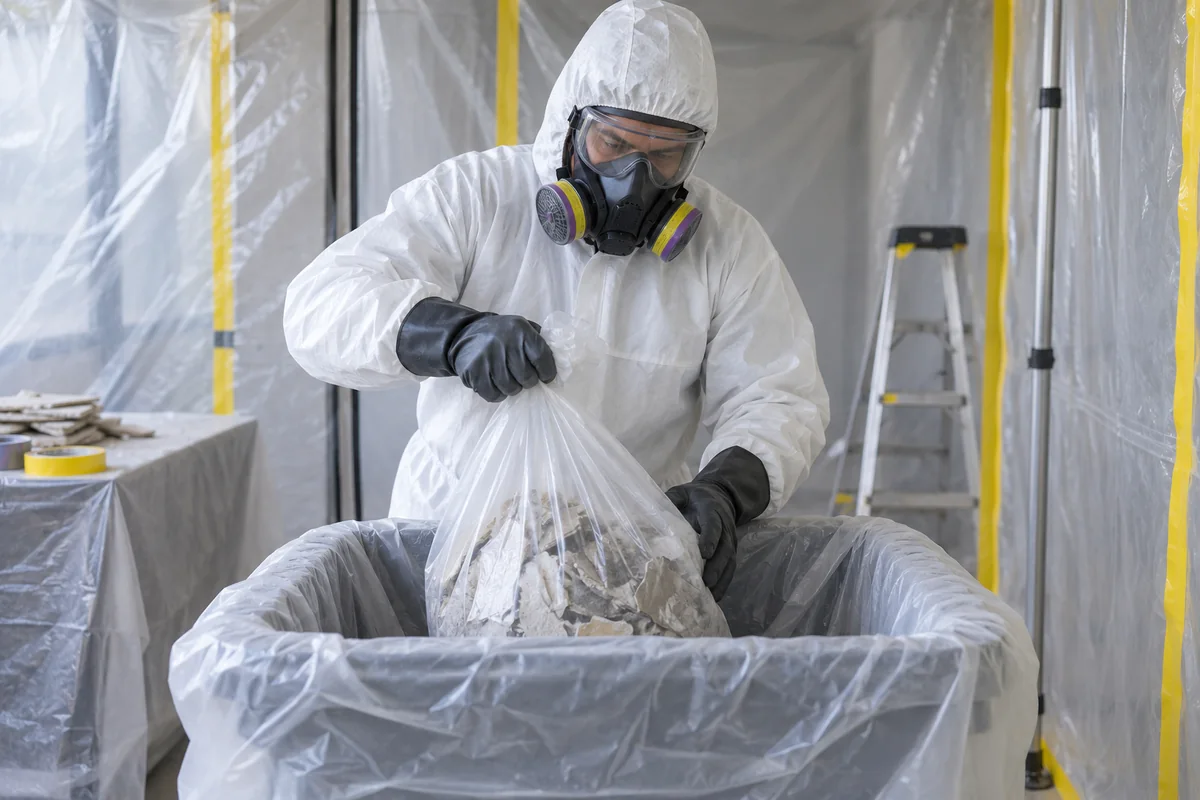
A hazardous materials removal worker places sealed debris into a lined container.

A day in the life

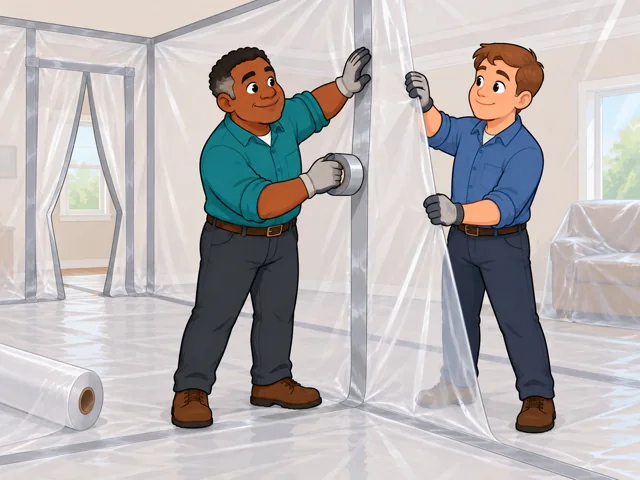
1A worker tapes a plastic containment seam while a coworker holds the sheeting taut in a room being prepared for hazardous material removal.

Enclose the work area first

Put up a closed-off space before any removal starts, so contamination stays inside the cleanup zone.
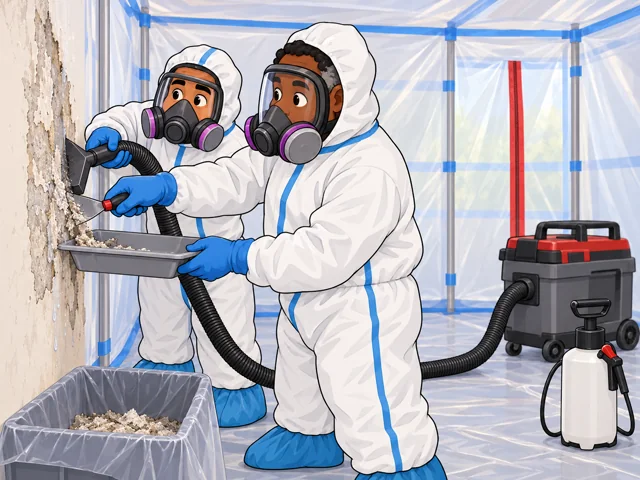
2Inside plastic containment, two protected workers scrape damp contaminated material from a wall and collect debris with a specialized vacuum.

Scrape and vacuum asbestos off surfaces

On an asbestos crew, you strip the material from building surfaces with scrapers and special vacuums.
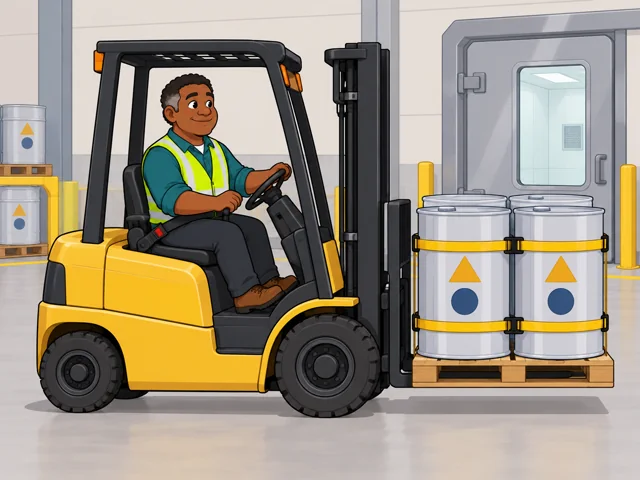
3A worker drives a forklift carrying a secured pallet of closed hazardous waste containers through a staging bay.

Pack waste and move containers

Get the contaminated material ready to haul away, then shift full containers with machines such as a forklift.
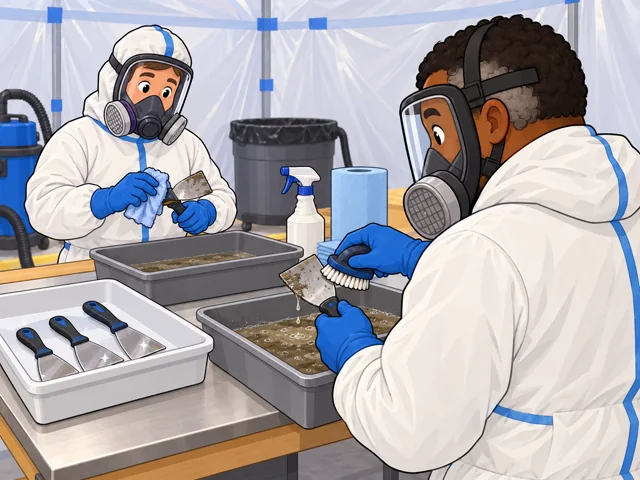
4Two protected workers clean reusable tools at a decontamination station, keeping dirty wash liquid contained.

Decontaminate your gear

Clean your gear after removal wraps up, so you can reuse it without spreading contamination.

5In a clean site office, a worker enters disposal records while checking a container tally and a storage-location diagram.

Log containers and track storage

Log container counts, waste types, and amounts in a disposal record, and track where hazardous items are stored.

Quick facts

Preparation

High school + job training

United States

Pay

$49,450/year

United States · May 2025

Outlook

2% growth

United States · 2025–2035

Quick orientation

Preparation, pay & outlook

Preparation

High school + job training

Training depends on the material you remove; some work also requires a state license or permit.

Geography
United States
Period
Not applicable

Pay

$49,450/year

National median, equivalent to $23.78 an hour.

Geography
United States
Period
May 2025

Outlook

2% growth

About 4,300 openings a year are projected, mostly to replace workers who leave.

Geography
United States
Period
2025–2035

Fit, tradeoffs & changing tools

Things to weigh

  • Protective suits can feel hot and uncomfortable, sometimes for hours.
  • Bending, lifting, and prolonged scrubbing can make a shift physically tiring.
  • Emergency cleanup may bring overtime and travel that keeps you away from home for days or weeks.

Where AI may help

In some nuclear cleanup projects, small robots carry cameras and detectors through contaminated pipes, helping crews locate deposits before removal.

What people still lead

People interpret the inspection results and carry out the containment, removal, and waste-handling work around them.

What we can’t predict yet

How much more inspection and removal can happen remotely will depend on whether machines can reach the material and handle the site's conditions.

Pay in context

Earnings

The national midpoint is $49,450 a year, or $23.78 an hour. Your offer may differ with location, experience, and employer.

The national spread

The lowest-paid 10% earned below $38,460; the highest-paid 10% earned above $82,410. These are wage percentiles, not starting and senior pay grades.

Geography
United States
Period
May 2025
Pay basis
Annual employee wages for hazardous materials removal workers, SOC 47-4041

Pay by employer industry

Annual medians were $49,610 in construction, $48,900 in remediation and other waste management services, and $48,650 in waste treatment and disposal.

Geography
United States
Period
May 2025
Pay basis
Industry-specific annual median employee wages for SOC 47-4041

Learning while earning

Apprentices earn less than fully trained workers, with pay increases as they advance through their program.

Geography
United States
Period
Not stated
Pay basis
Apprenticeship pay progression; no program-specific rate

Openings beyond new jobs

Employment is projected to grow 2% during 2025–35. Most of the roughly 4,300 annual openings are expected to replace people leaving the occupation or workforce.

Geography
United States
Period
2025–2035
Pay basis
Employment projection, not a compensation measure

Getting started

Join a cleanup crew as a trainee

What the route involves
Combine technical lessons with fieldwork beside an experienced worker, learning protective equipment, cleanup tools, and site procedures.
What it can lead to
Build the skills needed to work on the employer's cleanup crew.
What to check
You must complete the training required for your job function before participating in covered hazardous-waste field operations; a trainee job does not bypass that requirement.

Train for asbestos removal

What the route involves
Find a state-approved asbestos worker course, complete the training, pass the required examination, and meet any additional state requirements.
What it can lead to
Earn worker accreditation for asbestos response work covered by the accreditation rules in schools and public and commercial buildings.
What to check
Worker accreditation is separate from inspector, project designer, and contractor/supervisor accreditation. Annual refresher training is required.

A high school diploma or equivalent is the usual starting point. You can learn through an employer or complete approved training for a particular kind of removal work.

After entry

Career paths

This starts where the entry routes leave off: early work, growing capability, and advancement or specialization. This path also has a credential or licensing boundary; see the requirements and limits.

  1. Get established

    Become reliable at setting up containment, preparing waste containers, and keeping the disposal record complete.

  2. Build equipment skills

    Develop your ability to move waste with handling equipment and decontaminate tools for reuse.

  3. Move toward crew supervision

    With experience and additional training, you may advance to a supervisor role coordinating cleanup work.

Where you can work

Buildings being renovated or demolished

Asbestos and lead crews work around existing walls, ceilings, and other structures. Tight spaces, work at height, and awkward removal positions can shape the day.

  • Indoors
  • Physical demands
  • Safety-sensitive

Waste storage and disposal facilities

Work centers on incoming waste, sorting loads, moving containers, and keeping their locations straight. Forklifts or hoists may do the heavy moving.

  • Physical demands
  • Safety-sensitive

Nuclear-facility cleanup

Crews decontaminate equipment and package radioactive waste, including during plant closure. This specialty adds extensive radiation-safety training.

  • Physical demands
  • Safety-sensitive

Try it

See whether the job clicks before you commit to the path.

Make six paper cards representing sealed waste containers, each with an ID, contents, and storage location. Create a tracking sheet, move two cards to new locations, and update the record. Notice whether you enjoy making every container traceable.

Stay safe: Keep this a paper exercise; do not collect, open, or handle real waste or suspected hazardous material.

Explore more careers

Sources

  1. U.S. Bureau of Labor Statistics. Hazardous Materials Removal Workers. Accessed 2026-10-03.
  2. O*NET OnLine. 47-4041.00 — Hazardous Materials Removal Workers. Accessed 2026-10-03.
  3. Occupational Safety and Health Administration. 1910.120 — Hazardous waste operations and emergency response. Accessed 2026-10-03.
  4. U.S. Environmental Protection Agency. Asbestos Professionals. Accessed 2026-10-03.
  5. U.S. Department of Energy. Pipe Crawling Robot Helps Paducah Prepare for Demolition. Accessed 2026-10-03.

Your message goes to the Great Jobs team. How we use your information