
Career profile

Hearing Aid Specialist

Hearing aid specialists fit hearing aids and help people lean on them in everyday conversation.

Does this hearing aid help someone hear better, and can they wear and work it comfortably? Testing, fitting and teaching are how you find out.
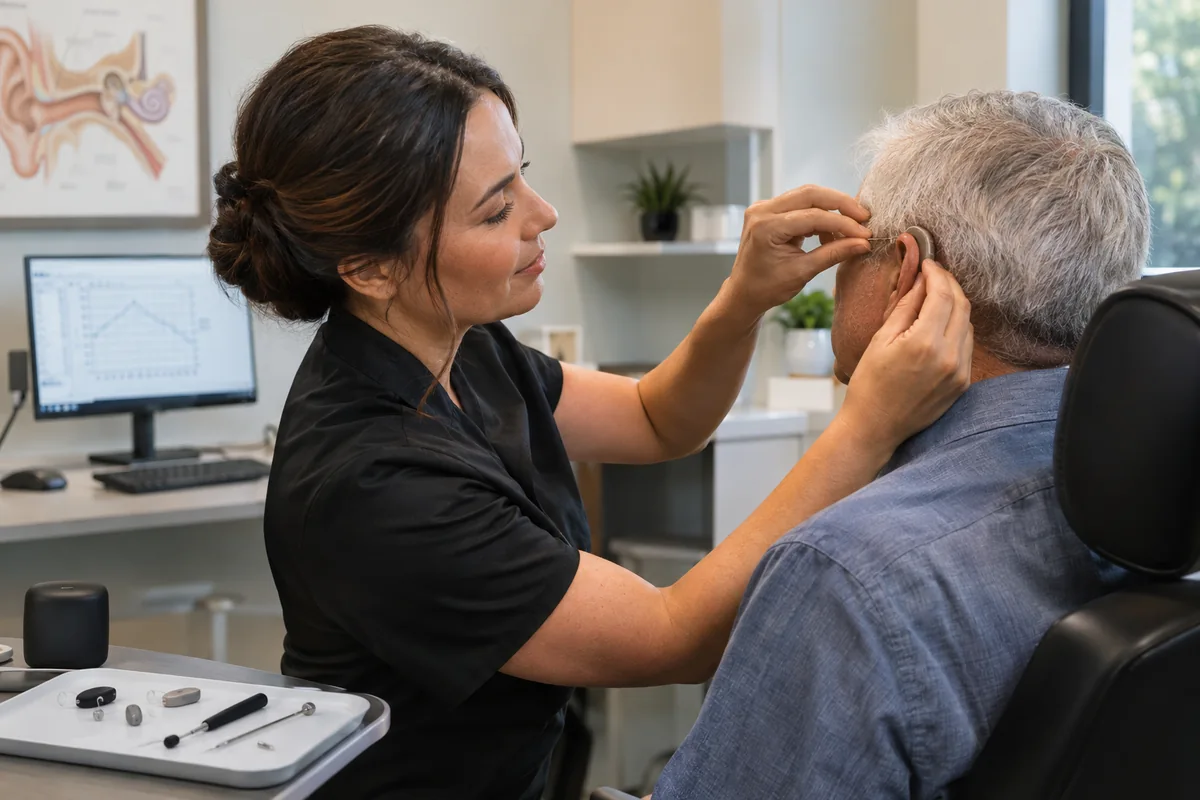
hearing aid specialist fitting a hearing aid for an adult client in a clinic.

A day in the life

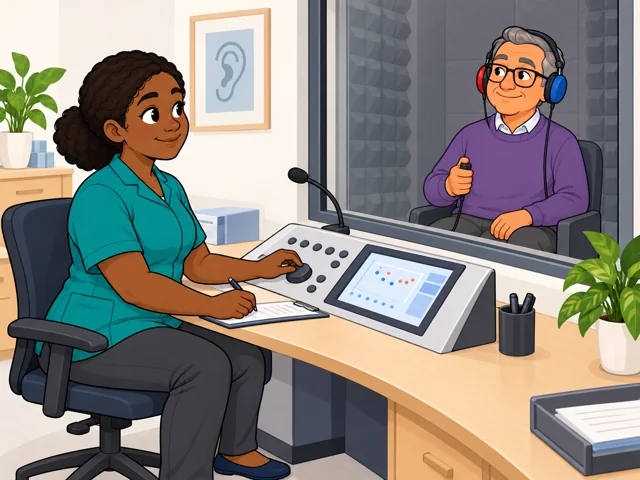
1A hearing aid specialist operates hearing-test equipment while an older man in a sound-treated booth listens through headphones and presses a response button.

Test hearing to recommend an aid

Play tones of varying pitch and loudness in a sound-treated room, note each reaction, and test speech understanding.
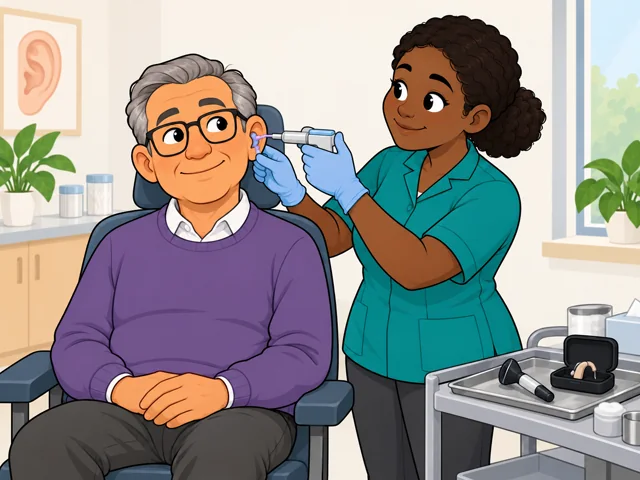
2A hearing aid specialist carefully takes an ear impression for a custom earmold while an older man sits calmly in a fitting chair.

Match an aid to their hearing

Choose a device for the client's hearing, and for custom fits, take an ear impression for the earmold.
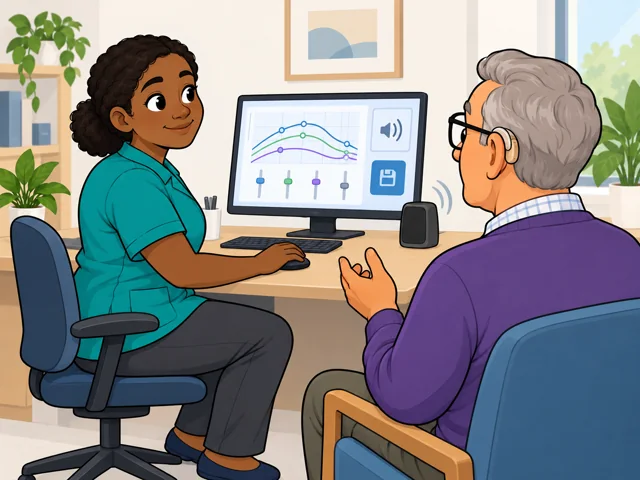
3A specialist adjusts hearing-aid settings on a computer while checking an older man's response to the sound.

Retune when a sound bothers them

Change settings in programming software, watch the client's reaction, and save the new settings to their electronic file.
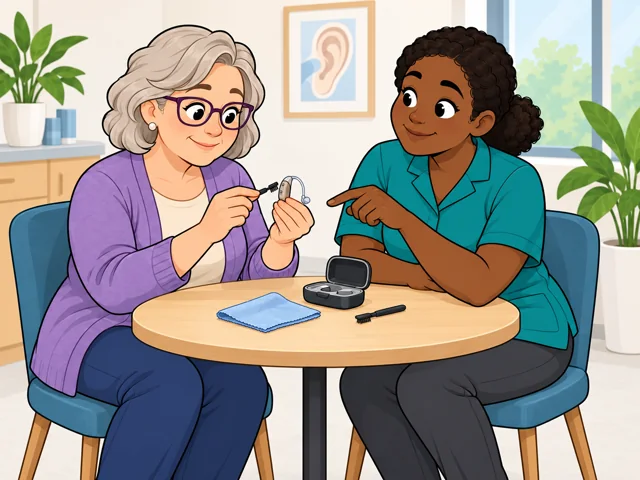
4An older woman practices brushing her hearing aid while the specialist watches and points out where to clean.

Teach a client to clean it

Demonstrate cleaning with the hearing-aid brush, have the client repeat it, and re-explain any part they struggle with.
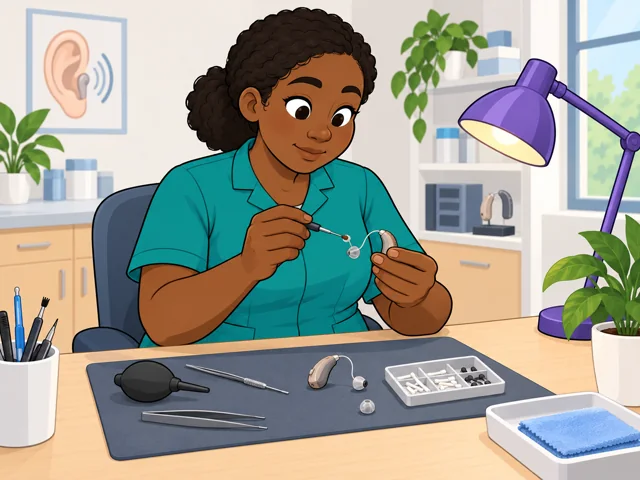
5A hearing aid specialist works under a task lamp to replace a clogged wax filter in a hearing-aid receiver.

Get a dead aid working again

Examine a hearing aid that quit working, find the problem, and maintain or repair it.

Quick facts

Preparation

High school + specialized training

United States

Pay

$65,160 a year

United States · May 2025

Outlook

19.4% projected growth

United States · 2025–2035

Quick orientation

Preparation, pay & outlook

Preparation

High school + specialized training

A high school diploma or equivalent is the typical entry education. State requirements may call for supervised training or an approved college program.

Geography
United States
Period
Not applicable

Pay

$65,160 a year

National median for hearing aid specialists, equivalent to $31.33 an hour.

Geography
United States
Period
May 2025

Outlook

19.4% projected growth

Employment of hearing aid specialists is projected to grow nationally from 2025 to 2035.

Geography
United States
Period
2025–2035

Fit, tradeoffs & changing tools

Things to weigh

  • Some jobs have sales goals or performance benchmarks alongside client care. Ask how those expectations shape appointments.
  • You need patience with complaints and frustrated clients, even when the conversation is difficult.

Where AI may help

Programming software helps you adjust devices. Some over-the-counter hearing aids also let users customize settings through tests and phone apps; these products are for adults 18 or older with perceived mild to moderate hearing loss.

What people still lead

In a fitting appointment, you check comfort, explain device care, and respond when a client's experience does not match their expectations.

What we can’t predict yet

As self-fitting products improve, some appointments may shift from initial setup toward troubleshooting. How much fitting people will handle themselves remains uncertain.

Pay in context

Earnings

The national median is $65,160 a year, or $31.33 an hour. Treat that as a comparison point when you read job offers.

The national spread

In May 2025, the 10th-percentile annual wage was $38,400 and the 90th-percentile wage was $94,020. These describe the lower and upper parts of the wage distribution, not starting pay and a guaranteed later salary.

Geography
United States
Period
May 2025
Pay basis
BLS Occupational Employment and Wage Statistics wages for hearing aid specialists, SOC 29-2092; not self-employment income.

Read the commission terms

Some hearing-care jobs combine a base salary with commission. Ask what pay is guaranteed, what earns commission, and how returned hearing aids affect it.

Geography
United States
Period
Not stated
Pay basis
Employer-specific base salary plus commission; no national prevalence or amount implied.

Growth and openings

National employment is projected to grow 19.4% from 2025 to 2035, with about 900 openings a year on average. Openings include replacement needs as well as growth; local hiring can differ.

Geography
United States
Period
2025–2035
Pay basis
Employment projection and average annual openings, not a wage measure.

Getting started

Train with a licensed specialist

What the route involves
In Texas, start at age 18 or older with a high school diploma or equivalent, a qualified supervisor, and a temporary training permit. Complete 150 hours of supervised practice plus 10 hours of masking training, a hearing-test technique.
What it can lead to
Pass the written and practical tests and complete the state-law test to apply for an apprenticeship permit. After the one-year apprenticeship, apply for the full hearing instrument fitter and dispenser license.
What to check
You need the permit before beginning the supervised practice. This is Texas's route; securing a supervisor and training position is a separate step.

Complete an approved college program

Two years for the Spokane Falls program.
What the route involves
At Spokane Falls Community College in Washington, earn an Associate in Applied Science in Hearing Instrument Specialist. Study hearing science and practice testing, fitting, and client instruction through laboratory and clinical work.
What it can lead to
The degree meets Washington's educational requirement. You then complete the licensing application process and pass the board-approved written examination.
What to check
Graduation does not itself grant a license. Check another state's requirements before assuming this degree qualifies you there.

Check the licensing board where you want to work before choosing training. These two routes show why the state matters.

After entry

Career paths

This starts where the entry routes leave off: early work, growing capability, and advancement or specialization.

  1. Get established

    Build a reliable appointment routine: prepare devices, keep client records current, and make sure orders and follow-up visits are tracked.

  2. Broaden your device skills

    Learn to demonstrate additional listening devices and explain how clients can use them.

  3. Lead a hearing center

    A senior specialist role can add staff scheduling, apprentice mentoring, and responsibility for daily operations while keeping some fitting appointments.

Where you can work

A hearing center inside a warehouse store

You move between a sound-treated testing room and retail operations. The job can include taking payments, managing device inventory, and covering the front desk between appointments.

  • Indoors

A dedicated hearing-care office

Independently owned hearing centers can bring hearing professionals, patient coordinators, and office support staff together in one practice. Ask who handles appointment calls and office work; the staffing arrangement affects your day.

  • Indoors
  • Office

Try it

See whether the job clicks before you commit to the path.

Find a manufacturer's public hearing-aid care guide. Turn one cleaning task into a short explanation for a classmate, using a drawing of the device. Ask them to explain it back. Notice whether you enjoy spotting confusion and making the steps clearer.

Stay safe: Keep this a paper exercise; you do not need to handle anyone's hearing aid or test their hearing.

Explore more careers

Sources

  1. O*NET OnLine. 29-2092.00 — Hearing Aid Specialists. Accessed 2026-10-09.
  2. U.S. Bureau of Labor Statistics. May 2025 Occupational Employment and Wage Statistics — national estimates; supplied pinned binding. Accessed 2026-09-29.
  3. U.S. Bureau of Labor Statistics. Employment Projections, Table 1.2, 2025–2035; supplied pinned binding. Accessed 2026-09-29.
  4. Texas Department of Licensing and Regulation. Temporary Training Permits — Hearing Instrument Fitters and Dispensers. Accessed 2026-10-09.
  5. Washington State Department of Health. Hearing Aid Specialist — Licensing Requirements. Accessed 2026-10-09.
  6. Spokane Falls Community College. Hearing Instrument Specialist — Associate in Applied Science. Accessed 2026-10-09.
  7. Costco. Costco Hearing Aid Center. Accessed 2026-10-09.
  8. Costco Wholesale Corporation. Licensed Hearing Aid Dispenser — role description, Alexandria, Virginia. Accessed 2026-10-09.
  9. Costco Wholesale Corporation. Senior Hearing Aid Specialist — role description, Washington, DC. Accessed 2026-10-09.
  10. U.S. Food and Drug Administration. OTC Hearing Aids: What You Should Know. Accessed 2026-10-09.
  11. Demant / HearingLife. Audiologist or Hearing Aid Specialist — Bloomingdale, Illinois. Accessed 2026-10-09.
  12. Beltone. Search Careers — independently owned hearing care centers. Accessed 2026-10-09.

Your message goes to the Great Jobs team. How we use your information