
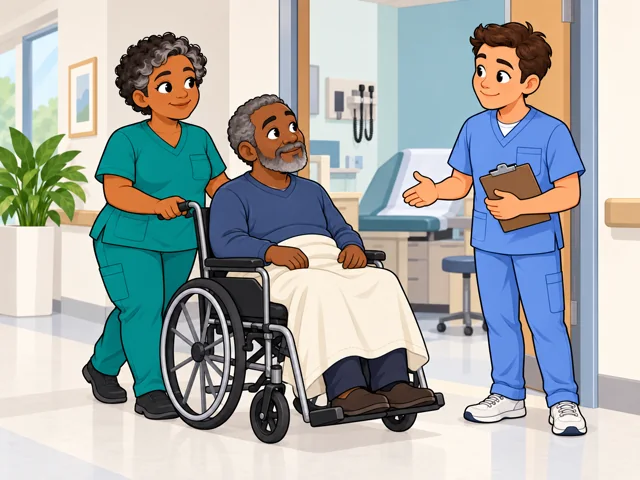
Take a patient to testing
Bring a patient from their room to testing by wheelchair, stretcher or bed, then tell staff they're here.
Career profile
Orderlies move patients around a hospital and set up equipment and spaces for whoever's next.
Take someone to X-ray, then wipe down a wheelchair or restock supplies: physical hospital work, lots of walking, and quick chats with patients.

Bring a patient from their room to testing by wheelchair, stretcher or bed, then tell staff they're here.
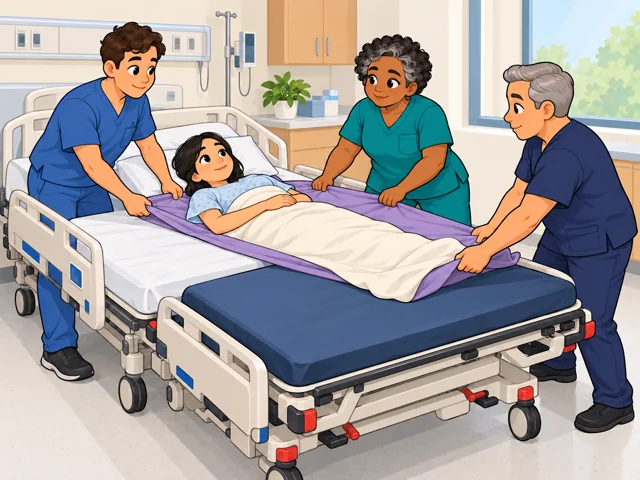
Help a patient shift between bed and stretcher with coworkers, using a slide sheet or transfer board.
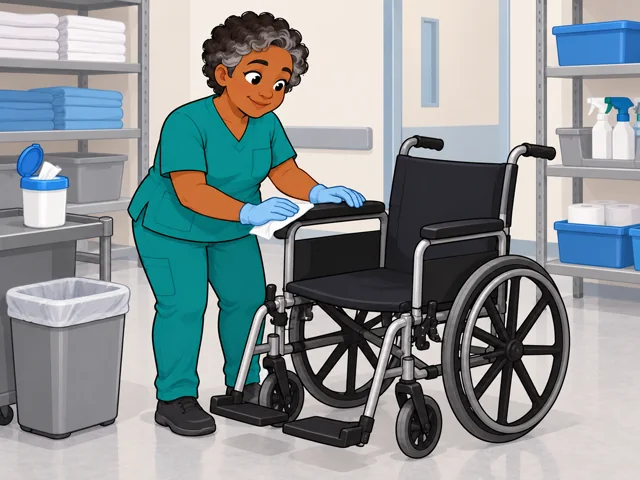
Clean a wheelchair after someone finishes with it, and report any broken or faulty gear for repair.
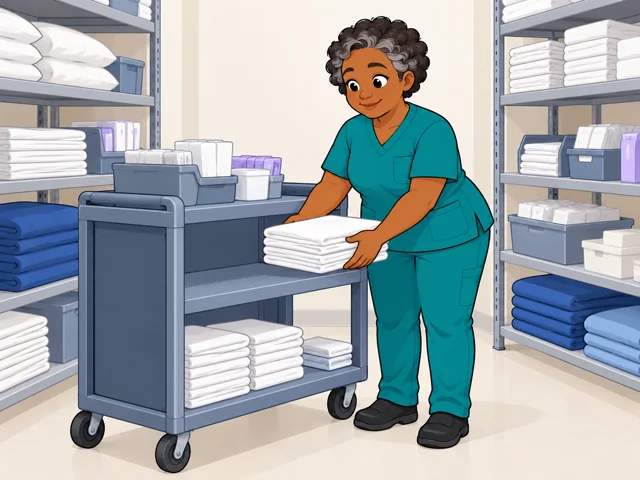
Remove dirty linens, bring clean ones, and restock the supply room or cleaning cart before items run short.
United States
United States · May 2025
The broader orderly outlook below includes hospitals and other workplaces.
Quick orientation
A diploma or equivalent is typical, followed by short on-the-job training.
Median for orderlies in hospitals, May 2025.
The broader orderly outlook below includes hospitals and other workplaces.
Some hospitals send transport requests to phones and use powered transport equipment to help move patients.
You still help people transfer, notice distress and communicate with clinical staff.
How much future systems can take over moving patients, beyond dispatching requests and assisting movement, remains uncertain.
Pay in context
Use the hospital median as a reference when comparing offers.
The annual median was $38,370—about $18.45 an hour when divided by 2,080 hours. This is a midpoint, not a starting offer.
Across all orderly workplaces, the lowest-paid 10% earned below $32,240; the highest-paid 10% earned above $50,600. These are not beginner and experienced-worker rates.
Orderly medians were $38,550 in ambulatory healthcare, $38,370 in hospitals and $35,350 in nursing and residential care.
Employment of orderlies across all settings is projected to grow 4.0%, with about 7,200 openings annually during 2025–2035. These figures include workplaces beyond hospitals.
Orderlies work under nursing supervision and do not need an occupational license. Employers may require cardiopulmonary resuscitation (CPR) or basic life support (BLS) certification.
After entry
This starts where the entry routes leave off: early work, growing capability, and advancement or specialization.
Learn the hospital's routes, patient identification checks and how to tell staff about arrivals and departures.
Become comfortable with different transport equipment and coordinated transfers with coworkers.
A lead transporter role can add training new hires and monitoring daily work. Some employers seek prior transport or hospital experience for this step.
You travel between wards and testing or treatment areas, coordinating pickups with dispatch and hospital staff. Your workplace changes with each trip.
Work stays closer to the operating rooms. Cleaning between procedures, moving heavy equipment and preparing room setups shape the pace of your shift.
Try it
Sketch a pretend hospital floor with patient rooms, an elevator and an X-ray department. Trace a wheelchair trip and explain the destination to a partner. Notice whether you enjoy combining wayfinding with clear, reassuring conversation.
Stay safe: Keep this a paper exercise; do not practice lifting or moving a person.