
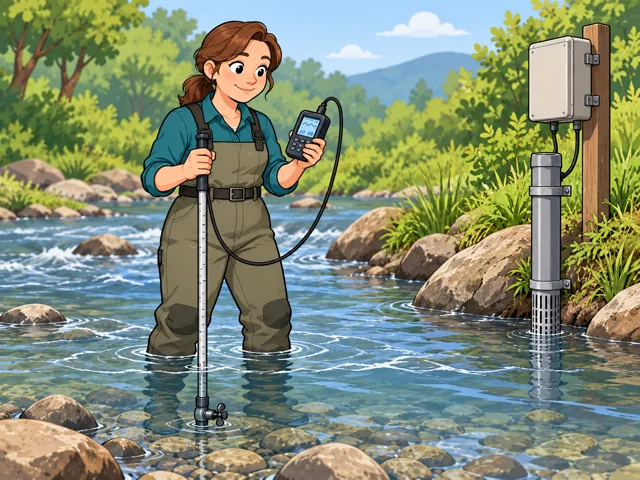
Gauge a stream's flow
Measure a stream's flow and inspect the gear installed in it, so your numbers reflect real conditions.
Career profile
Hydrologists track water's path and amount, then turn data into advice on supply and flooding.
Can a town pump more groundwater without drying up the neighbors' wells? Hydrologists help answer questions like that using collected data and models.
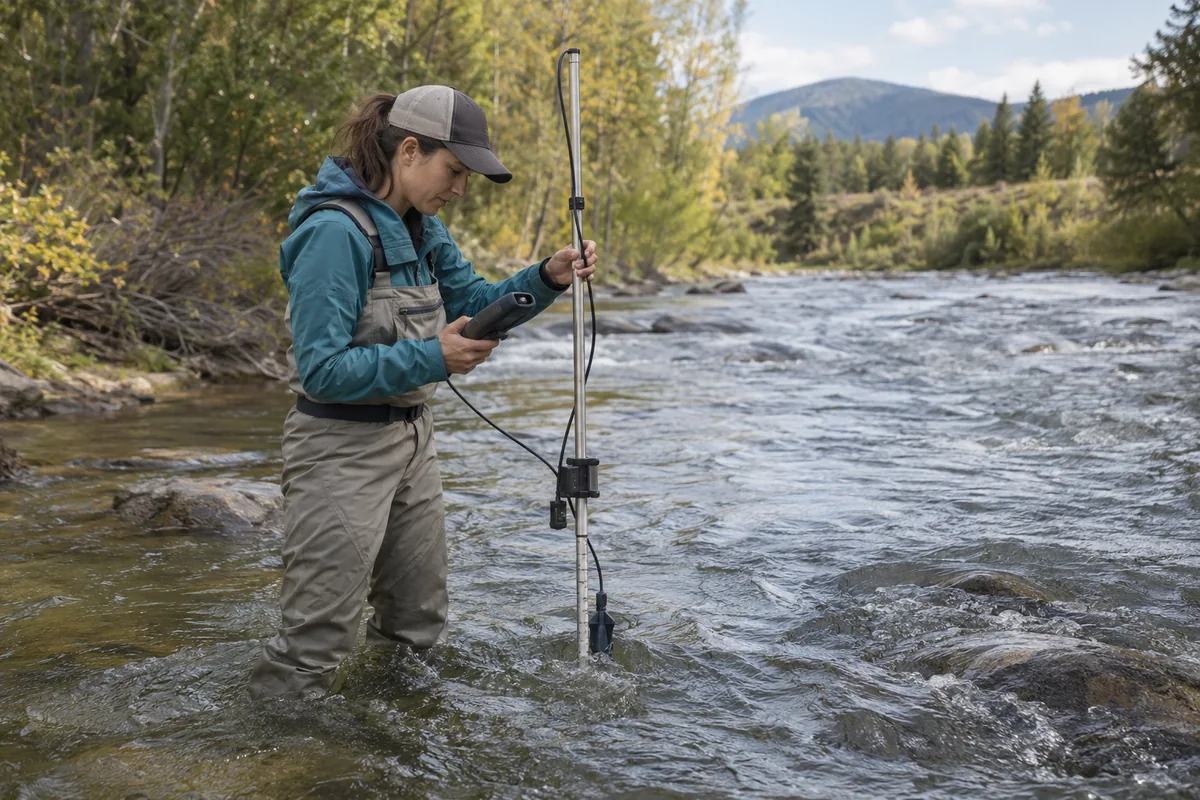
Measure a stream's flow and inspect the gear installed in it, so your numbers reflect real conditions.
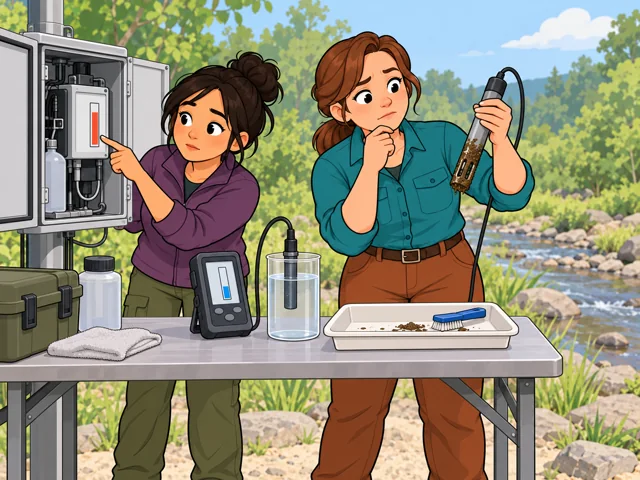
Compare a sample with the automatic monitor's reading, and trace any mismatch before you rely on that figure.
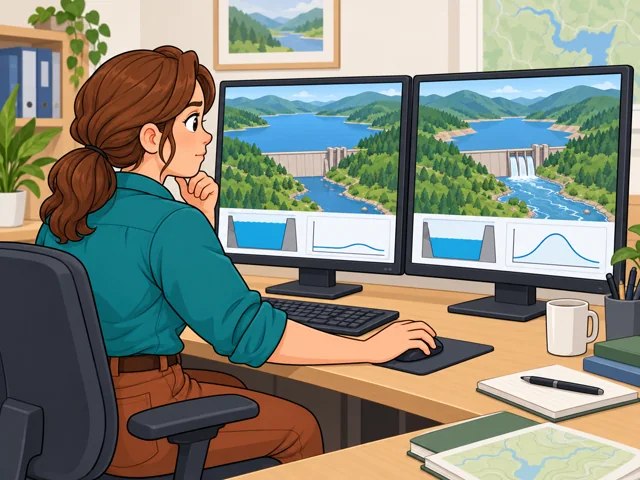
On surface-water projects, you run computer models of a reservoir holding versus releasing water, ahead of the choice.
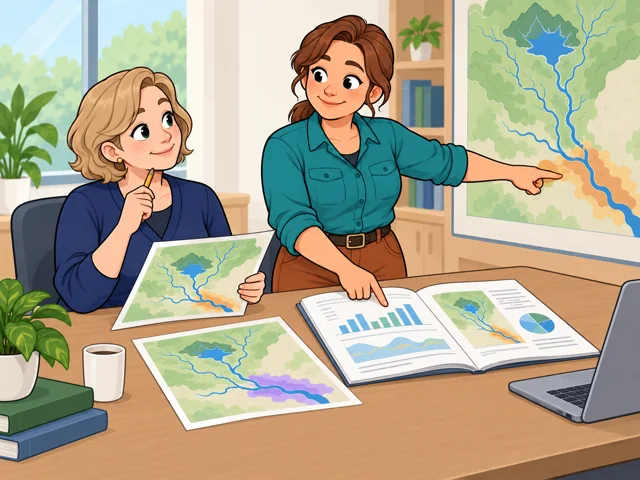
Turn your results into maps and a written report so water managers can weigh their options.
United States
United States · May 2025
United States · 2025–2035
Quick orientation
Usually in hydrology, geology, or a related physical science.
National median for hydrologists; equivalent to $46.44 an hour.
About 400 openings a year are projected nationally, including replacement openings.
Some drought-forecasting projects use software that learns patterns from past data—machine learning—to predict low streamflow.
You choose the study question, check measurements, and explain what the results mean for water decisions.
How much forecasting these tools can take over depends on the task. Predicting drought severity and looking farther ahead remain harder than some other predictions.
Pay in context
Your pay can vary with experience, responsibility, and location.
Hydrologists had median wages of $96,600 a year, equivalent to $46.44 an hour. Half earned more and half earned less.
The 10th-percentile wage was $64,020 and the 90th-percentile wage was $153,130 a year. These describe the wage distribution, not starting and senior salaries.
Employment is projected to grow 1.5%, with about 400 openings annually on average. Openings include replacing workers who leave, as well as new jobs.
A relevant bachelor's degree is the usual starting point. Some employers prefer a master's degree.
After entry
This starts where the entry routes leave off: early work, growing capability, and advancement or specialization.
Get comfortable checking instruments and documenting measurements that another scientist can use.
In groundwater work, learn to connect well levels and drilling records to estimates of available water.
Progress toward designing studies and coordinating scientists and technicians through the final recommendations.
Work alongside technicians, data scientists, and other specialists on monitoring networks and long-term watershed studies. Projects can involve several government or university partners.
Investigate groundwater for utilities, municipalities, or industrial clients. Your analysis helps connect local underground conditions to decisions about wells and long-term supplies.
Try it
Open Water Data for the Nation from the U.S. Geological Survey and choose a streamflow graph. Mark its largest rise and how long the flow takes to fall again. Write two possible explanations and one extra measurement you would need to distinguish them. Notice whether interpreting the pattern makes you curious.