
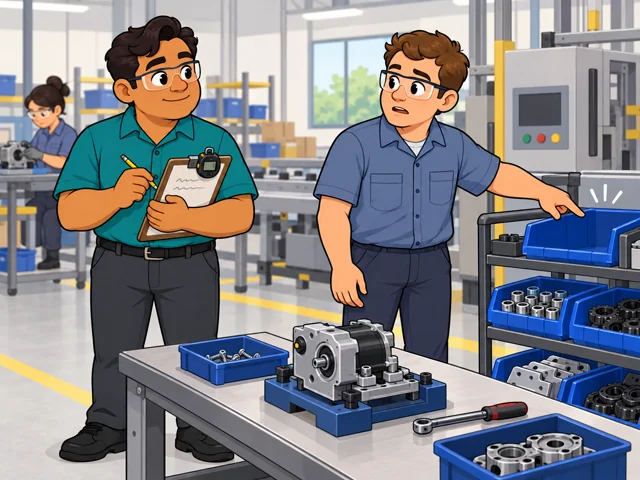
Find where work sits idle
Watch one assembly step, log how long each part takes, and ask its operator why holdups happen.
Career profile
Industrial engineers plan how people, machines, and materials work together as one system.
How can production stall when every machine runs fine? You trace how work passes between stations, plan a better arrangement, then check whether it helps.
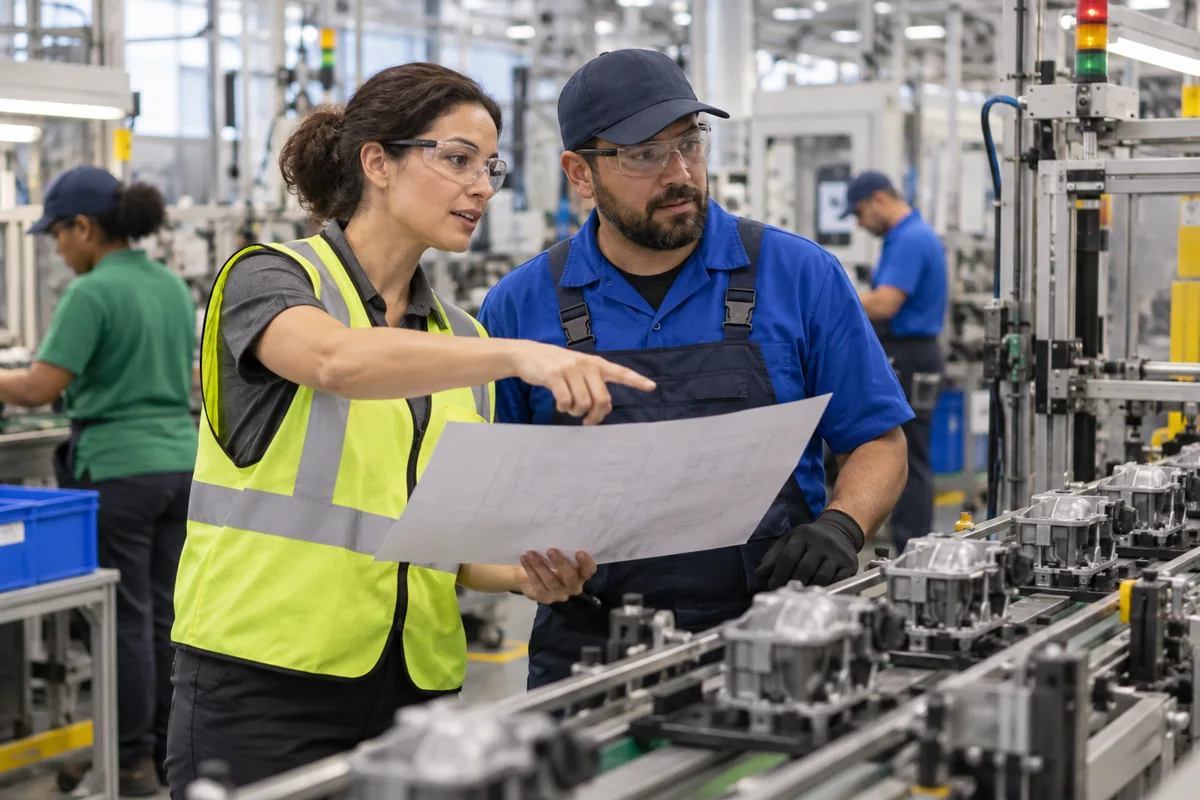
Watch one assembly step, log how long each part takes, and ask its operator why holdups happen.
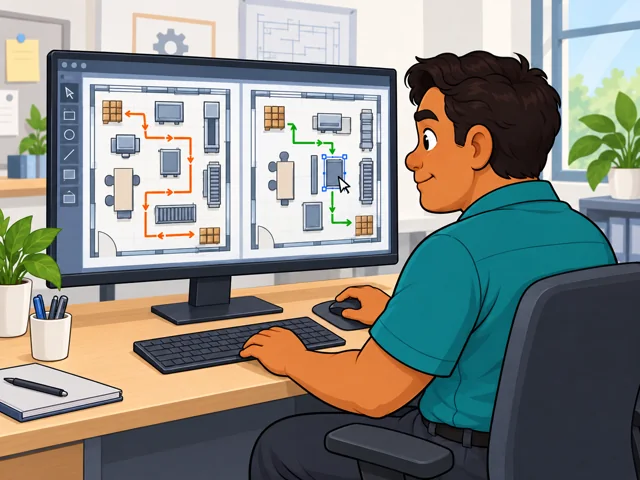
In drafting software, compare several equipment layouts for one workstation to shorten how far materials travel.
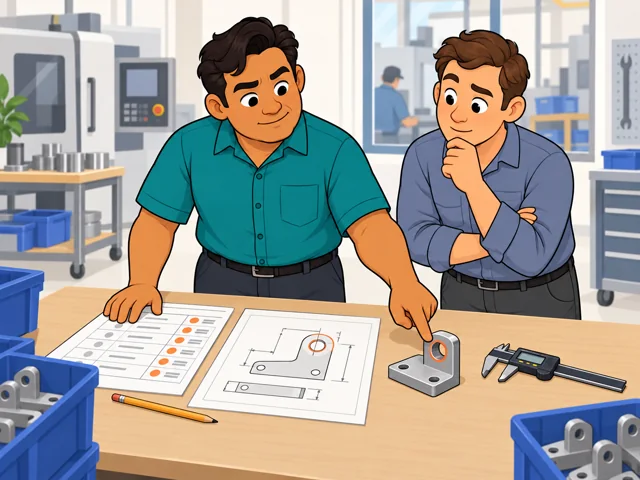
When defects climb, check inspection records against the product specifications, then flag what the production team should investigate.

Calculate production cost and a suggested change's likely savings so a manager can decide if it's worth funding.
United States
United States · May 2025
United States · 2025–2035
Quick orientation
Usually industrial engineering or a related engineering field.
National median; equivalent to $49.25/hour.
About 23,100 openings annually, including replacement needs.
In advanced manufacturing, computer models connected to real production data—called digital twins—can predict how a system will behave before you change it.
People define what the model must represent and check its predictions against the real operation before trusting the results.
How much planning these tools can take over depends on reliable data and models that work together. Building and checking those connections remains difficult.
Pay in context
The median describes the middle worker’s pay, not a starting offer.
The median was $102,440 a year, or $49.25 an hour. The 10th and 90th percentiles were $74,370 and $159,860 annually. These describe the wage distribution, not beginner and senior salaries.
Annual medians were $107,610 in professional, scientific and technical services; $105,370 in computer and electronic manufacturing; and $93,170 in fabricated metal manufacturing.
Compare the subjects you would study in these two education routes.
After entry
This starts where the entry routes leave off: early work, growing capability, and advancement or specialization.
Start by tracing material flow and learning the production records behind it.
Develop a system change, compare alternatives, and evaluate whether the result meets the project’s goals.
With experience, move toward managing engineers and technicians.
Move between observing assembly on the factory floor and analyzing results in an office.
Work with clinical partners on appointment schedules, staffing workloads and room capacity. Patient access and the needs of care teams shape the design.
Try it
Make ten paper packets, each with three different sheets. Time your first assembly method, sketch where supplies sit, then change the layout or sequence and repeat. Count mistakes as well as seconds. Notice whether you enjoy explaining why one arrangement works better.