
Career profile

Industrial Maintenance Technician

Industrial maintenance technicians maintain and repair plant machines that move, shape, package, or process goods.

The appeal is detective work: trace a vibrating machine, an on-screen fault code, or a worn part to its cause, then prove your fix holds.
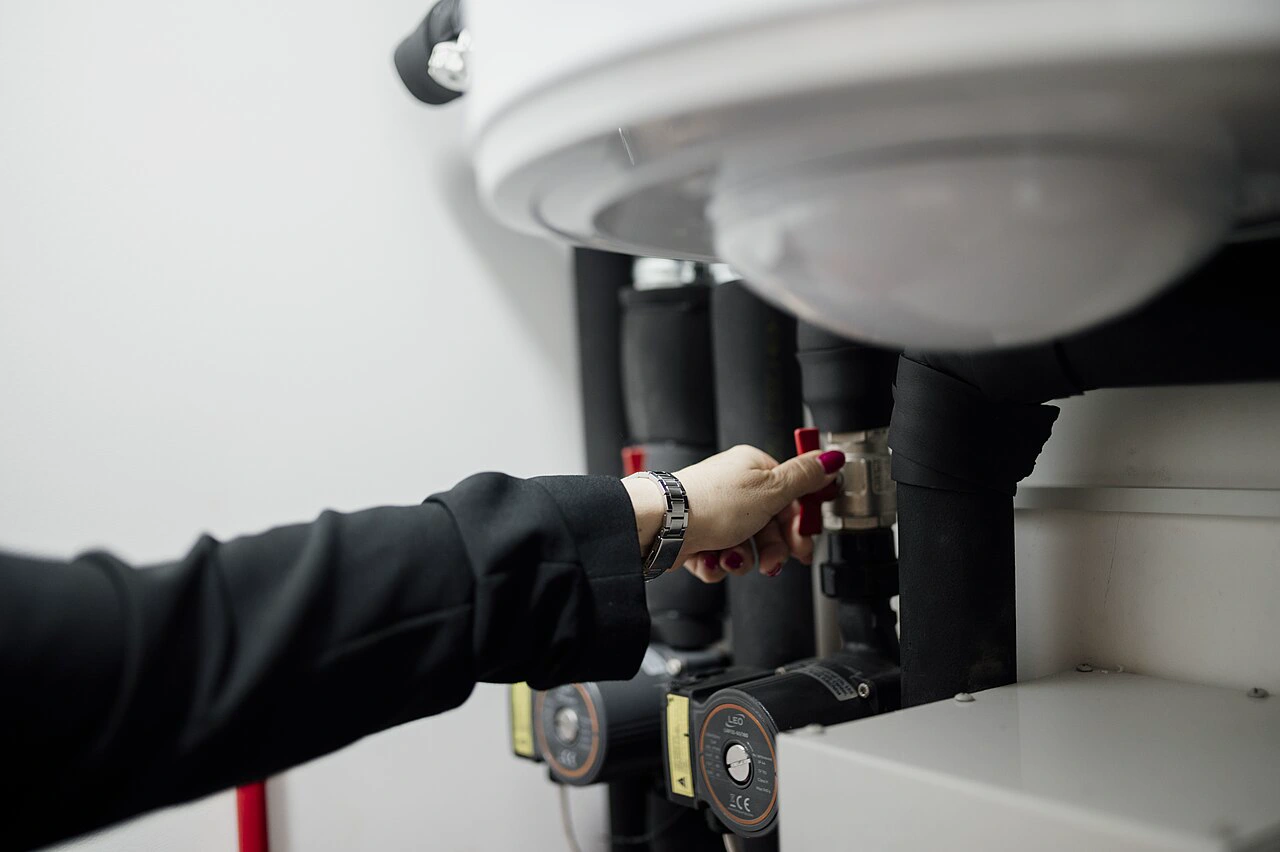
A technician turns a valve among pumps and insulated pipes in a civilian mechanical room.
Shixart1985 / CC BY 2.0

A day in the life

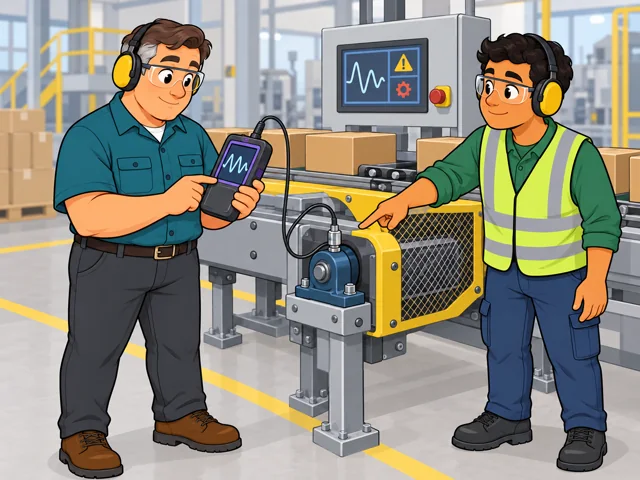
1A maintenance technician studies vibration data while a medium-tan male operator points to the guarded conveyor drive.

Narrow down what's wrong

Hear out the operators, watch the machine, then narrow possible causes with fault codes, meters, or vibration data.
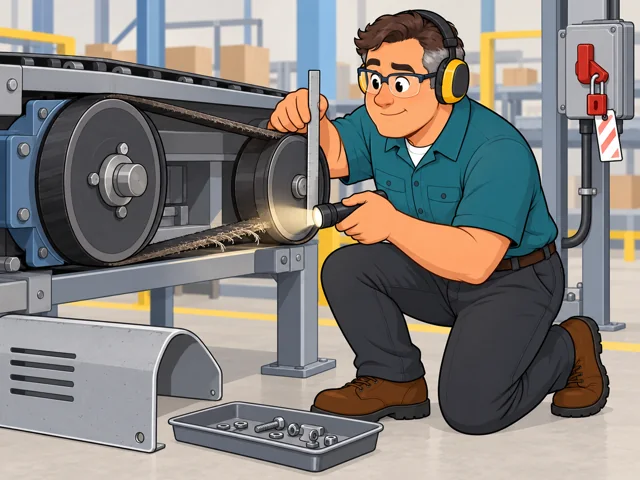
2Kneeling beside an isolated conveyor drive, the technician examines a frayed belt and checks the pulley alignment.

Open it and choose a fix

Take apart the section involved and check gears, belts, bearings, and other parts for wear or damage.
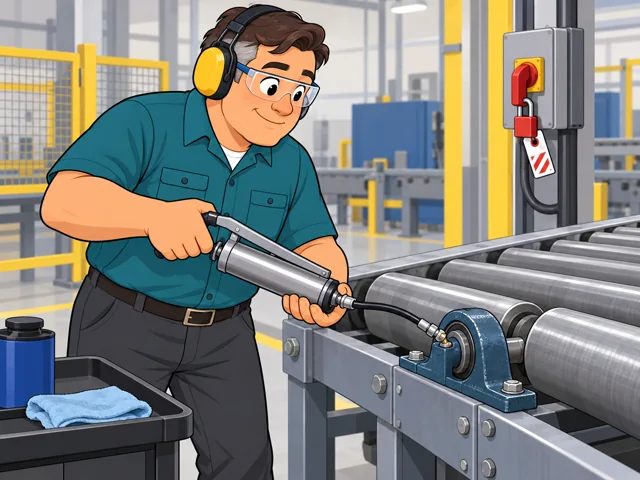
3The technician applies grease to a cleaned bearing fitting on an isolated roller conveyor.

Oil and tune the equipment

Clean, oil, tune, and calibrate the equipment to catch small problems before they become line shutdowns.
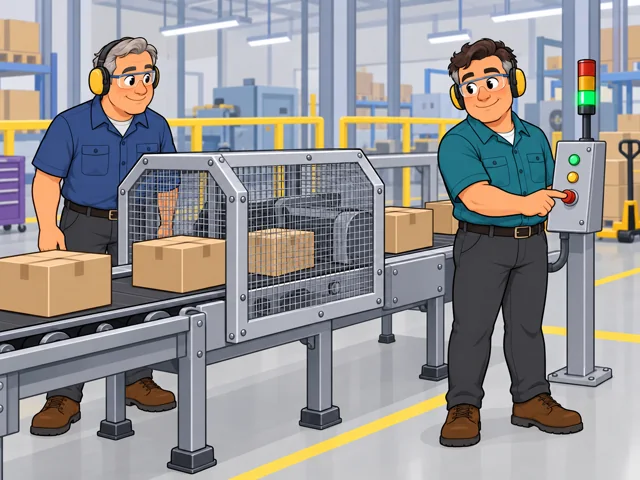
4The technician operates the repaired conveyor during a controlled test while a very-light-skinned male coworker watches the packages move.

Reassemble and test the machine

Reassemble the machine and run a controlled test to confirm it works before it rejoins production.
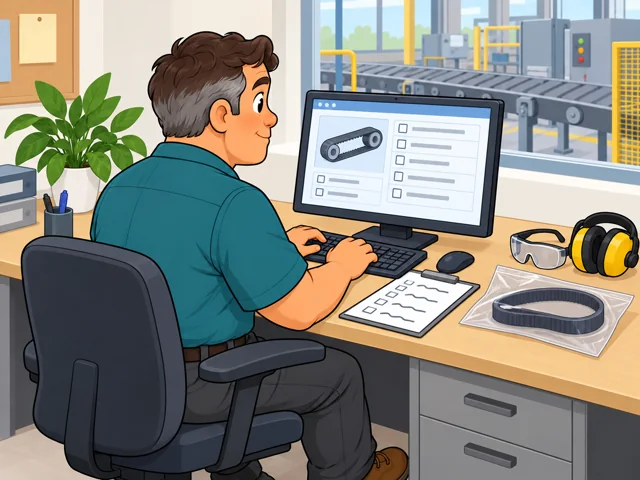
5Seated at a maintenance-office computer, the technician records the conveyor repair and the replacement part used.

Log the repair and parts

Record each fix and the parts installed, and in some jobs, key instructions or settings into computer-controlled machines.

Quick facts

Preparation

High school + 1 year or more training

United States · BLS profile updated August 2026

Pay

$64,520 median

United States · May 2025

Outlook

18% projected growth

United States · 2025–2035

Quick orientation

Preparation, pay & outlook

Preparation

High school + 1 year or more training

Industrial machinery mechanics generally need a high school diploma or equivalent and more than a year of on-the-job training. Some complete a two-year industrial-maintenance associate program.

Geography
United States
Period
BLS profile updated August 2026

Pay

$64,520 median

National median annual wage for industrial machinery mechanics—not a starting wage.

Geography
United States
Period
May 2025

Outlook

18% projected growth

Projected employment change for industrial machinery mechanics; a national projection does not guarantee local openings.

Geography
United States
Period
2025–2035

Fit, tradeoffs & changing tools

Things to weigh

  • Industrial machinery can injure people. Following shutdown procedures and wearing the required eye, hearing, hand, head, and foot protection are part of the job.
  • Expect time on your feet and possible climbing, lifting, noise, contaminants, heat, or cramped access around equipment.
  • Many jobs keep regular full-time hours, but breakdowns can bring on-call, night, weekend, or overtime work.

Where AI may help

Computerized diagnostic and vibration-analysis tools can surface clues. Maintenance software can organize records, while machine-control and monitoring software can show equipment status and settings.

What people still lead

A person still connects the clues to the physical machine, selects and performs the repair, and verifies that the equipment operates correctly.

What we can’t predict yet

Automation and predictive maintenance are changing task mixes and scheduling, but the equipment and software used—and their effects on staffing—vary by employer.

Pay in context

Earnings

Use the national median as a midpoint for this occupation, then check local employers and the exact duties in each posting.

National midpoint

Industrial machinery mechanics had a median annual wage of $64,520. Half earned more and half earned less; this is not an entry wage. The median hourly wage was $31.02.

Geography
United States
Period
May 2025
Pay basis
Median annual wage from BLS Occupational Employment and Wage Statistics; self-employed workers are excluded.

The national spread

In May 2025, the 10th-percentile annual wage was $46,120 and the 90th-percentile wage was $95,170. These are wage percentiles, not starting and senior salaries.

Geography
United States
Period
May 2025
Pay basis
National annual wage percentiles

Why offers differ

Experience, responsibility, performance, tenure, and location can change pay. A technician title may also cover a narrower or broader set of repairs.

Geography
United States
Period
Not stated
Pay basis
Occupational wage factors; not an estimate of starting pay, overtime, or shift premiums.

Getting started

Employer-trained mechanic

What the route involves
Enter with a high school diploma or equivalent and learn the employer's machinery through supervised setup, cleaning, lubrication, startup, blueprint reading, tool use, and related technical instruction.
What it can lead to
Builds the practical skill to handle routine setup and preventive service and to take on more troubleshooting and repair tasks as the employer judges you ready.
What to check
Check whether the job includes diagnosis and major repairs; some maintenance titles describe narrower duties.

Certificate or associate program

What the route involves
Study industrial maintenance through a certificate or two-year associate program; coursework may include welding, mathematics, hydraulics, and pneumatics.
What it can lead to
Provides a structured technical base for jobs requesting postsecondary training, although employers may still train you on their machines.
What to check
There is no single education requirement across employers. Compare the program's labs and courses with local job duties before enrolling.

Registered apprenticeship, where offered

Paid
What the route involves
Combine a paid job, mentor-led work, and related classroom instruction in an occupation such as Industrial Maintenance Mechanic.
What it can lead to
Completion leads to a portable, nationally recognized Registered Apprenticeship credential and documented workplace training.
What to check
Titles, openings, duration, and entry rules vary by sponsor and location; confirm that a program's duties match industrial machinery repair.

Employers use more than one preparation route. Compare the posting's duties, training plan, and equipment—not just its title.

After entry

Career paths

This starts where the entry routes leave off: early work, growing capability, and advancement or specialization.

  1. Learn the plant

    Work with experienced staff to learn the machinery, manuals, shutdown procedures, routine service, and safe startup checks used at your site.

  2. Own the repair cycle

    Take on more observation, testing, diagnosis, repair, documentation, and verification while learning when to involve another specialist.

  3. Add controls or lead work

    Develop deeper skill with machine-control and monitoring systems, electronics, or diagnostic tools, or move toward training operators and coordinating maintenance work.

    • Build welding or machining capability for difficult mechanical repairs.

Where you can work

Manufacturing plants

Work around production or processing lines and their machinery. The floor may be noisy, physically active, and exposed to contaminants or hazardous equipment; breakdowns can also bring on-call, night, weekend, or overtime work.

  • Indoors
  • Shift work
  • On call
  • Physical demands
  • Safety-sensitive

Warehouse and distribution operations

Where a facility uses automated conveyors, maintenance may focus on belts, motors, rollers, and controls that keep materials moving. The pace of material flow can make downtime especially time-sensitive.

  • Indoors
  • Shift work
  • Physical demands
  • Safety-sensitive

Try it

See whether the job clicks before you commit to the path.

With permission, observe an instructor or technician inspect de-energized training equipment. Write down the symptom, three possible causes, the clue that would separate them, and how the repair would be checked. Notice whether patient troubleshooting holds your attention.

Stay safe: Observe only under an authorized supervisor. Do not open, energize, operate, or touch industrial equipment, and follow every site rule.

Explore more careers

Sources

  1. U.S. Bureau of Labor Statistics. Industrial Machinery Mechanics, Machinery Maintenance Workers, and Millwrights. Accessed 2026-09-16.
  2. O*NET OnLine, U.S. Department of Labor. 49-9041.00 — Industrial Machinery Mechanics. Accessed 2026-09-16.
  3. Apprenticeship.gov, U.S. Department of Labor. Career Seekers. Accessed 2026-09-16.

Your message goes to the Great Jobs team. How we use your information