

Investigate an incoming alert
When an alert comes in, sift network or user-account activity for suspicious patterns and record what happened.
Career profile
Information security analysts harden company networks and data, probing weak spots and suspicious activity.
Expect to dig into stubborn technical problems and make calls that change how coworkers use live systems.

When an alert comes in, sift network or user-account activity for suspicious patterns and record what happened.

Run vulnerability or risk checks, study the results, and rank which gaps to handle first.

Adjust encryption, firewalls, access rules or other safeguards, then check that systems still work as intended.

Draft and test recovery steps so the company can bring key systems back after an incident.
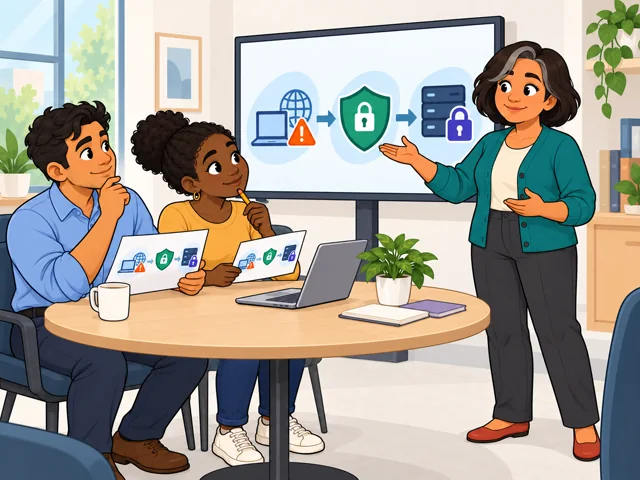
Turn technical results into reports, advice or training that managers and coworkers can understand and use.
United States
United States · May 2025
United States · 2025–2035
Quick orientation
BLS lists a bachelor’s degree as typical entry-level education and says related work experience is commonly needed.
National median annual wage for the occupation; this is not a starting salary.
BLS projects 2025–2035 growth and about 14,100 openings per year on average from growth and replacement needs.
Security tools can collect alerts, scan for vulnerabilities, enforce configured controls, and organize evidence for review.
Analysts still judge what is risky, choose a response, balance security with business needs, and explain decisions to other people.
AI is changing systems that need protection and the tools used to defend them. How far employers will automate individual analyst tasks or change staffing remains uncertain.
Pay in context
BLS national figures describe workers across the occupation, not the offer a new analyst should expect.
The median annual wage was $129,180: half of workers earned more and half earned less. The median hourly wage was $62.11.
The lowest-paid 10 percent earned under $75,090 annually, while the highest-paid 10 percent earned over $199,850. These cutoffs are not entry and senior career stages.
A bachelor’s degree is the usual route, but employers also draw on related IT experience and some occupation-aligned apprenticeships.
After entry
This starts where the entry routes leave off: early work, growing capability, and advancement or specialization.
Learn the organization’s systems and procedures, handle alerts with team guidance, document incidents, and apply approved controls carefully.
Take on broader vulnerability testing, access-control work, recovery planning, security reporting, and recommendations to technical and nontechnical coworkers.
Lead an analyst team, become an expert in a security area, or work toward chief security officer or another information systems management role.
Protect one organization’s systems and work closely with its IT staff and users. Emergencies may create after-hours on-call work.
Work may be organized around client systems and projects, with coordination across departments and outside vendors.
Major incidents come with a regulatory clock: the bank must notify the FDIC as soon as possible and no later than 36 hours after determining that a qualifying notification incident occurred.
Try it
On an account you own, review one ordinary sign-in alert. List the evidence that shows whether the activity was yours, then write a five-step response checklist for a suspicious alert. Notice whether you enjoy sorting evidence and making the instructions precise.
Stay safe: Use only accounts and devices you own or have explicit permission to inspect. Do not scan, probe, or test school, workplace, public, or another person’s systems.