

Career profile

Judicial Law Clerk

Judicial law clerks research past court cases and write analysis judges rely on when deciding.

Opposing attorneys can read the same ruling as backing opposite results, so you study the case file and relevant law, then explain whose reasoning holds.
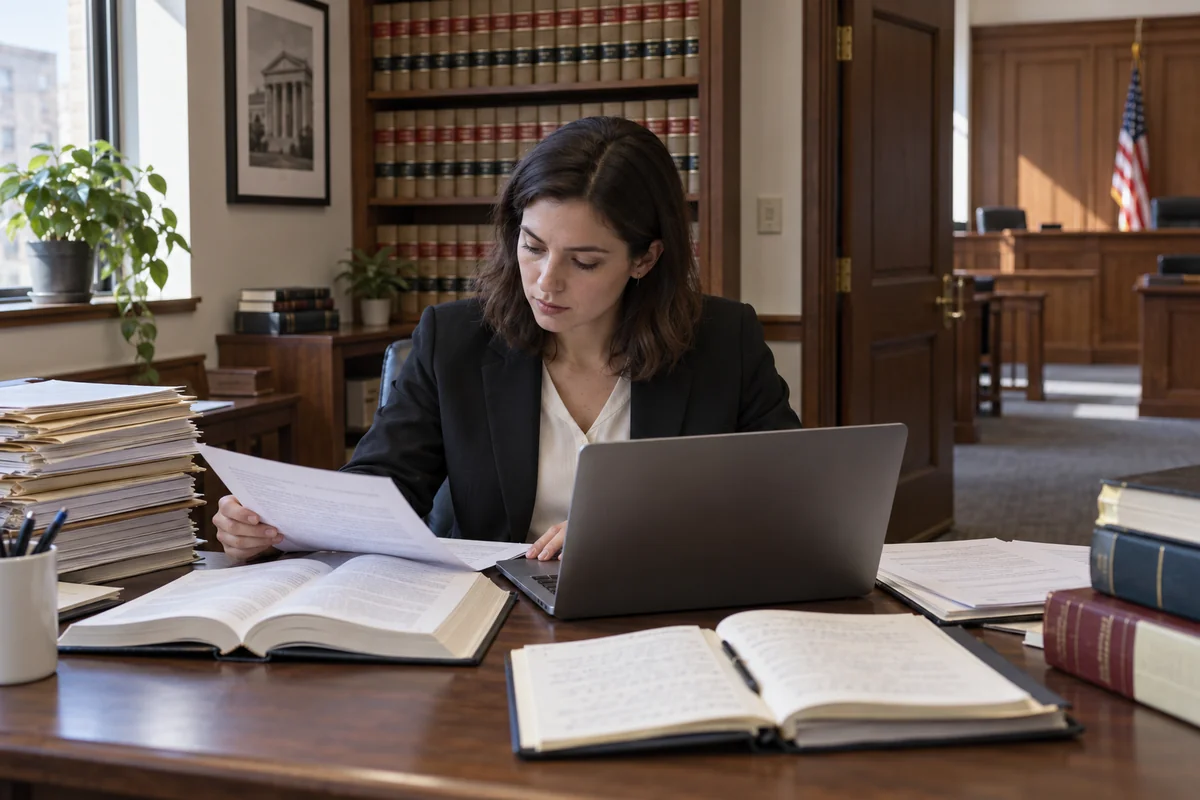
Judicial law clerk researches case files at a courthouse desk.

A day in the life

1A law clerk compares a motion and opposing response, noting the legal question on a separate sheet.

Find what the court must decide

Read the motion and the reply, separating what each side wants from the question the court must decide.
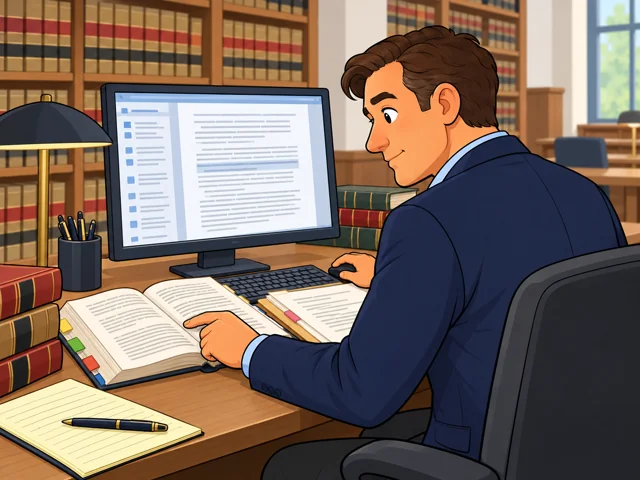
2A law clerk reads a decision on a legal research screen and compares a printed precedent with the current case.

Test past rulings against this case

Search Westlaw or LexisNexis and read the full rulings to judge whether past reasoning fits this dispute.

3A law clerk drafts a bench memo using notes on each side's arguments and issues still needing answers at the hearing.

Write the judge's bench memo

Give the judge a summary of the case, each side's arguments and open questions for the hearing.
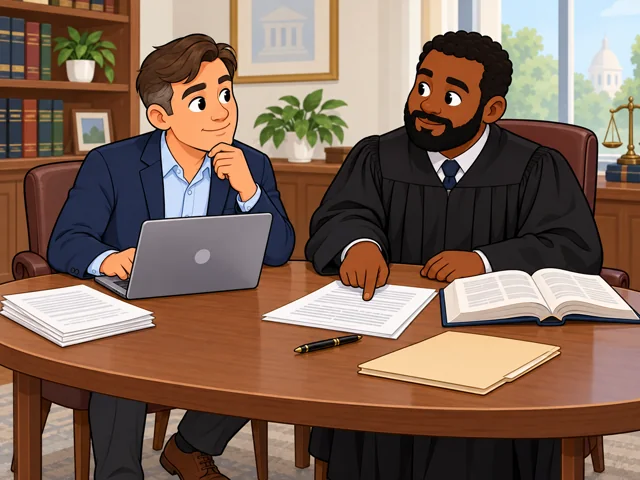
4A law clerk revises a draft ruling as a judge points out a passage for reconsideration, with a source decision open beside them.

Shape a ruling with the judge

Draft an order or opinion, then discuss it with the judge and fix any gap the conversation exposes.

Quick facts

Preparation

Usually a law degree

United States · 2025

Pay

$64,920 median

United States · 2025

Outlook

2.8% projected growth

United States · 2025–2035

Quick orientation

Preparation, pay & outlook

Preparation

Usually a law degree

Plan on professional study in law; individual courts also set academic and experience requirements.

Geography
United States
Period
2025

Pay

$64,920 median

National annual pay for judicial law clerks in 2025, equivalent to about $31.21 an hour.

Geography
United States
Period
2025

Outlook

2.8% projected growth

About 1,500 openings a year are projected nationally, including replacement openings.

Geography
United States
Period
2025–2035

Fit, tradeoffs & changing tools

Things to weigh

  • Much of the work happens at a desk, reading and writing with sustained attention.
  • You must keep internal case discussions confidential; interesting work is often something you cannot share with friends.
  • Many federal clerkships last one or two years, so planning your next job can begin while you are still learning this one.

Where AI may help

Tools that generate text—generative artificial intelligence (AI)—can help search legal material and revise drafts. Some judges already use them, but court adoption varies.

What people still lead

You still check the actual cases and quotations. A convincing AI answer can invent a citation or misstate what a court decided.

What we can’t predict yet

How much first-draft work will shift to AI remains unsettled. That could also change how new clerks build the research and writing skills needed to catch mistakes.

Pay in context

Earnings

Use the national median as a reference point, then examine the particular court's salary and appointment terms.

The national spread

The 2025 median was $64,920 a year, about $31.21 an hour. The 10th and 90th percentiles were $46,180 and $113,140. Those are wage percentiles, not starting and senior salaries.

Geography
United States
Period
2025
Pay basis
Annual wage and hourly equivalent; judicial law clerks, SOC 23-1012

Court level can change pay

New Jersey's 2025–26 schedule paid $61,256 for Law Division trial-court clerks, $72,540 in the Appellate Division, and $79,456 in the Supreme Court. These covered 52 weeks; overlap weeks were paid separately. Check the rate for your appointment year.

Geography
New Jersey
Period
2025–2026 court term
Pay basis
Scheduled salary for 52 weeks, excluding separately paid overlap

Federal pay has its own rules

Federal clerk salaries reflect qualifying legal experience after graduation, bar membership, and locality adjustments. The hiring judge sets the grade and step; experience does not guarantee a particular offer.

Geography
United States
Period
Current guidance accessed 2026-10-04
Pay basis
Federal Judiciary Salary Plan

Openings include people leaving

Employment is projected to grow 2.8% from 2025 to 2035, with about 1,500 openings annually from growth and replacement needs. These are projected openings, not a count of jobs available today.

Geography
United States
Period
2025–2035
Pay basis
Employment projection; not a compensation measure

Getting started

Enter a state clerkship after law school

Paid
What the route involves
Complete law school, then research cases and prepare written analysis in a court's graduate clerkship.
What it can lead to
A first paid role working closely with judges and seeing how proceedings turn into decisions.
What to check
Rules vary by state. New Jersey requires graduation from an American Bar Association–approved law school within the previous four years, plus a background check.

Apply to a federal judge

Paid
What the route involves
Complete law school and meet the judge's academic requirements. You can apply as a graduate or bring legal work experience that some judges prefer.
What it can lead to
A federal clerkship researching disputes and drafting proposed rulings for a judge.
What to check
Federal minimums require demonstrated academic proficiency and a fingerprint check. Bar admission is not a universal entry requirement, but is required for higher pay grades; judges may add requirements.

The usual foundation is a law degree. You work for the court: your research and recommendations support the judge, who makes the decisions.

After entry

Career paths

This starts where the entry routes leave off: early work, growing capability, and advancement or specialization.

  1. Get established

    Learn the judge's memo format, court procedures, and expectations for handling confidential information.

  2. Strengthen your analysis

    Build from summarizing filings to explaining competing legal options clearly and drafting more complete proposed rulings.

  3. Pursue a longer court career

    Consider a career law clerk appointment if you want sustained work in chambers. It is a separate hiring opportunity, not an automatic extension of a term clerkship.

Where you can work

Trial-court chambers

Pending motions and live proceedings shape your workload. An issue raised during trial can require a quick research memo while other cases keep moving.

  • Indoors
  • Office

Appellate chambers

You work from lawyers' briefs and the record of earlier proceedings. Preparing for argument means identifying what the judges still need clarified.

  • Indoors
  • Office

Try it

See whether the job clicks before you commit to the path.

Choose a short published court opinion. Write a half-page memo identifying the question, each side's position, and the court's reasoning. Mark one sentence you had to reread. Notice whether untangling the argument makes you curious enough to keep going.

Explore more careers

Sources

  1. O*NET OnLine. Judicial Law Clerks — 23-1012.00. Accessed 2026-10-04.
  2. O*NET OnLine / U.S. Bureau of Labor Statistics. National Wages: Judicial Law Clerks. Accessed 2026-10-04.
  3. U.S. Bureau of Labor Statistics. Occupational projections and worker characteristics, 2025–35. Accessed 2026-10-04.
  4. Administrative Office of the U.S. Courts. Legal Careers. Accessed 2026-10-04.
  5. Administrative Office of the U.S. Courts. Qualifications, Salary, and Benefits. Accessed 2026-10-04.
  6. Federal Judicial Center. Law Clerk Handbook, Fourth Edition. Accessed 2026-10-04.
  7. New Jersey Courts. Law Clerk 2026–2027. Accessed 2026-10-04.
  8. National Center for State Courts. A legal practitioner’s guide to AI & hallucinations. Accessed 2026-10-04.
  9. National Center for State Courts. Judicial use of generative AI: Lessons learned. Accessed 2026-10-04.

Your message goes to the Great Jobs team. How we use your information