

Read the land before drawing
You walk the land checking existing trees, grades and drainage data against the site map.
Career profile
Landscape architects plan outdoor spaces, including walkways, the land around them and their plants.
A curve in a park walkway has to suit the slope, the nearby trees and the people using it, not just look pretty.

You walk the land checking existing trees, grades and drainage data against the site map.
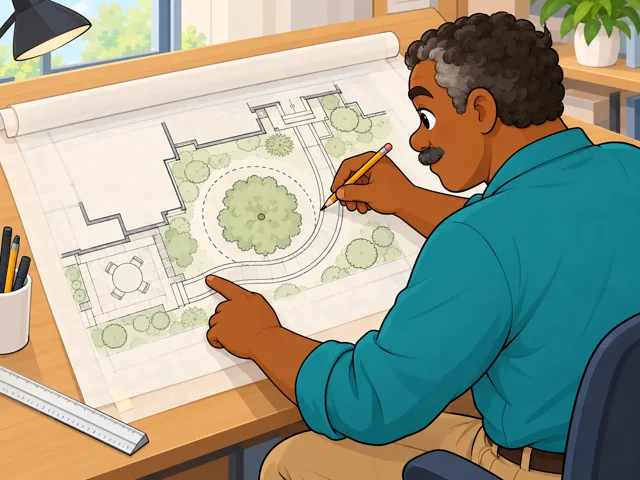
Sketch a rough plan that spares a tree worth keeping, then check how the walkway joins nearby areas.

You draw contractor-ready plans in computer-aided design and drafting software, naming the paving and plant materials.

For public projects, you present a proposed layout at community meetings, gathering feedback that might change it.
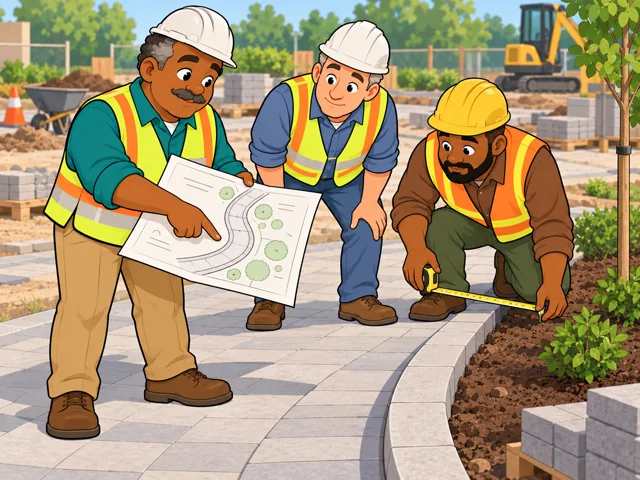
On site, you check the installed work against the drawings and talk through mismatches with the construction crew.
United States
United States · May 2025
United States · 2025–2035
Quick orientation
An accredited landscape architecture degree is the usual starting point; state licensing requirements vary.
National median for landscape architects, equivalent to $38.40/hour.
About 1,700 openings a year, including replacements for people leaving the occupation.
Some designers use artificial intelligence (AI) image generators to explore planting combinations or early visual ideas.
You must check whether an attractive image actually fits the site. Generated images can misrepresent space or invent details.
How far these tools can move from concept pictures into dependable, site-specific design remains unsettled.
Pay in context
Employer type matters. These national employee wages exclude self-employed earnings.
The median was $79,870 a year, or $38.40 an hour. The 10th-percentile wage was $54,770 and the 90th was $130,190. These describe the workforce, not starting and senior salaries.
Annual medians were $107,410 in government, excluding state and local education and hospitals; $82,290 in architectural, engineering, and related services; and $65,150 in landscaping services. Switching industries does not guarantee those differences.
Employment is projected to grow 4.4% from 2025 to 2035, with about 1,700 openings annually. Many openings replace workers who change occupations or leave the workforce.
Education and work experience usually connect: choose a qualifying degree, then build experience toward licensure.
After entry
This starts where the entry routes leave off: early work, growing capability, and advancement or specialization. This path also has a credential or licensing boundary; see the requirements and limits.
Learn the office's drawing standards and use feedback to make your plans clearer.
Connect design decisions with cost estimates, then follow the work into construction to see what needs adjustment.
Move toward project management, coordinating design reviews, contracts, and construction issues.
Your projects may range from a small plaza to a waterfront. Larger studios can combine landscape architecture with planning and urban design; office design work connects with site visits.
Some roles manage outside firms' designs and construction contracts. You coordinate reviews and travel to projects while keeping natural and historic resources central to decisions.
Try it
Sketch a familiar courtyard or park entrance from above. Mark paths, trees, shade, and low spots. Redraw one awkward connection while keeping existing features. Explain what improves and what you give up; notice whether you enjoy working through those competing needs.