
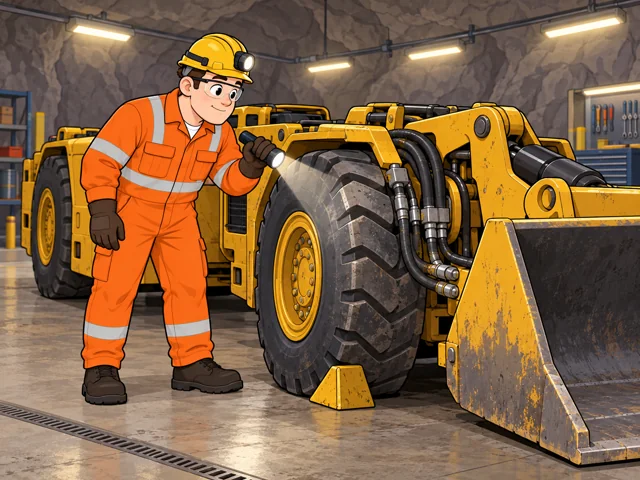
Check the loader for faults
Look the loader over carefully for any faults before you start running it.
Career profile
Underground loader operators move broken coal or rock out of the mining area and onward.
From the seat of a load-haul-dump machine, you control a powerful bucket, and the challenge is keeping every motion steady and repeatable in tight quarters.
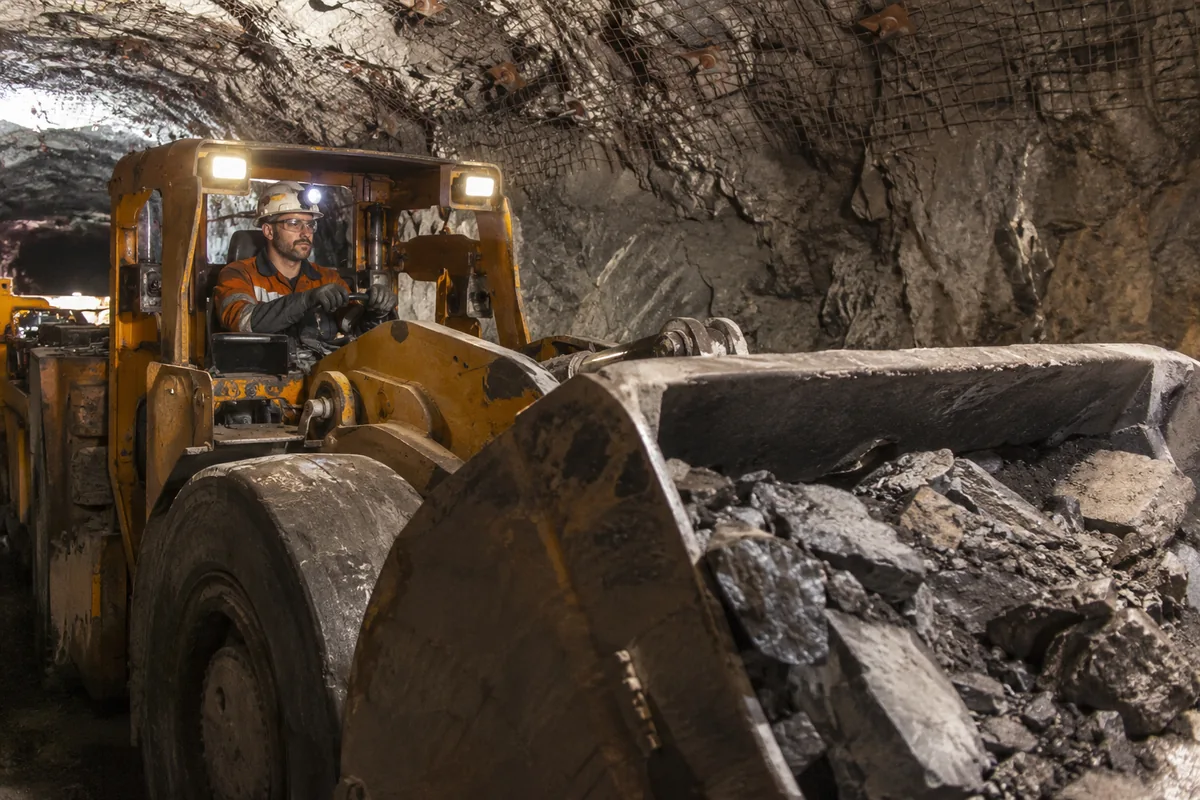
Look the loader over carefully for any faults before you start running it.
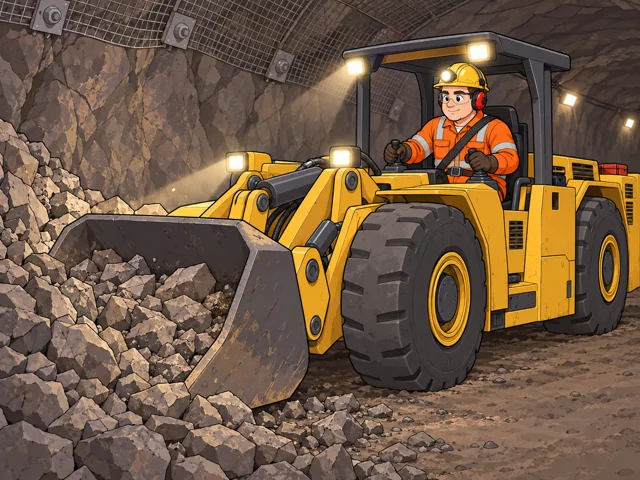
Drive into the loose pile, handling bucket and driving controls at the same time to fill the bucket.
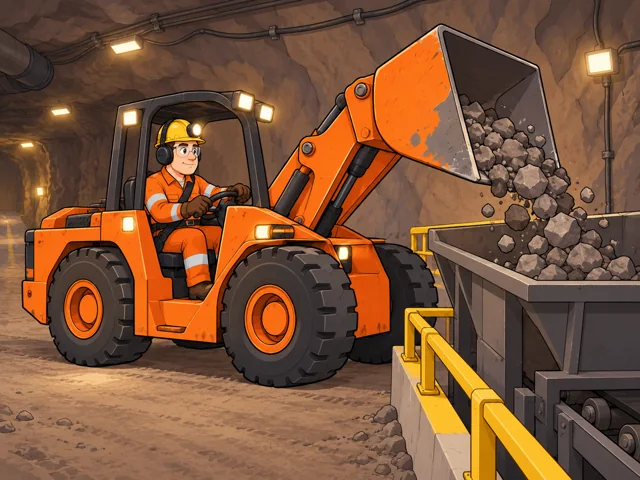
Keep watching the route as you drive, then position the loader and dump at the handoff spot.
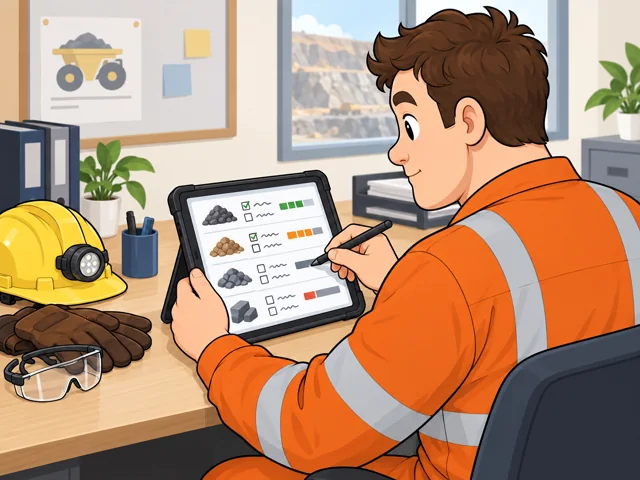
Note how much material you moved and its condition, so the shift's work can be followed.
United States · 2025–2035
United States · May 2025
United States · 2025–2035
Quick orientation
Typical entry education; mine-safety and equipment training are still required.
Median: $35.82 an hour for underground loading and moving machine operators.
Employment is projected to shrink, with about 400 openings annually across underground loading and moving machine operators.
At equipped mines, software can drive a loader between points, dump its load and assist with bucket filling. Operators can work from a control station away from the machine.
People monitor machine movements and alerts and use remote controls for tasks the installed system leaves to them.
How much of your shift becomes driving versus monitoring will depend on the mine's equipment, communication network and ability to separate automated work areas.
Pay in context
Use these figures as a national comparison when considering an offer. Ask about the hourly rate, paid hours and overtime terms.
The median was $74,500 a year, or $35.82 an hour. These figures cover loading and moving machine operators in underground mining, including loader and shuttle-car operators; they are not starting-pay estimates.
The 10th-to-90th-percentile range was $52,030–$87,730 annually, or $25.02–$42.18 hourly. These are positions in the wage distribution, not beginner and experienced-worker rates.
Employment is projected to fall 15.8% from 2025 to 2035. About 400 openings per year are projected across the occupation as workers leave or move to other work, even while total employment shrinks.
You can train through an employer or prepare through an underground mine-training program. Check the state's requirements as well as the mine's: some states require additional training.
After entry
This starts where the entry routes leave off: early work, growing capability, and advancement or specialization.
Build a smooth load-haul-dump cycle, with reliable control of the bucket and machine.
Develop competence on additional underground equipment, completing new-task training when the operating duties change.
At a mine with automated loaders, learn to control and monitor machines from a remote station. Some systems let one operator supervise several machines.
You ride with the machine, working close to the load in confined passages.
Where remote loaders are installed, you use controls, machine-location displays and alerts. Automated operating areas need controlled access; this is a mine-based equipment role.
Try it
Draw a narrow passage with a loading point and a dumping point. Move a paper loader through five cycles, then add a blocked section and rethink the route. Notice whether repeating precise movements while watching clearances holds your attention.
Stay safe: Keep this a tabletop exercise; it does not teach you to operate mining equipment.