
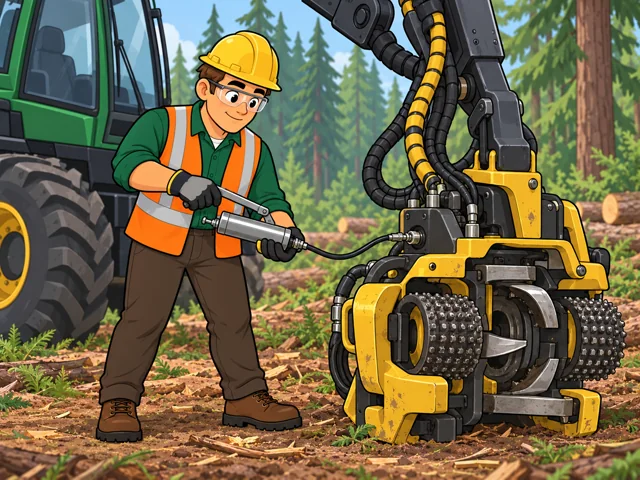
Check the machine before starting
Check the machine for safety hazards and do basic upkeep, all before you start running it.
Career profile
Logging equipment operators run machines that fell trees and haul logs from the woods.
Small hand moves on the controls shift heavy wood, so this fits anyone who enjoys precise machine work among the trees.
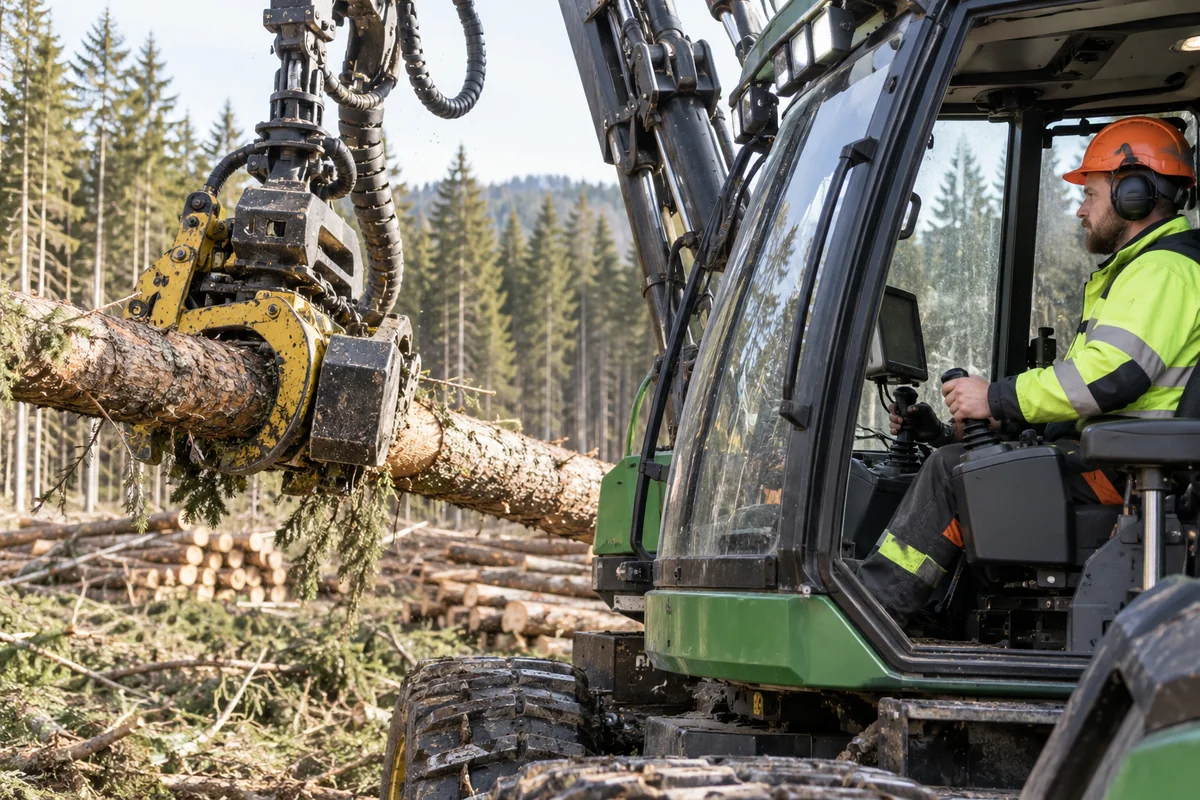
Check the machine for safety hazards and do basic upkeep, all before you start running it.
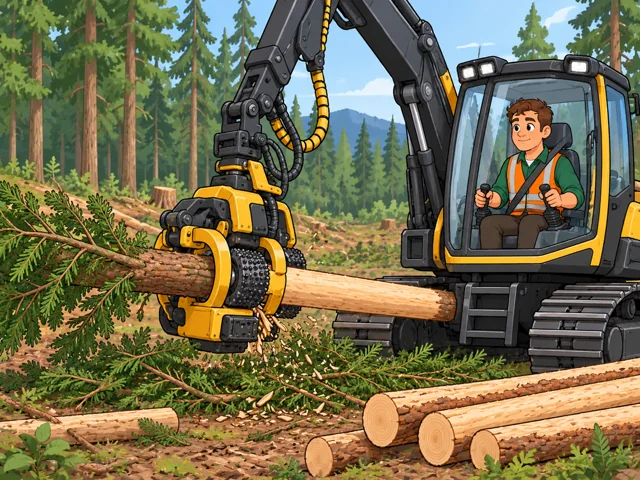
Steer the harvester's cutting head to drop a tree, strip its limbs and saw the trunk to length.
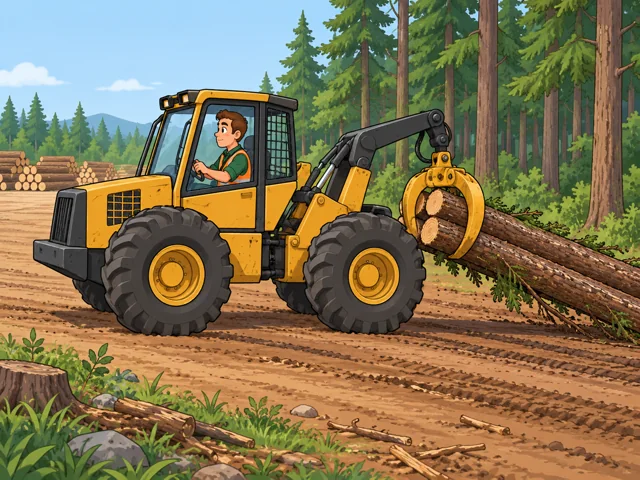
Clamp the skidder's grapple on fallen trees and haul them through the woods to the landing.
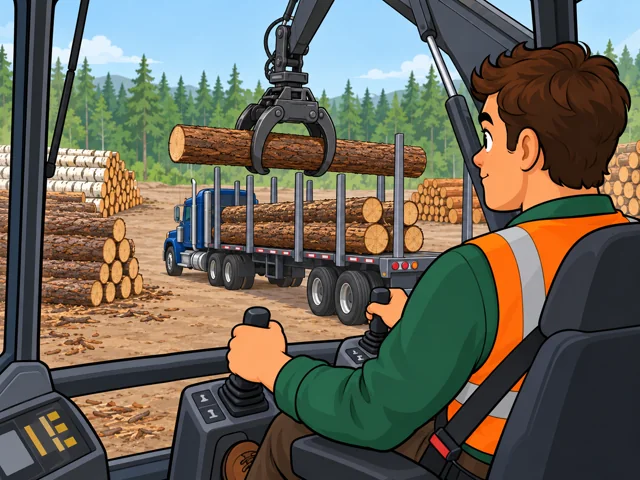
Sort timber by species or wood type with a log loader, then lift the logs onto the truck.
United States · 2025–2035
United States · 2025
United States · 2025–2035
Quick orientation
A high school diploma or equivalent is typical; you learn machine operation on the job.
National annual median for logging equipment operators; the hourly median is $23.91.
About 3,700 openings per year are projected despite declining total employment.
Some forwarders help coordinate boom movements so you steer the grapple more directly. Digital maps can also share machine locations and harvesting progress.
You still choose where to move the load and respond when terrain, trees, or nearby workers create a hazard.
How much of a complete loading or travel cycle machines will handle automatically remains uncertain, especially across changing forest conditions.
Pay in context
The national median is a useful starting point for comparing offers, not a promised starting wage.
In 2025, the median was $49,740 a year, or $23.91 an hour. The 10th and 90th percentile annual wages were $35,170 and $74,300. Those mark the wage distribution, not beginner and experienced rates.
Operators employed in forestry and logging had a median of $50,840 a year, or $24.44 an hour. This describes that industry’s workers; changing workplaces does not automatically produce that pay.
Employment is projected to fall 3.8% from 2025 to 2035, with about 3,700 openings annually on average. Openings are opportunities to replace departing workers as well as fill any new positions; they are not a count of jobs available today.
Employer training is the usual starting point. A practical logging program offers another way to build machine experience before applying.
After entry
This starts where the entry routes leave off: early work, growing capability, and advancement or specialization.
Make equipment checks and clear crew communication dependable habits.
Learn to trace operating problems and improve your maintenance skills.
Train for another assignment, such as moving from a skidder to a harvester or log loader.
A skidder works between the feller buncher’s piles and the landing. Your workspace moves through the woods with each load.
Logs arrive where processing machines and loaders work near truck loading. Coordinating movements around other machines and workers becomes a central concern.
Try it
Watch a forestry-machine demonstration video. Pause as a grapple picks up a log and sketch where the machine, load, and nearby equipment sit. Notice whether tracking several moving parts holds your interest.
Stay safe: Keep this exercise on screen; it is not practice for operating machinery.