
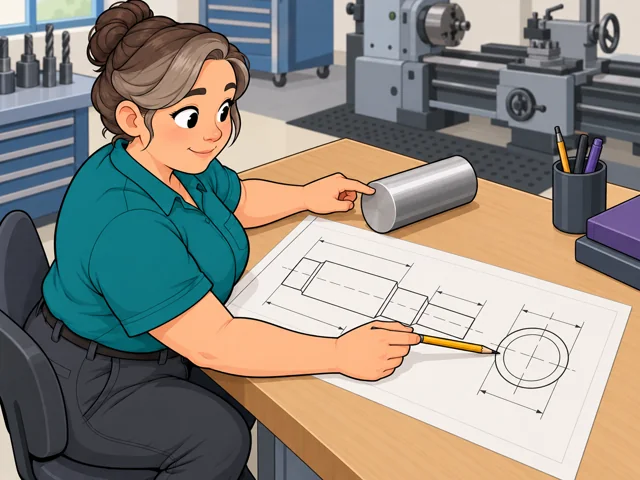
Plan cuts from the drawing
Go through the drawing and decide which surfaces to machine first and what order follows.
Career profile
Machinists turn a plan drawing into a metal part, and that part has to fit.
The tricky part comes twice: first choosing which cuts to make, and afterward measuring whether the finished part hits its sizes.
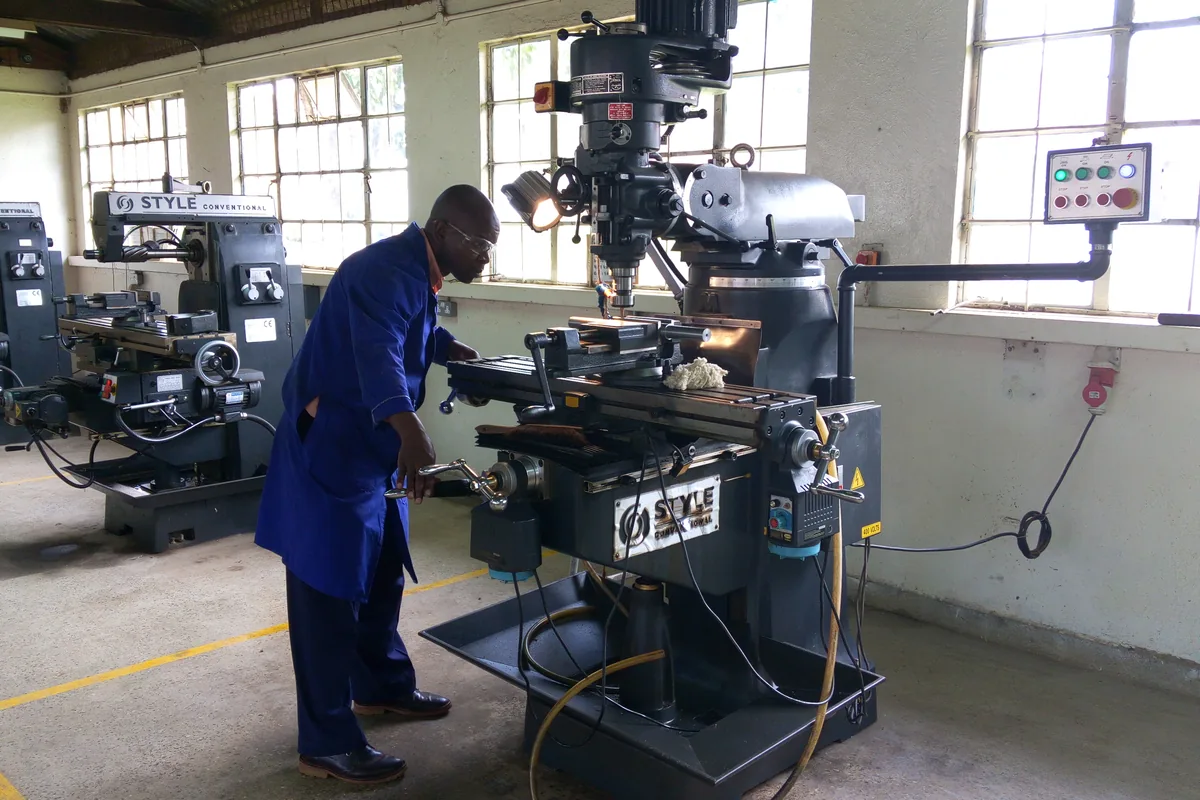
Go through the drawing and decide which surfaces to machine first and what order follows.
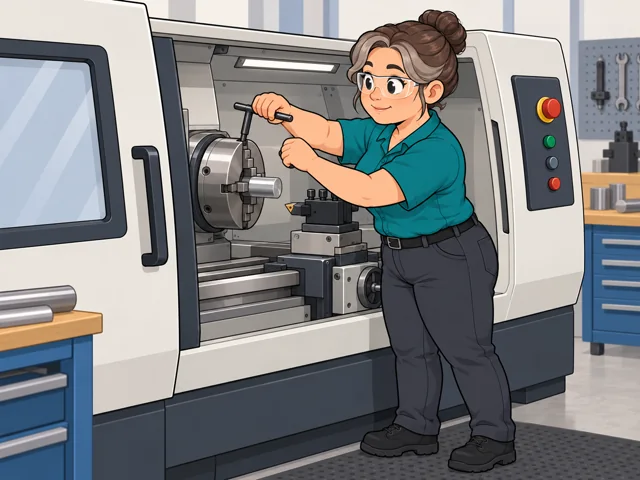
Align the metal stock and cutting tools on the lathe or milling machine, then fasten them tight.
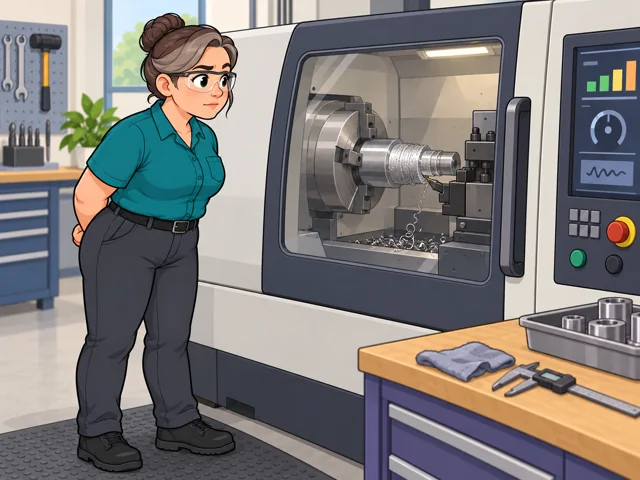
Track speed and feed, and find why a cut went bad before changing how the job runs.
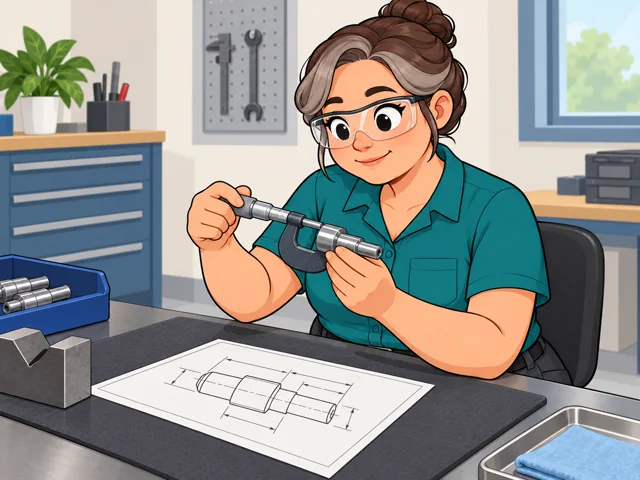
Measure the finished part with a micrometer and confirm every size falls within the range the drawing allows.
United States
United States · May 2025
United States · 2025–2035
Quick orientation
A diploma or equivalent is typical; machining skills take further training.
National median for machinists, equivalent to $28.24/hour.
Projected change in machinist employment from 2025 to 2035.
Computer numerical control (CNC) machines follow programmed cutting instructions.
You still set up the work and monitor the results.
As automatic loading and cutting improve, how much hands-on tending remains will vary by shop.
Pay in context
The national median gives you a reference point, not a starting offer.
Machinists’ median pay was $58,750 a year, or $28.24 an hour. The 10th percentile was $39,200 and the 90th was $80,010 annually. Those points describe the wage distribution, not beginner and senior pay grades.
Location, experience, and responsibility can affect earnings.
Employment is projected to grow 1% from 2025 to 2035, with about 26,100 openings annually on average. Openings include replacing people who leave the occupation, not just newly created jobs.
You can learn through employment or study machining before applying.
After entry
This starts where the entry routes leave off: early work, growing capability, and advancement or specialization.
Build consistent machine-operation habits as you gain shop experience.
Develop your ability to set up CNC work and understand the programming behind it.
A possible next step is computer-aided manufacturing (CAM) programming: plan machining jobs and prepare instructions that operators can run.
You may work through batches of the same part, keeping dimensions consistent across the run.
A machinery mechanic identifies a damaged component; you use its engineering drawing to make a replacement.
Try it
Sketch a rectangular part with two holes. Mark its outside dimensions and each hole’s size and distance from an edge. Ask someone to redraw it using only your measurements. Notice whether finding missing information and making the drawing clearer interests you.