
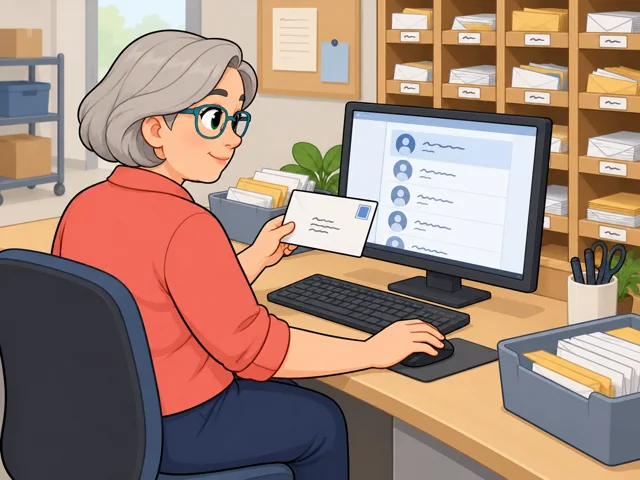
Sort letters and identify unknown names
Sort letters by destination, and when a name is unfamiliar, identify that staff member before forwarding it.
Career profile
Mail clerks sort an organization's incoming letters, deliver parcels and ready outgoing envelopes for pickup.
Enjoy putting things in order and seeing finished work go out? Mailrooms move at a steady pace, with every address right and every deadline met.
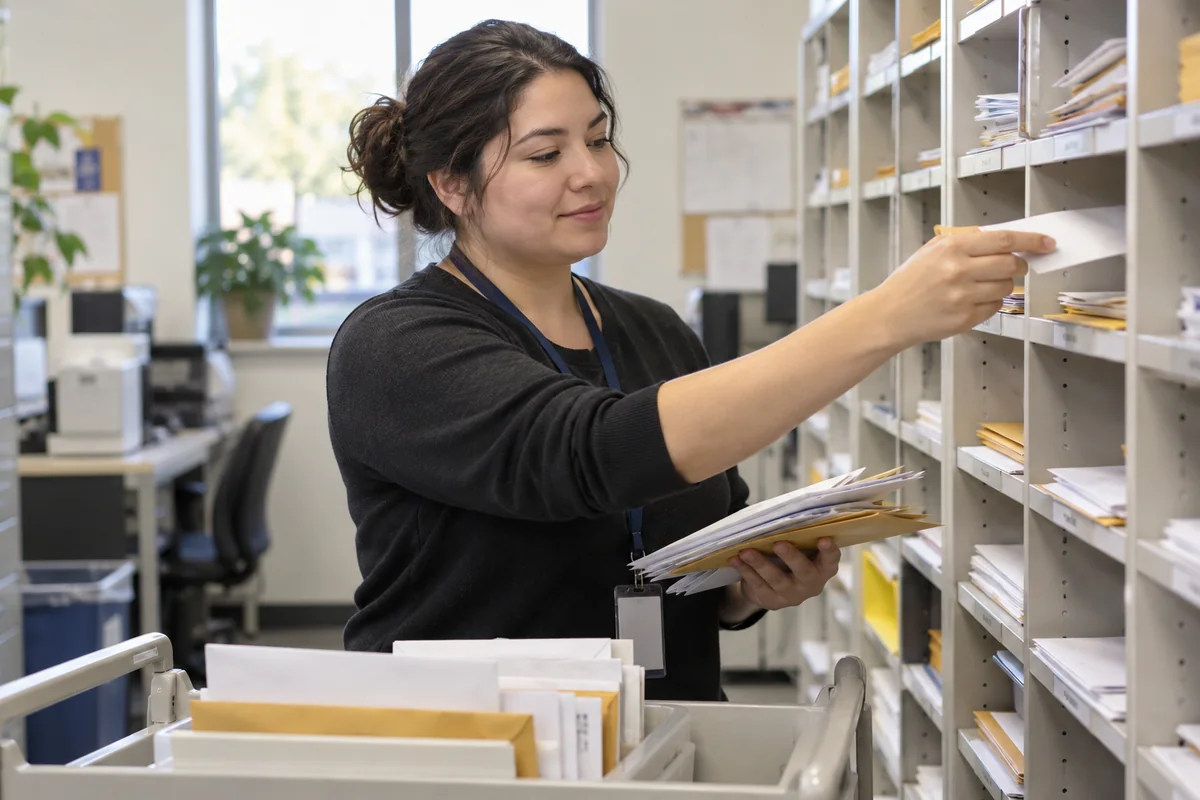
Sort letters by destination, and when a name is unfamiliar, identify that staff member before forwarding it.
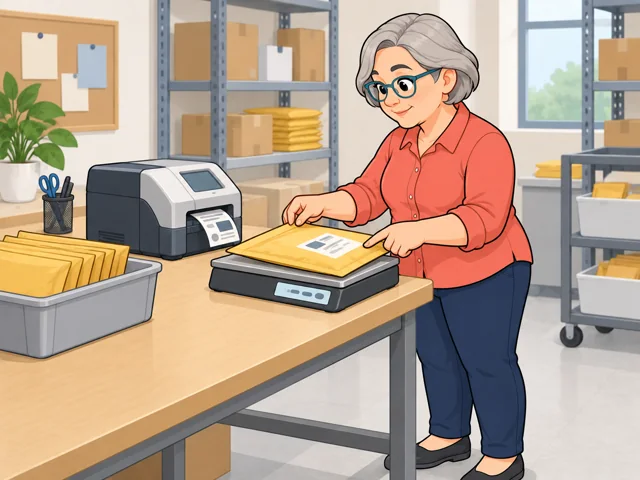
Put each outgoing piece on the scale for postage, then check its address and wrapping before it leaves.
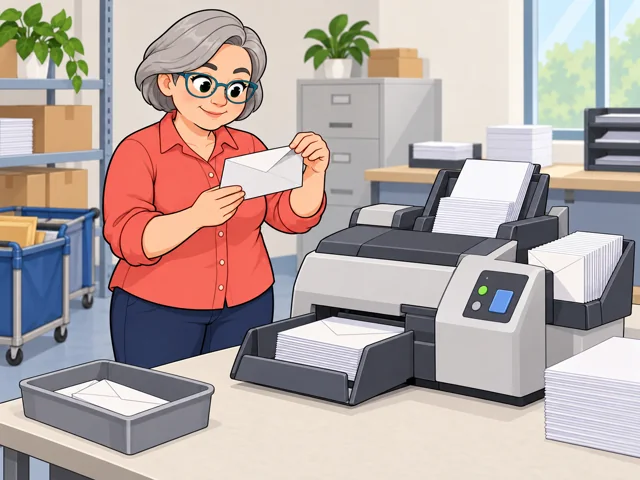
In some mailrooms, you load letters into a folding and inserting machine, then check its envelopes for errors.
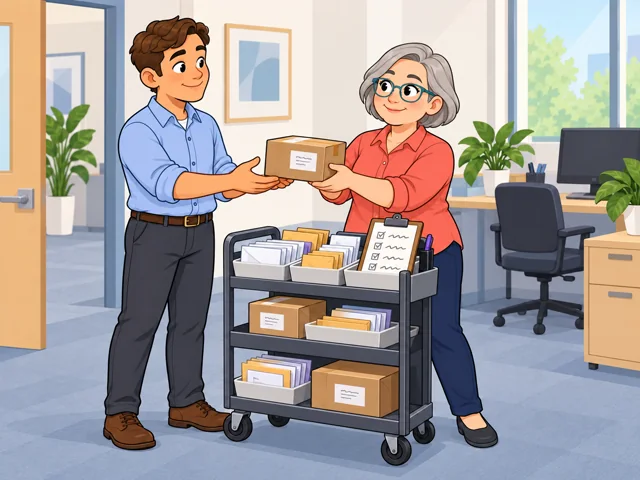
Log each shipment as it arrives, then carry letters and small packages to drop points around the building.
United States · 2025–2035
United States · May 2025
United States · 2025–2035
Quick orientation
Typical preparation includes short-term training on the job; some employers ask for experience.
Median of $18.89 an hour for nonpostal mail clerks and mail machine operators combined.
For nonpostal mail clerks and machine operators combined, with about 4,700 openings a year projected.
Some digital mailrooms scan paper and use software to read and route it to an electronic inbox.
Workers handle the physical documents and resolve exceptions when automated routing needs a check.
How much routine sorting moves into software depends on what employers adopt; the balance between handling paper and checking digital deliveries may shift.
Pay in context
Use these national figures as context: they cover nonpostal mail clerks and mail machine operators together, a broader group than mailroom clerks alone.
The median was $39,280 a year, or $18.89 an hour. The 10th and 90th percentiles were $30,780 and $54,820 annually ($14.80 and $26.36 hourly). Those are positions in the wage distribution, not starting and senior salaries.
Employment in the broader group is projected to fall 7.2%, while about 4,700 openings a year are projected over the decade. These are national figures, not a count of nearby vacancies.
A college degree is not the typical entry requirement. You can look for a job that trains beginners or build experience for positions with a wider range of duties.
After entry
This starts where the entry routes leave off: early work, growing capability, and advancement or specialization.
Learn the destinations and delivery records, then become dependable at sorting and postage checks.
Cross-train on meters, inserting machines and bulk-mail preparation so you can cover more of the mailroom's work.
A possible next step is organizing workloads, training staff and checking service quality. Supervisory jobs have their own experience and education requirements.
Mail goes to departments across several buildings. Delivery duties can take you outside and may involve a vehicle.
You work around batches of printed material and folding, inserting and metering equipment. Production areas can be noisy, and some jobs use nonstandard shifts.
Paper arrives physically, but recipients receive electronic copies. Scanning and checking routing exceptions become part of the mail-handling workflow.
Try it
Make a fictional staff directory and label a small stack of scrap-paper envelopes, including a few missing department names. Sort them into department trays, using the directory to resolve the incomplete labels. Check your errors and notice whether you enjoy the careful sorting.
Stay safe: Use invented names and addresses, not someone else's real mail.