
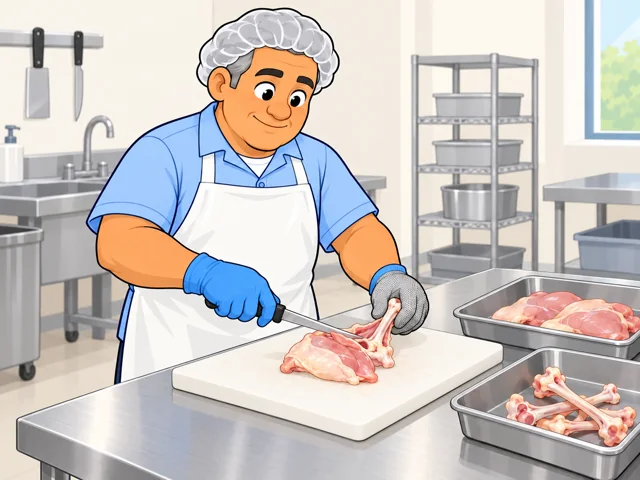
Debone poultry thighs and breasts
At a poultry deboning station, you use a knife to free thigh or breast meat from the bone.
Career profile
Meat, poultry, and fish cutters slice and shape portions that go on to packaging.
Like physical work with results you can see? Then think hard about the pace and repetition of keeping every cut precise as product keeps coming.
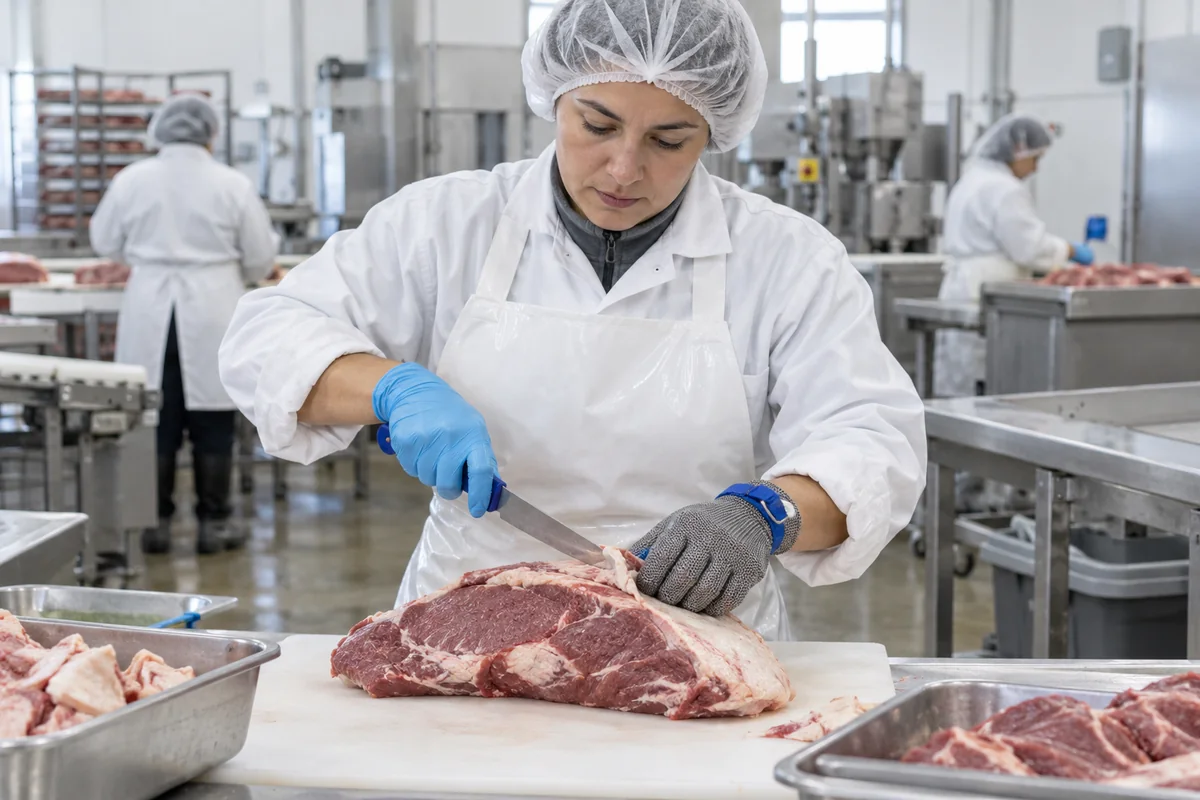
At a poultry deboning station, you use a knife to free thigh or breast meat from the bone.
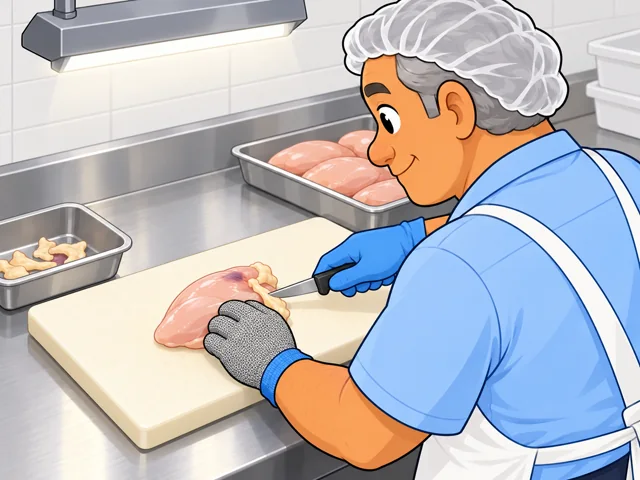
Check each piece for bruises or other flaws first, then cut away the damaged spot and extra fat.
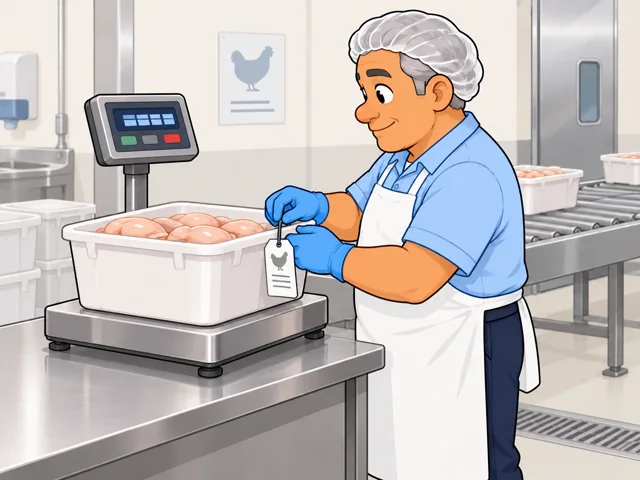
You weigh the product, then label its container with the weight and contents before it moves on.
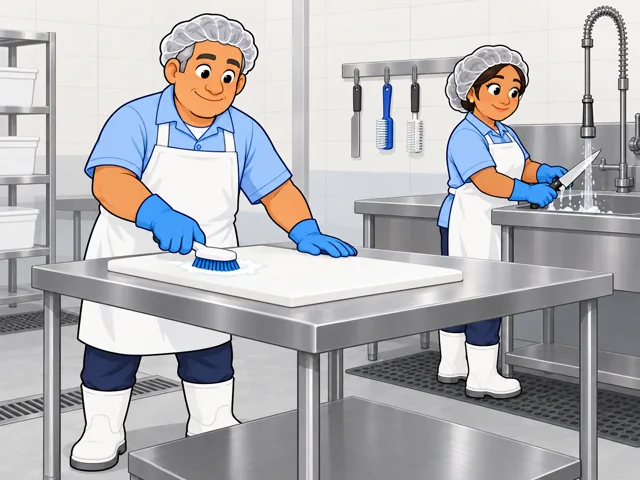
Wash down your tools and the surfaces you work on so nothing contaminates the food.
United States · 2025
United States · May 2025
United States · 2025–2035
Quick orientation
Typically no formal educational credential; short-term workplace training.
National median, equivalent to $18.41 an hour.
About 17,000 openings a year, including replacement needs.
Some poultry lines use machines that make cuts automatically after workers load the birds.
Manual deboning still calls for controlled knife movements, and workers check the finished pieces.
How much cutting shifts to machines depends on the product and process. Handling variable shapes and separating meat from bone remain difficult tasks to automate.
Pay in context
Use national pay as a reference when comparing an actual offer.
The May 2025 median was $38,300 a year, or $18.41 an hour. Half of workers earned more and half earned less; this is not a starting wage.
In May 2025, the 10th-percentile annual wage was $29,980 and the 90th-percentile wage was $48,150. These are wage percentiles, not starting and senior salaries.
In May 2023, annual average pay was $37,480 in animal slaughtering and processing and $34,600 in food and beverage retailers. These older averages are separate from the 2025 national median.
Employment is projected to grow 5.7% from 2025 to 2035, with about 17,000 openings annually from growth and replacement needs. Openings are not all newly created jobs.
A degree is not the usual entry requirement. Look for jobs that teach cutting skills at work.
After entry
This starts where the entry routes leave off: early work, growing capability, and advancement or specialization.
Build reliable cutting habits while learning tool care and sanitation.
In poultry processing, develop specialty trimming skills for pieces that must meet a customer's requirements.
In seafood processing, experience and further training can lead toward checking product quality or supervising workers. Ask what skills the next role requires.
Conveyors carry birds through successive stations. You may repeat one part of a cut while coworkers complete the next steps, making the line's pace a major part of your day.
Wet processing areas call for rain gear and rubber boots. Seasonal jobs at remote plants can also mean living in employer-arranged housing away from home.
Try it
Watch the seafood-processing orientation linked by the Alaska Job Center. Follow one cutting station: note what arrives, what the worker removes and where the finished piece goes. Consider whether that repeated, precise work appeals to you.
Stay safe: Keep this an observation exercise; do not practice with processing knives or machinery.