
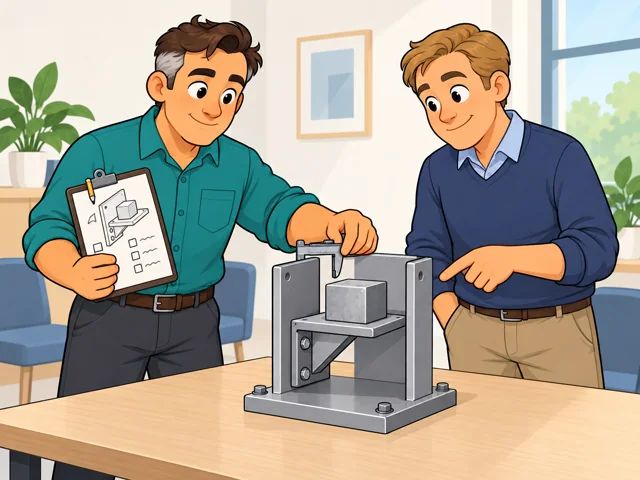
Turn a client request into specs
Ask the client what the mechanism must hold and where it must fit, then write testable requirements.
Career profile
Mechanical engineers design machines and their parts, then check that they work as intended.
A design can look right yet bend more than it should, so you use math, drawings and test results to choose the changes it needs.
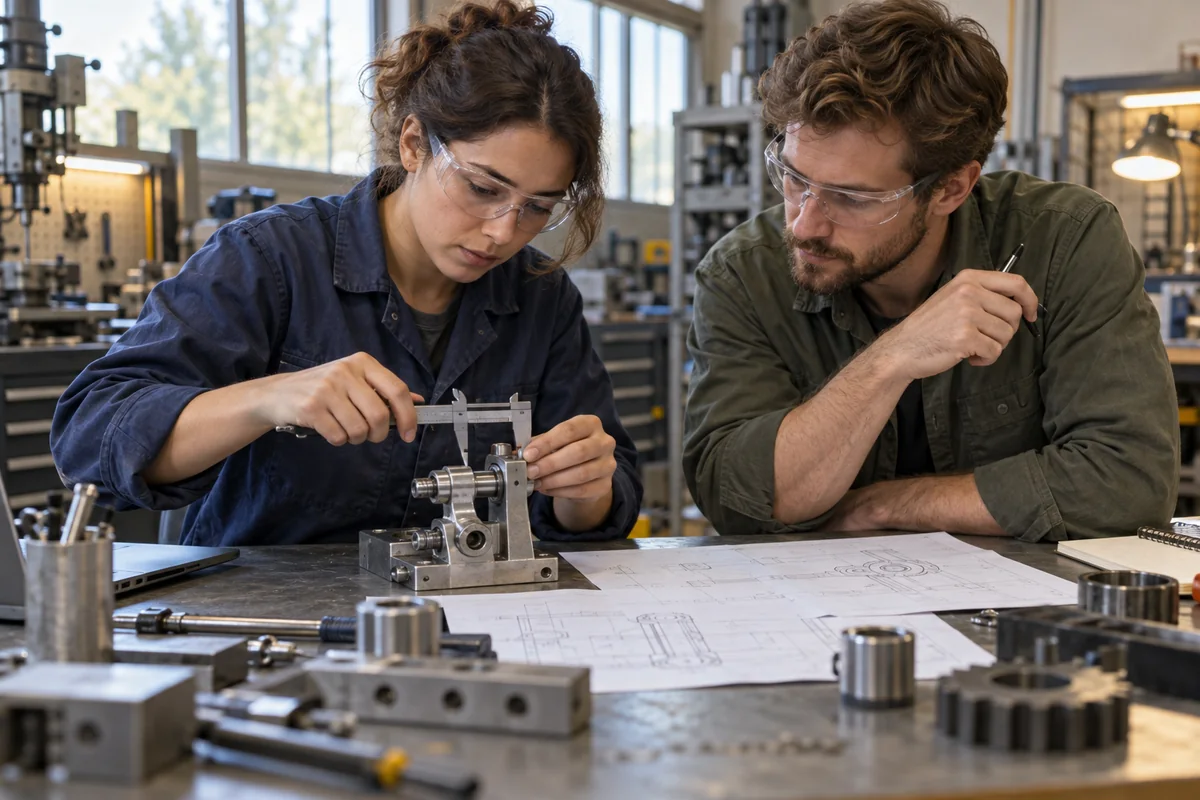
Ask the client what the mechanism must hold and where it must fit, then write testable requirements.
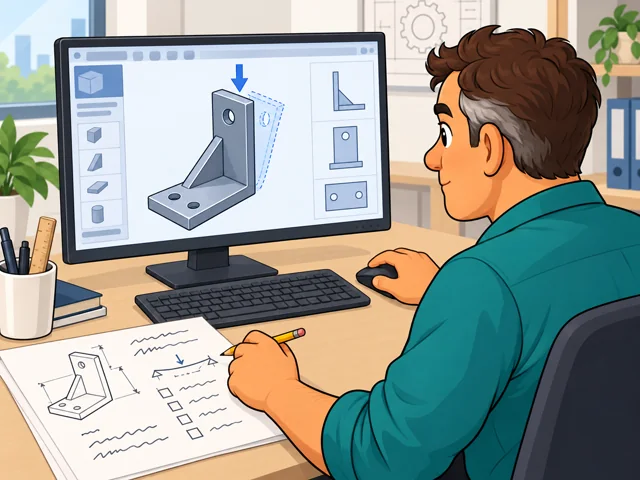
Draw the bracket in computer-aided design (CAD) software and calculate whether it can take the expected load.
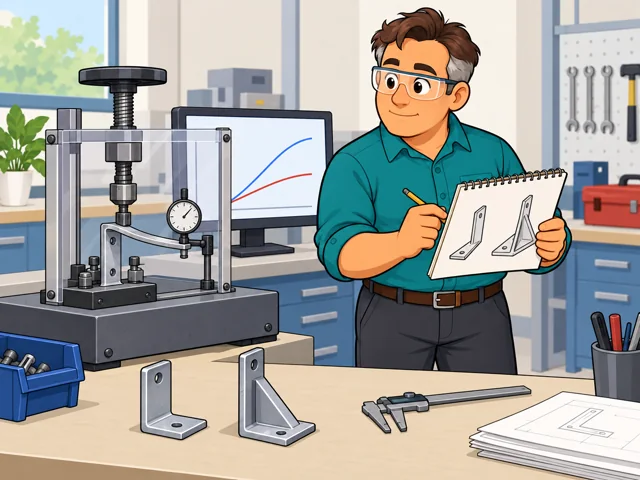
Check the measured numbers against your prediction, and reshape and retest the piece if it flexes too far.

Walk through the drawing with manufacturing coworkers, settle questions about dimensions, then revise the design record.
United States
United States · May 2025
United States · 2025–2035
Quick orientation
The usual starting qualification.
National median; $50.05 an hour.
Projected employment growth over the decade.
Some design software can propose lighter or stiffer part shapes within limits you set. This is called generative design.
You choose the requirements and manufacturing limits, then evaluate whether the proposed design solves the actual problem.
How much shape development will shift to software remains uncertain; it depends partly on how well the real problem can be captured in those limits.
Pay in context
Use the national figures as a comparison point, not an expected first offer.
The median was $104,110 a year, or $50.05 an hour. The annual 10th and 90th percentiles were $73,990 and $164,340. These describe the wage distribution, not beginner and senior pay.
Annual medians were $132,040 in scientific research and development, $103,440 in architectural and engineering services, and $98,620 in machinery manufacturing.
About 17,800 openings are projected annually, including replacements for people who leave the occupation.
Entry-level jobs generally do not require professional licensure.
After entry
This starts where the entry routes leave off: early work, growing capability, and advancement or specialization. This path also has a credential or licensing boundary; see the requirements and limits.
Learn to check a component’s drawing against its requirements.
Take a design revision from analysis through testing and production.
Build toward leading mechanical design on a project, coordinating other disciplines and reviewing technical decisions.
Coordinate heating, cooling, and ventilation designs with electrical and structural engineers. Available space, building codes, and client budgets constrain your choices.
In heating and cooling equipment labs, you can develop test facilities and troubleshoot their hardware and software alongside laboratory and product-development teams.
Try it
Make a folded-paper stand for an empty paper cup. Sketch it, predict where it will buckle, and add coins one at a time. Change one fold and repeat. Notice whether you enjoy explaining the result and improving the design.
Stay safe: Keep the test on a table and use only small loads.