

Prep a patient for the exam
Ask about the patient's health history, check weight and blood pressure, and enter it in the chart.
Career profile
Medical assistants prepare patients for exams and keep the clinic's paperwork and schedule in order.
One visit can take you from the exam room to the appointment calendar. You mix hands-on care with the small office tasks a clinic needs.
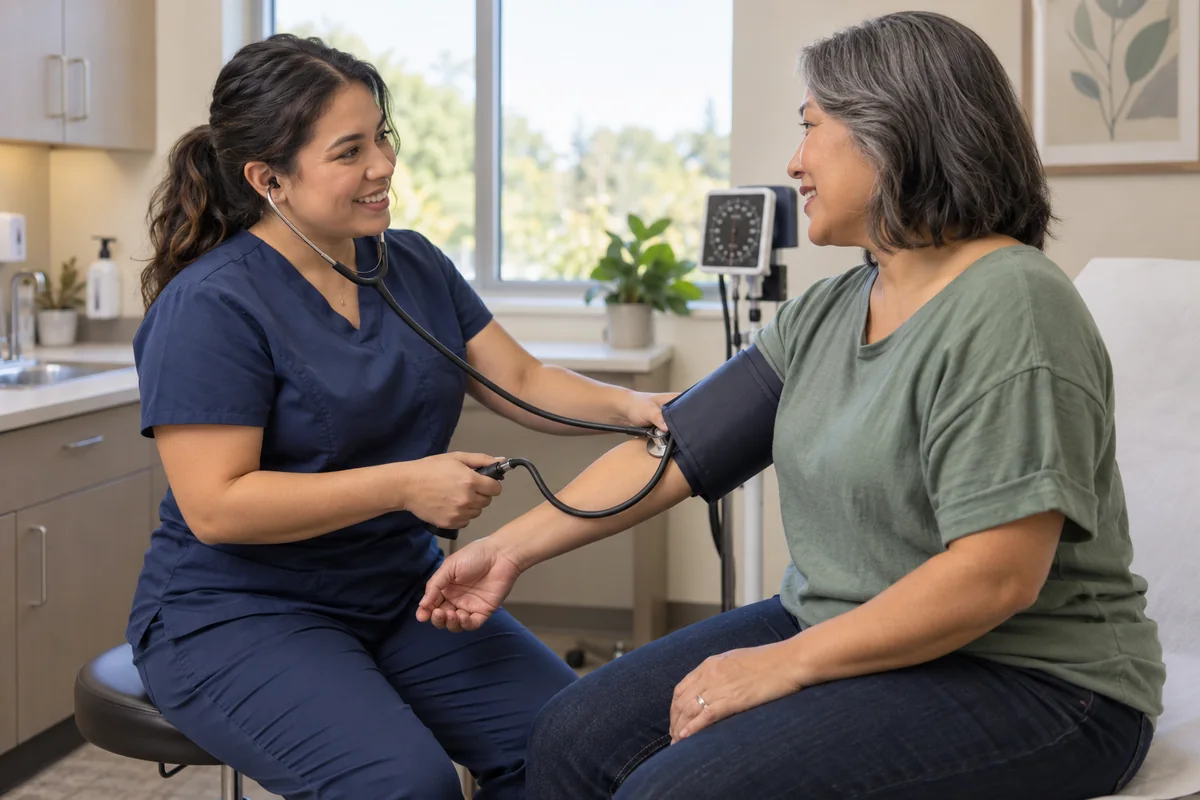
Ask about the patient's health history, check weight and blood pressure, and enter it in the chart.
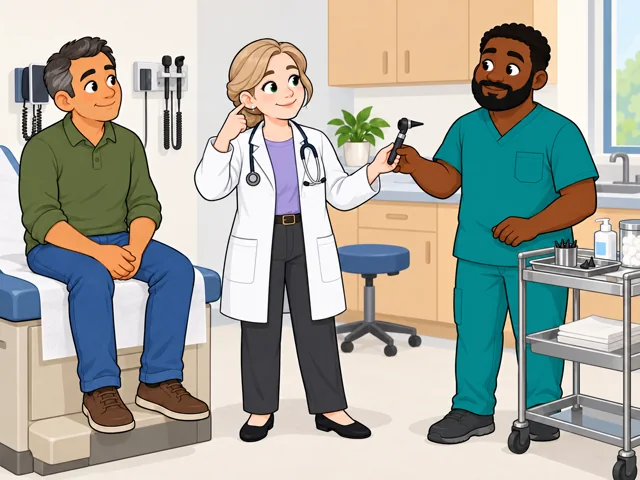
You tell the patient what to expect, then hand the doctor the tools and supplies they need.
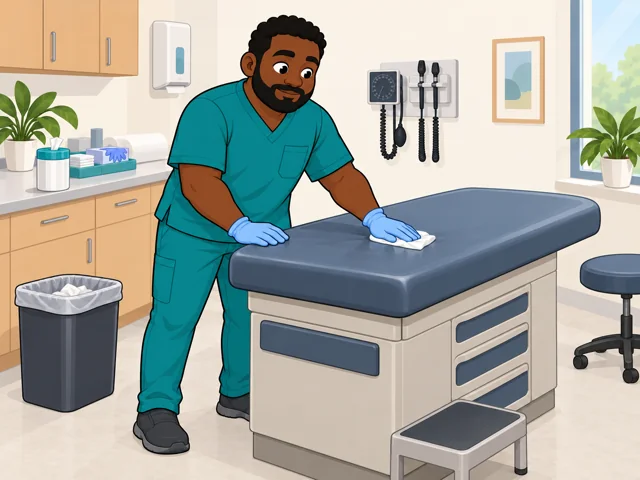
Clean the room, clear out what was used, and restock supplies before the next patient comes in.

Find a time that works on the schedule, then update insurance forms and other office records.
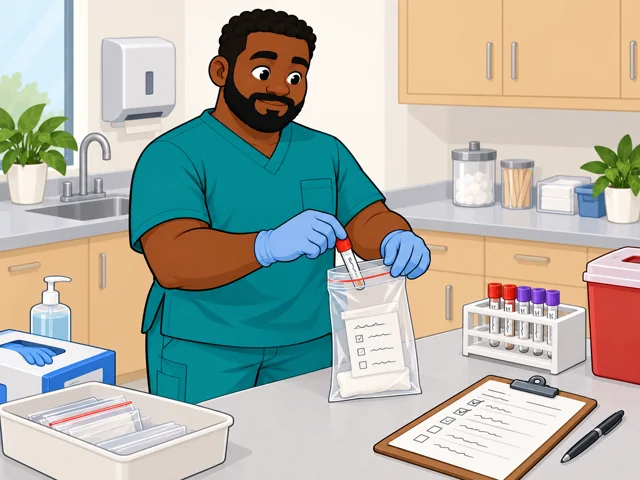
In some jobs, you collect samples like blood, log each one, and get it ready for testing.
United States
United States · May 2025
United States · 2025–2035
Quick orientation
A certificate or associate degree is typical; some employers train new hires.
National median, equivalent to $21.97 an hour.
About 109,700 openings annually, including replacement openings.
Electronic patient records and scheduling software help you store information and organize visits.
You still help patients through examinations and handle the physical work of preparing rooms and specimens.
How much record entry and scheduling becomes automatic will depend on the systems a clinic adopts.
Pay in context
Your offer can depend on location, experience, education, and skills. Compare the actual duties and benefits alongside the wage.
The median was $45,690 a year ($21.97 an hour). The 10th and 90th percentiles were $36,050 and $59,310—about $17.33 and $28.52 an hour. These describe the wage distribution, not starting and senior salaries.
Annual medians were $48,560 in outpatient care centers, $46,910 in hospitals, $45,520 in physicians’ offices, and $38,400 in other health practitioners’ offices.
Projected annual openings include people replacing workers who leave the occupation, as well as newly created jobs.
Check state and employer requirements first. Some require certification or specific education.
After entry
This starts where the entry routes leave off: early work, growing capability, and advancement or specialization. This path also has a credential or licensing boundary; see the requirements and limits.
Get comfortable preparing rooms, entering patient information, and finding the supplies each visit needs.
Build accuracy when updating medication and allergy information. Learn to communicate changes in a patient’s condition clearly to the clinician.
Some employers offer senior medical assistant levels with broader responsibilities and a role helping less experienced coworkers. Advancement requirements vary by employer.
You support preventive visits and ongoing health needs, updating records as well as preparing patients. Some positions offer a regular weekday daytime schedule.
You combine patient preparation and testing support with registration and records. Shifts may vary and extend into the evening, so the posted schedule matters.
Try it
Try a mock clinic intake with a friend using invented information. Ask the reason for the visit, record it accurately, then book a follow-up on a paper calendar. Switch roles and check what you missed. Notice whether you enjoy listening while keeping records straight.
Stay safe: Use fictional details; skip medical measurements, procedures, and advice.