

Career profile

Mental Health and Addiction Social Worker

Mental health and addiction social workers coordinate care, link services and, if licensed, provide therapy.

Listening closely is half of it. The other half is follow-through, making sure a plan works in someone's real daily life.
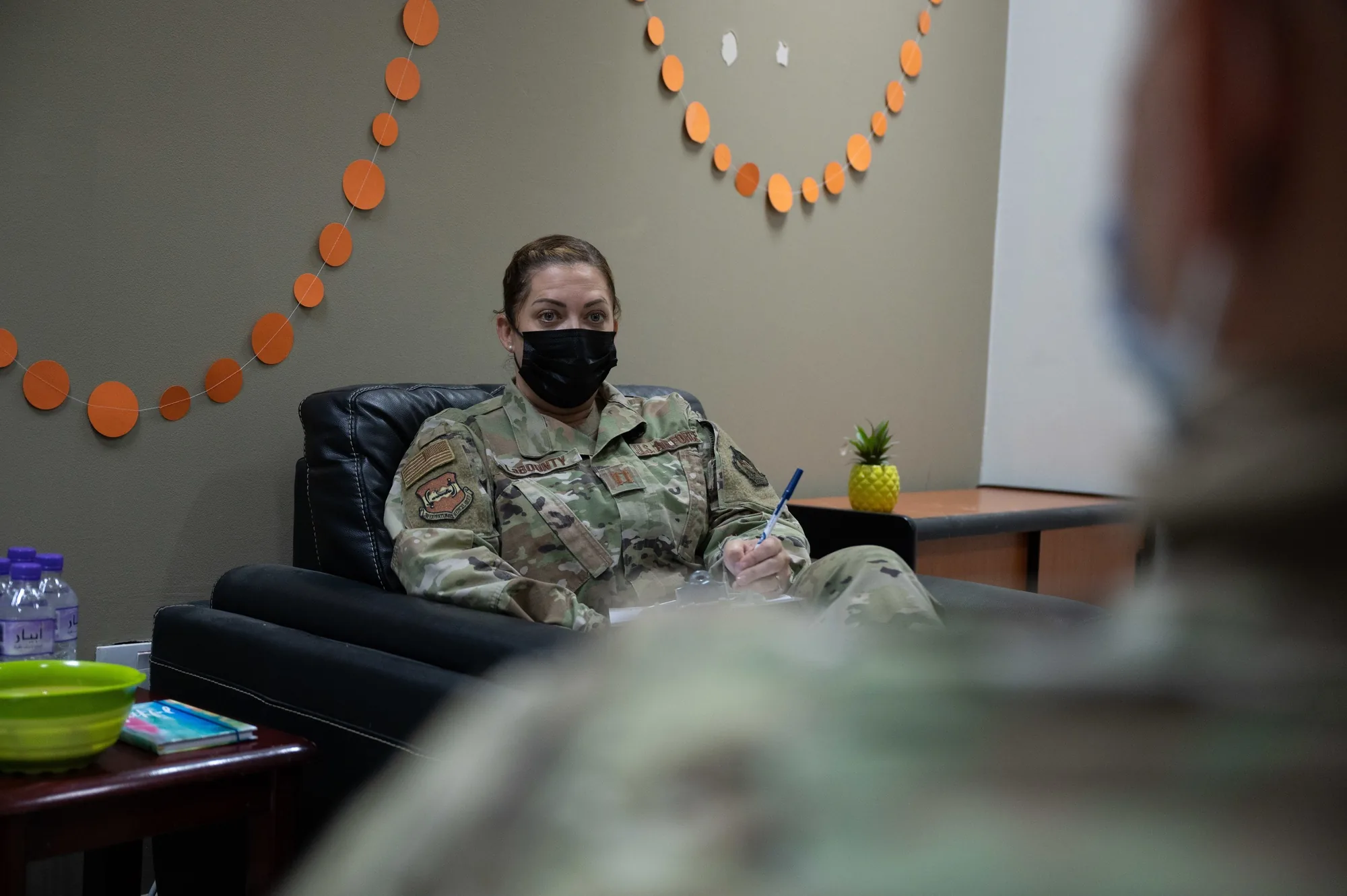
A clinical social worker speaks with a patient in a mental health office.
Photo by Senior Airman Daira Jackson, U.S. Air Force. Public domain U.S. government photo. The appearance of U.S. Department of War visual information does not imply or constitute DoW endorsement.

A day in the life

1A social worker listens to an adult client in a private office, reviewing his records and taking a brief note.

Interview a client, read files

You ask about symptoms, drug or alcohol use, strengths, safety risks, supporters and urgent needs.

2A social worker and an adult client discuss coping options using simple picture cards in a quiet counseling room.

Support one client or a group

Help people cope with emotional, psychiatric or drug and alcohol trouble, though giving therapy requires a clinical license.

3A social worker and two coworkers compare notes and arrange shared tasks to coordinate a client's care plan.

Meet with the care team

Compare what you've noticed with counselors, doctors, nurses or other staff, and agree on who handles what next.

4A social worker makes a follow-up call with a client while they review transportation to a community service.

Arrange services and follow up

Link clients to treatment programs, peer groups, housing, rides or other help, and later confirm each one worked.

5A social worker records progress as a client and coworker identify a barrier and revise the client's goals together.

Update the plan as things change

Log progress, spot new risks or obstacles, and rework goals or plans with the client and other providers.

Quick facts

Preparation

Bachelor's or master's

United States

Pay

$60,280 median

United States · May 2025

Outlook

10% projected growth

United States · 2025–2035

Quick orientation

Preparation, pay & outlook

Preparation

Bachelor's or master's

A BSW is common for entry-level nonclinical work. Clinical practice requires an MSW that meets state accreditation rules, supervised post-degree experience, and state licensure.

Geography
United States
Period
Not applicable

Pay

$60,280 median

National median annual wage for mental health and substance abuse social workers; it is not a starting salary.

Geography
United States
Period
May 2025

Outlook

10% projected growth

Employment is projected to rise from 138,900 to 153,200 jobs. National growth does not guarantee local openings.

Geography
United States
Period
2025–2035

Fit, tradeoffs & changing tools

Things to weigh

  • Clients may be in crisis or facing relapse, trauma, unstable housing, or other urgent problems. You cannot control every outcome.
  • Heavy caseloads, time pressure, referrals, and required records can compete with time spent directly with clients.
  • Some positions include evenings, weekends, holidays, or on-call coverage, especially when services must respond beyond office hours.

Where AI may help

Client-record, scheduling, database, email, and document systems can organize information and routine coordination.

What people still lead

A social worker still leads the interview, weighs context and risk, builds trust, counsels within scope, and takes responsibility for decisions.

What we can’t predict yet

New tools may reduce some paperwork, but their effects on caseloads, staffing, and time with clients will vary by employer.

Pay in context

Earnings

The national figure covers mental health and substance abuse social workers together. It is a midpoint for the occupation, not a starting salary.

National median

The median annual wage was $60,280: half of workers in the combined occupation earned more and half earned less. The median hourly wage was $28.98.

Geography
United States
Period
May 2025
Pay basis
Annual OEWS wage for wage-and-salary workers; self-employed workers are excluded.

The national spread

In May 2025, the 10th-percentile annual wage was $39,740 and the 90th-percentile wage was $104,170. These are wage percentiles, not starting and senior salaries.

Geography
United States
Period
May 2025
Pay basis
National annual wage percentiles

Getting started

Complete a BSW

Includes supervised fieldwork or an internship.
What the route involves
Study human behavior, social policy, ethics, and work with diverse populations while completing supervised field education.
What it can lead to
Preparation for entry-level nonclinical social work positions; some MSW programs offer BSW graduates a shorter advanced-standing path.
What to check
A BSW does not grant clinical diagnosis, treatment, or independent-practice authority. Nonclinical credential rules also vary by state.

Enter an MSW after a bachelor's degree

MSW programs generally take two years; some BSW graduates may qualify for a shorter advanced-standing program.
What the route involves
Complete an MSW program that meets your intended state board's accreditation rules, including a supervised practicum or internship.
What it can lead to
The academic preparation needed to begin supervised post-degree clinical experience and pursue the applicable state license.
What to check
An MSW alone does not authorize independent clinical practice; supervised experience, an exam, and state approval still apply.

Education can open a role, but state rules decide which social-work title and clinical activities you may use.

After entry

Career paths

This starts where the entry routes leave off: early work, growing capability, and advancement or specialization. This path also has a credential or licensing boundary; see the requirements and limits.

  1. Get established

    Use supervision to learn the employer's procedures, document consistently, make sound referrals, and follow each client's progress.

  2. Build capability

    Develop experience with a client population and treatment setting, strengthen teamwork and crisis judgment, and keep current through training and feedback.

  3. Advance or specialize

    Pursue clinical licensure for independent clinical work, or deepen expertise in areas such as substance-use recovery, community mental health, or integrated care.

    • Move toward program planning or supervision instead of independent clinical practice.

Where you can work

Community programs and agencies

Expect a mix of appointments, referrals, records, team meetings, and possible visits away from the office. Local service gaps can shape what help is realistic.

  • Indoors
  • Office
  • Field work
  • Travel

Hospitals and healthcare services

Work is more tightly connected to medical teams, treatment transitions, and shared care plans; schedules may extend beyond standard office hours.

  • Indoors
  • Office
  • Shift work
  • On call

Clinical private practice

Licensed clinical social workers may provide individual, group, or family therapy in solo or group practices, with responsibility for both care and practice administration.

  • Indoors
  • Office

Try the thinking, not the treatment

Plan a response to a fictional case

Use a fictional school or community case. Write five questions you would ask, two resources you would check, and one follow-up step. Notice whether careful listening, ambiguity, boundaries, and practical planning hold your interest.

Stay safe: Use only a fictional or published teaching case. Do not collect or try to counsel someone about a real mental-health or substance-use problem.

Explore more careers

Sources

  1. U.S. Bureau of Labor Statistics. Social Workers. Accessed 2026-09-22.
  2. O*NET OnLine. 21-1023.00 — Mental Health and Substance Abuse Social Workers. Accessed 2026-09-22.
  3. National Association of Social Workers. Clinical Social Work. Accessed 2026-09-22.
  4. Association of Social Work Boards. Becoming a Licensed Social Worker. Accessed 2026-09-22.

Your message goes to the Great Jobs team. How we use your information